


The story of the bird
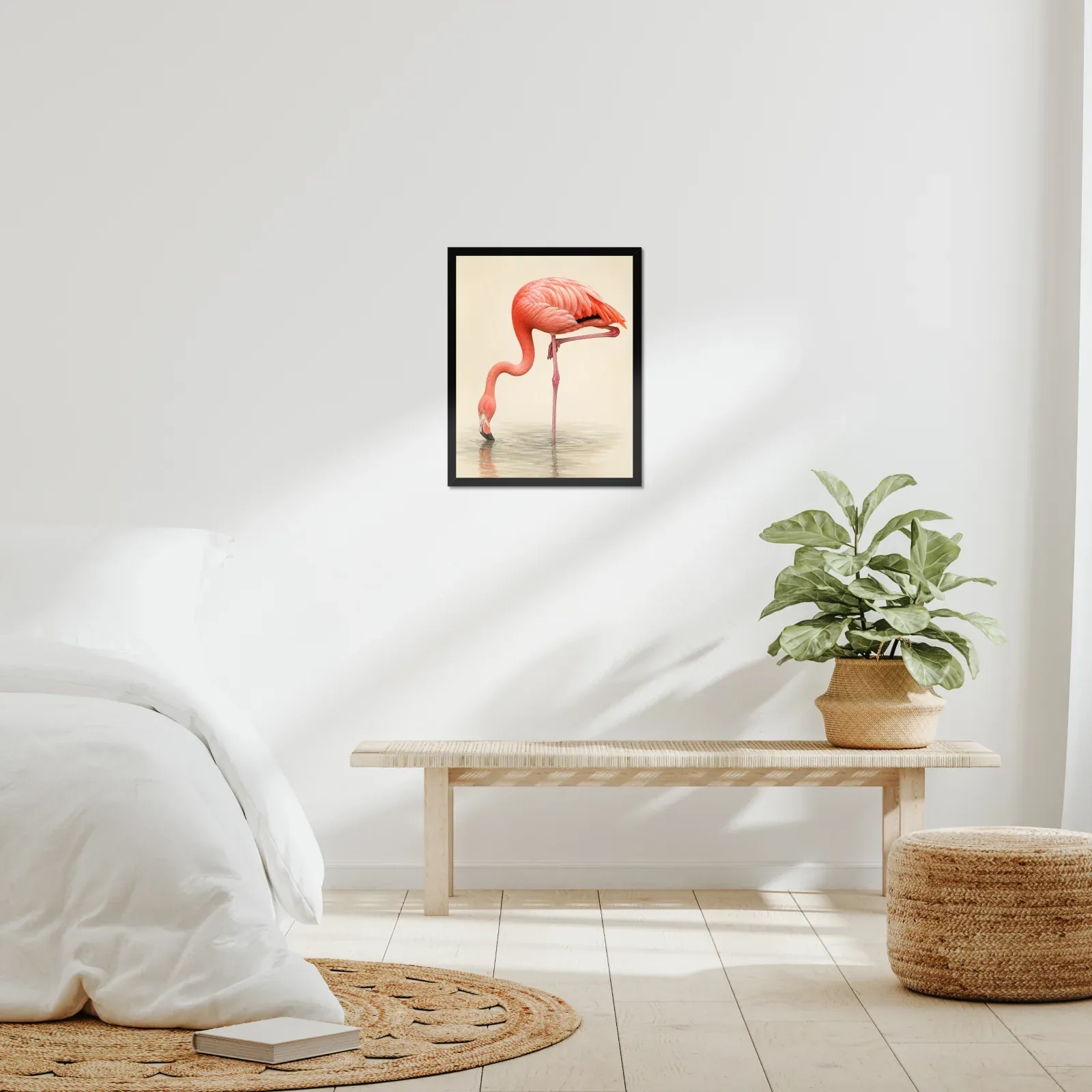
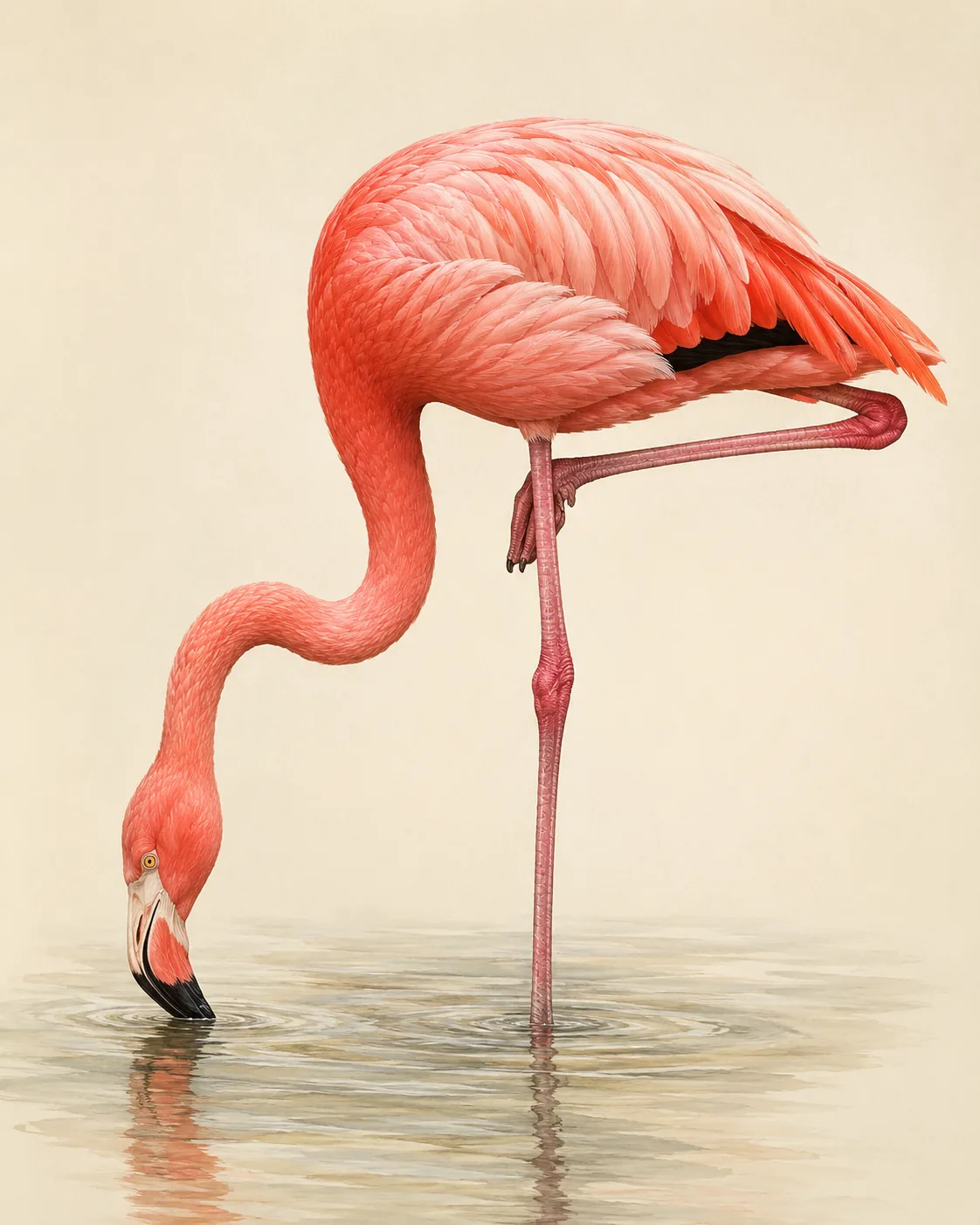
One leg drawn up, the long neck folded into a soft S-curve. Phoenicopterus ruber stands in the way it always stands, unhurried, on a pale parchment ground that gives the pink nowhere to hide. The Audubon-style palette takes the coral and deepens it toward the wing, sets the black flight feathers against the rose, and lets the colour run. It is warm and theatrical and entirely exact.
The American Flamingo is the most deeply coloured of the world’s six flamingo species. The pink is not pigment in the conventional sense. It is dietary. Carotenoid compounds absorbed from brine shrimp, algae, and small crustaceans accumulate in the feathers during each moult. A bird fed a carotenoid-free diet in captivity loses its colour within a single moult cycle. The flamingo builds its palette from the chemistry of the hypersaline lagoons it feeds in. The pinker the bird, the better and longer it has been eating.
Standing 120 to 145 centimetres tall, the flamingo feeds with its head literally upside down, the bent bill entering the water the wrong way round, the tongue acting as a pump to draw water through fine bony lamellae that filter out prey. The bill’s distinctive downward kink makes this inversion possible. No other North American bird is built to eat this way.
A flamingo hatches grey. Over roughly three years it eats itself pink. That slow accumulation, season by season, from the chemistry of a shallow Caribbean lagoon, is what this plate records.
A fine-art study in the tradition of Audubon.
Full field guide: /species/american-flamingo/