Stories
Field notes
from the feeder.
The folklore, the science, and the small daily encounters with the birds you already know.
The latest
Birds of Prey Wall Art: Choosing Eagle, Hawk, Falcon and Osprey Prints
How to choose birds of prey wall art by species, room, composition and gift occasion, with eagle, hawk, falcon and osprey print comparisons.
Read the story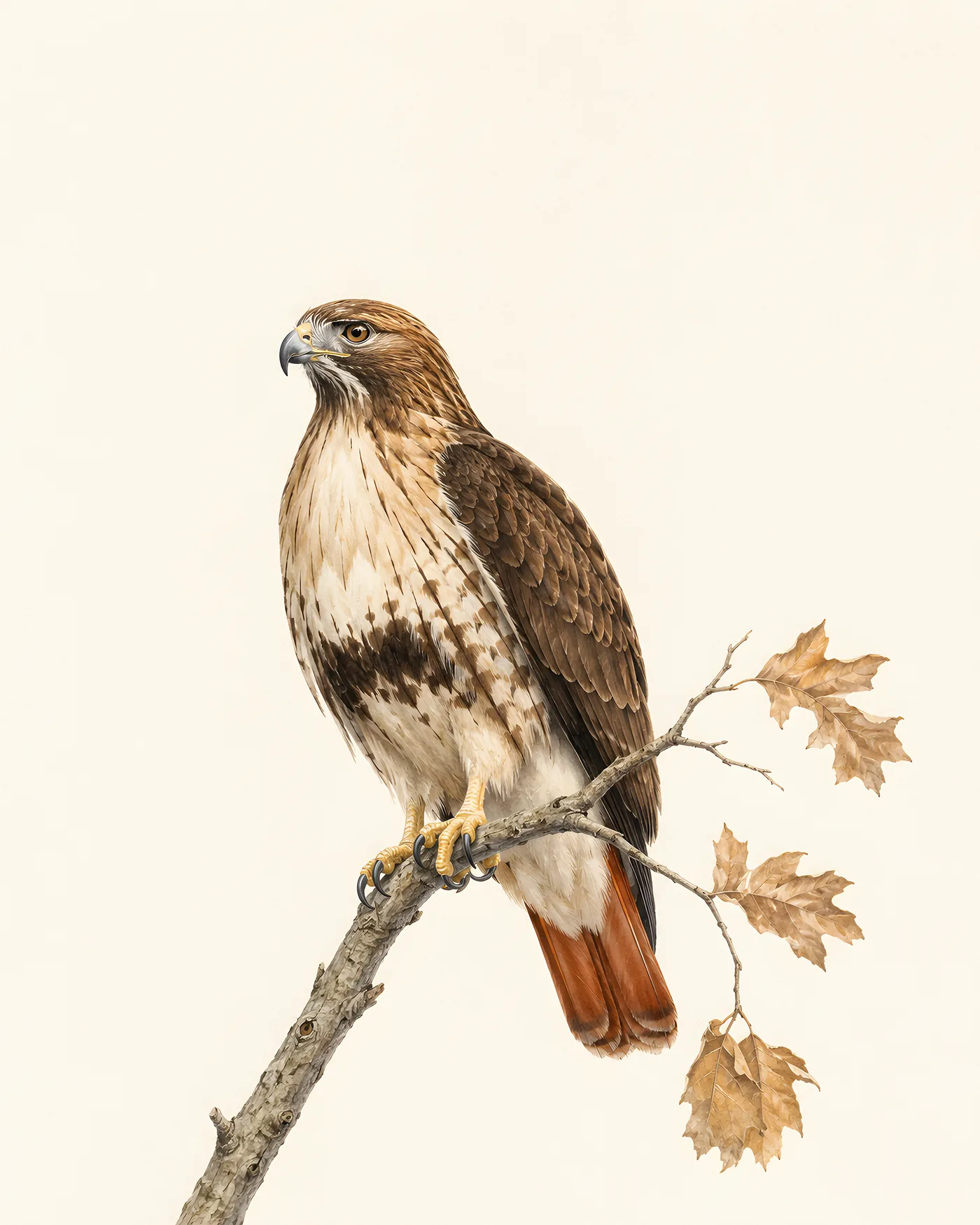
Latest stories
View all 286 stories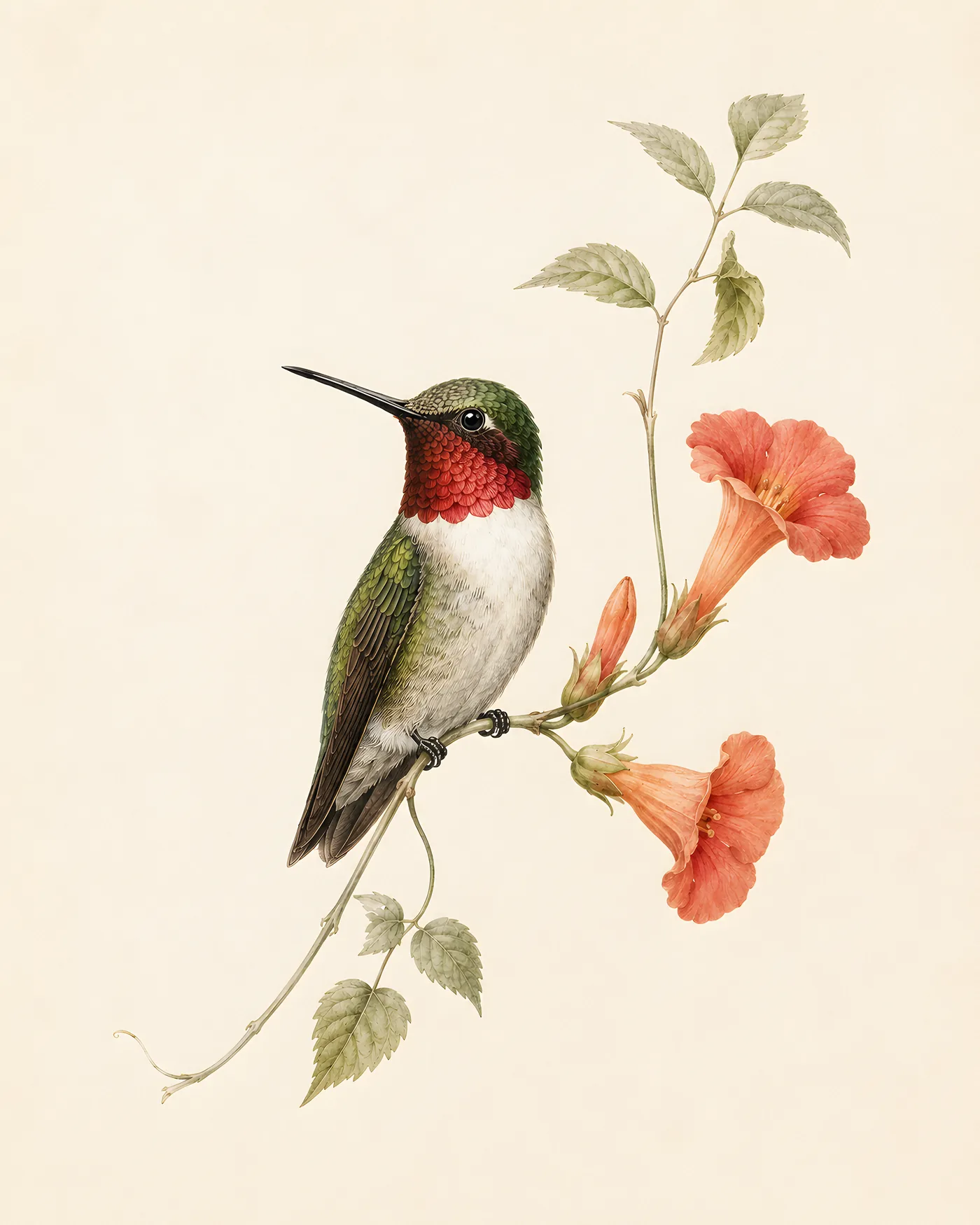 Gifts & decor Hummingbird Wall Art: Choosing the Right Print for a Room or Gift How to choose hummingbird wall art by species, colour, composition, room and gift occasion, with framed and unframed print options.
 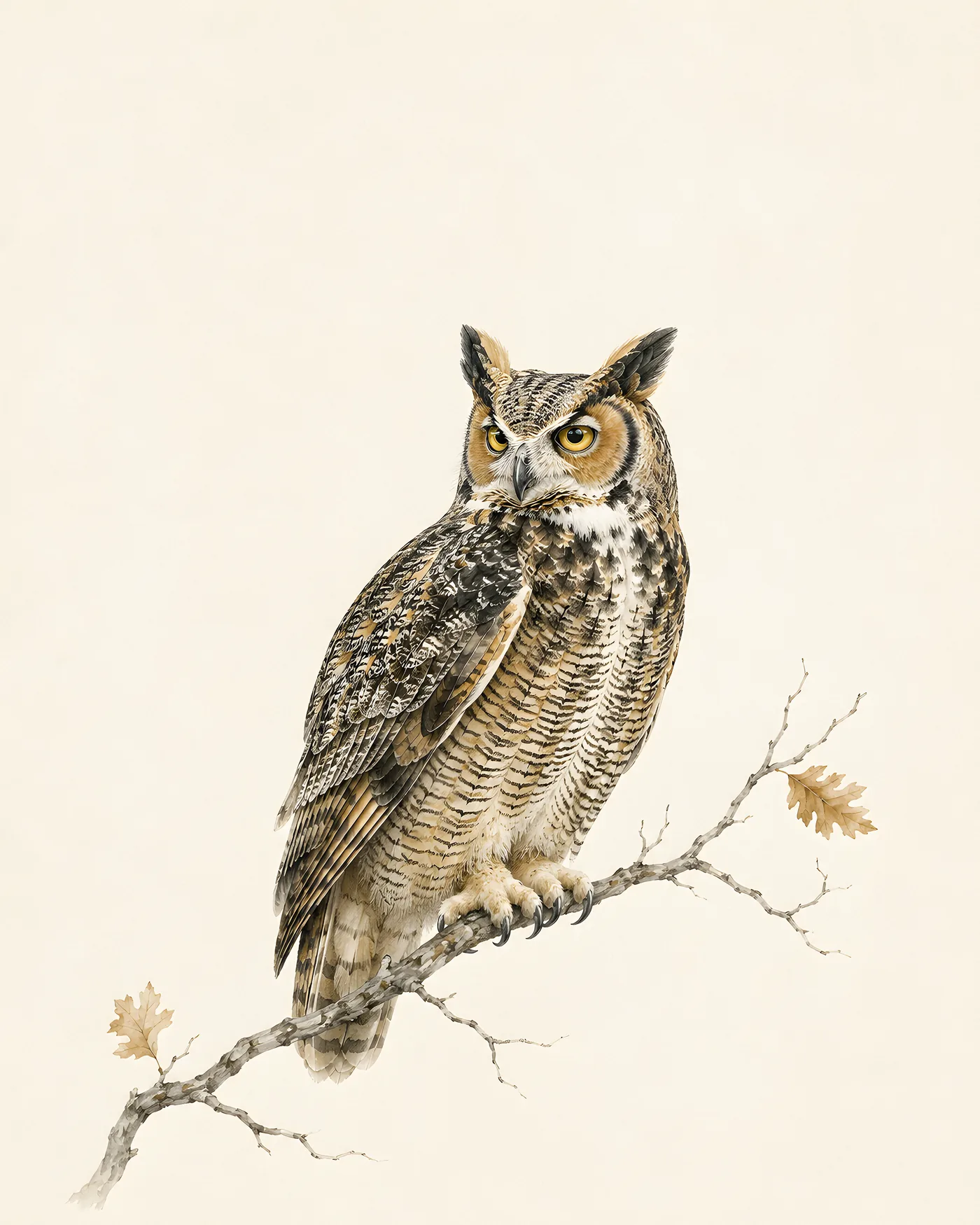 Gifts & decor Owl Wall Art: Choosing Barn, Great Horned, Snowy and Woodland Owl Prints How to choose owl wall art by species, palette, room and gift occasion, with Great Horned, Barn, Snowy and woodland owl print comparisons.
 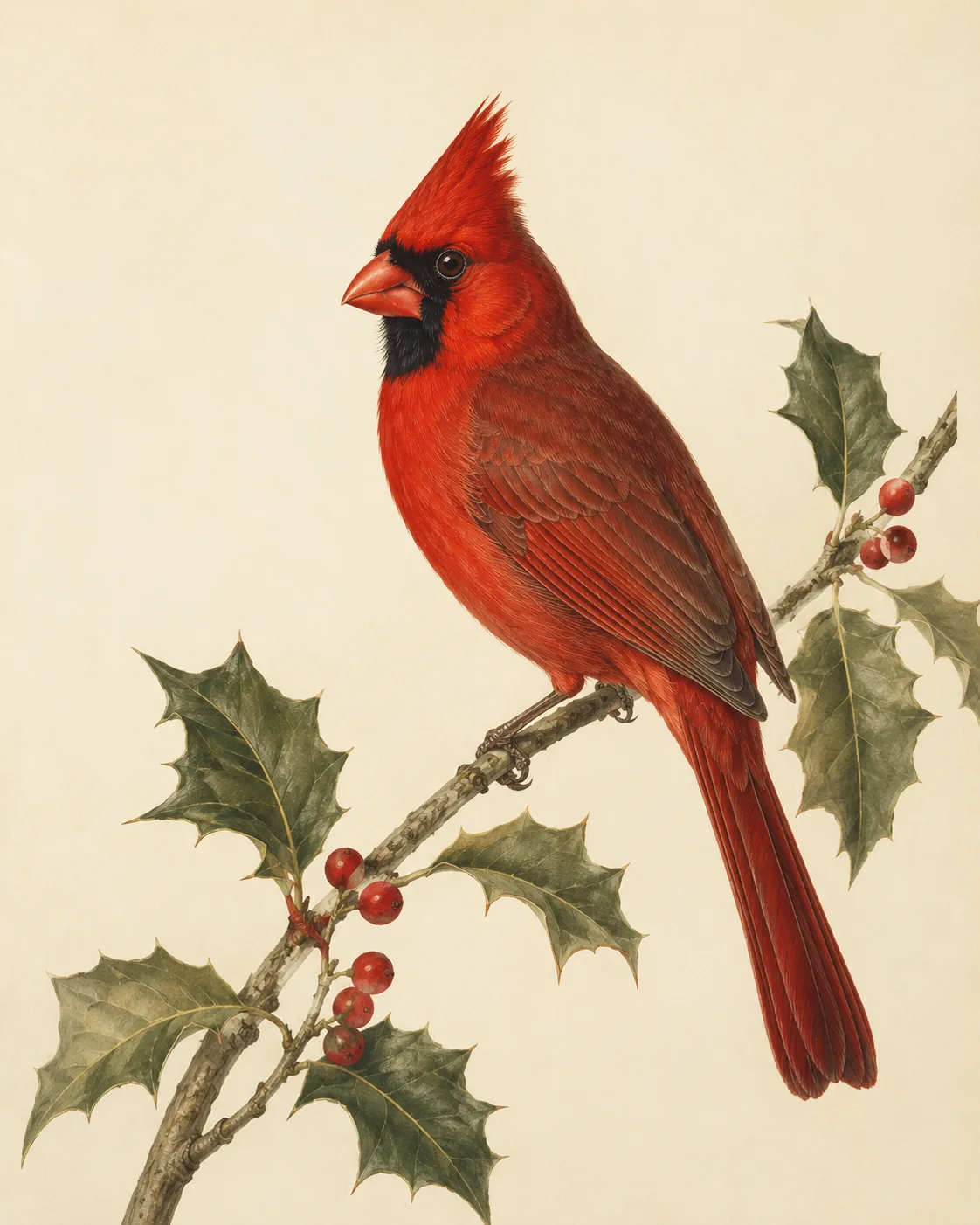 Gifts & decor Best Gifts for Cardinal Lovers A gift guide for the cardinal lover in your life, prints first, then the feeders, seed, mugs and books that make the everyday sightings better.
 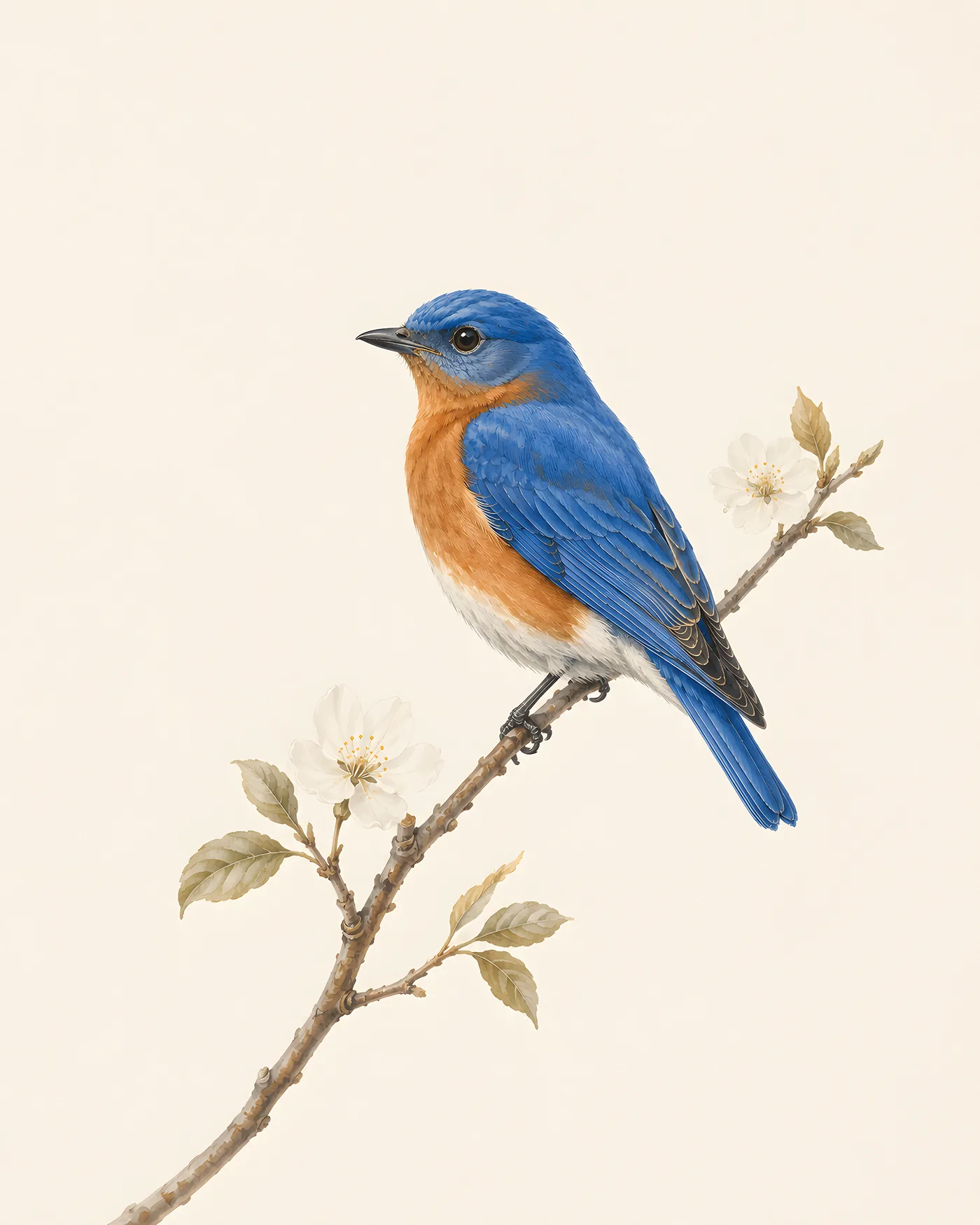 Gifts & decor Audubon-Style Prints for a Gallery Wall: How to Arrange Them How to arrange Audubon-style bird prints into a gallery wall that actually works: odd numbers, spacing, mixed sizes, one species or several.
 Free download
Take your cardinal with you.
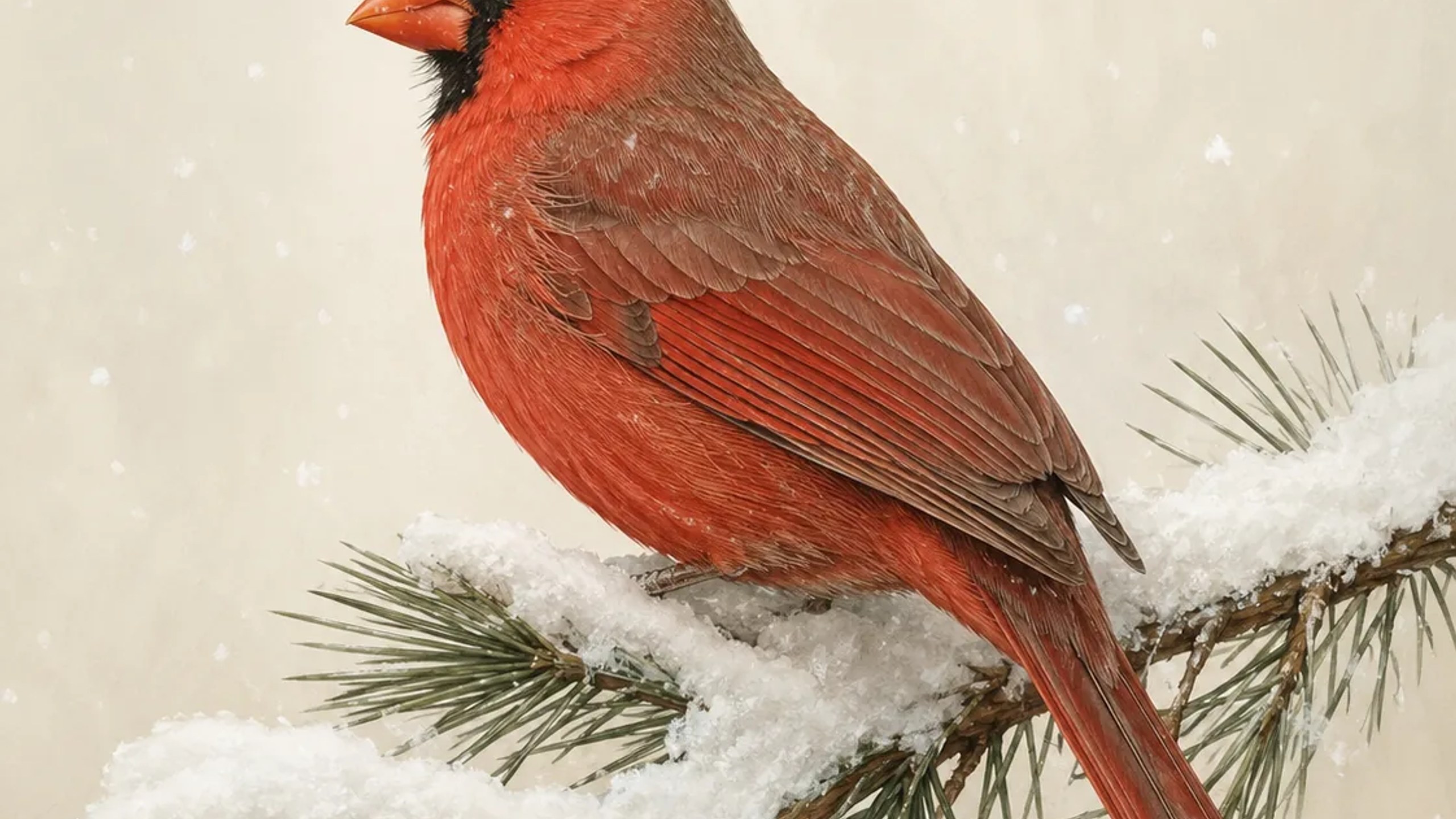
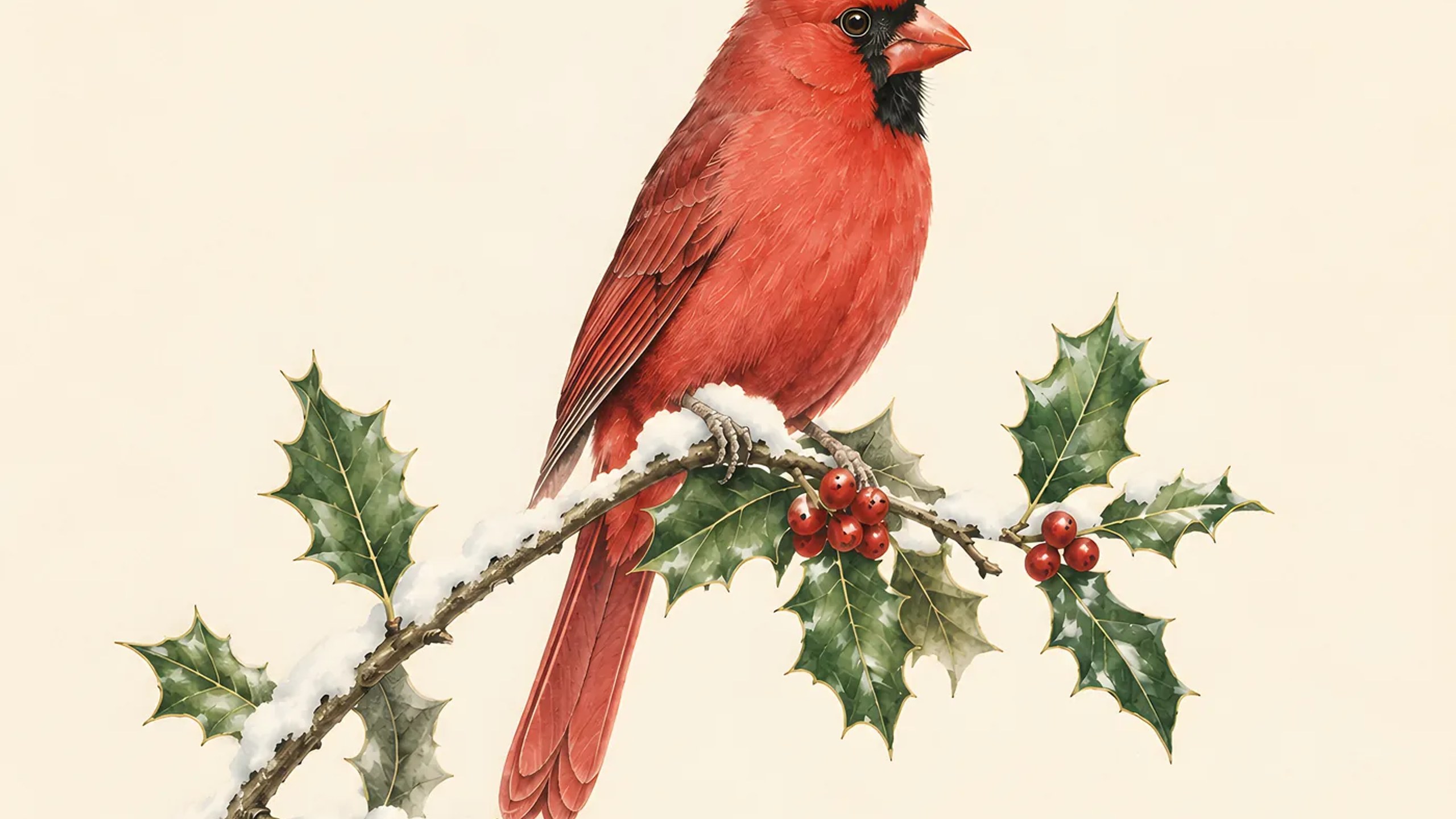
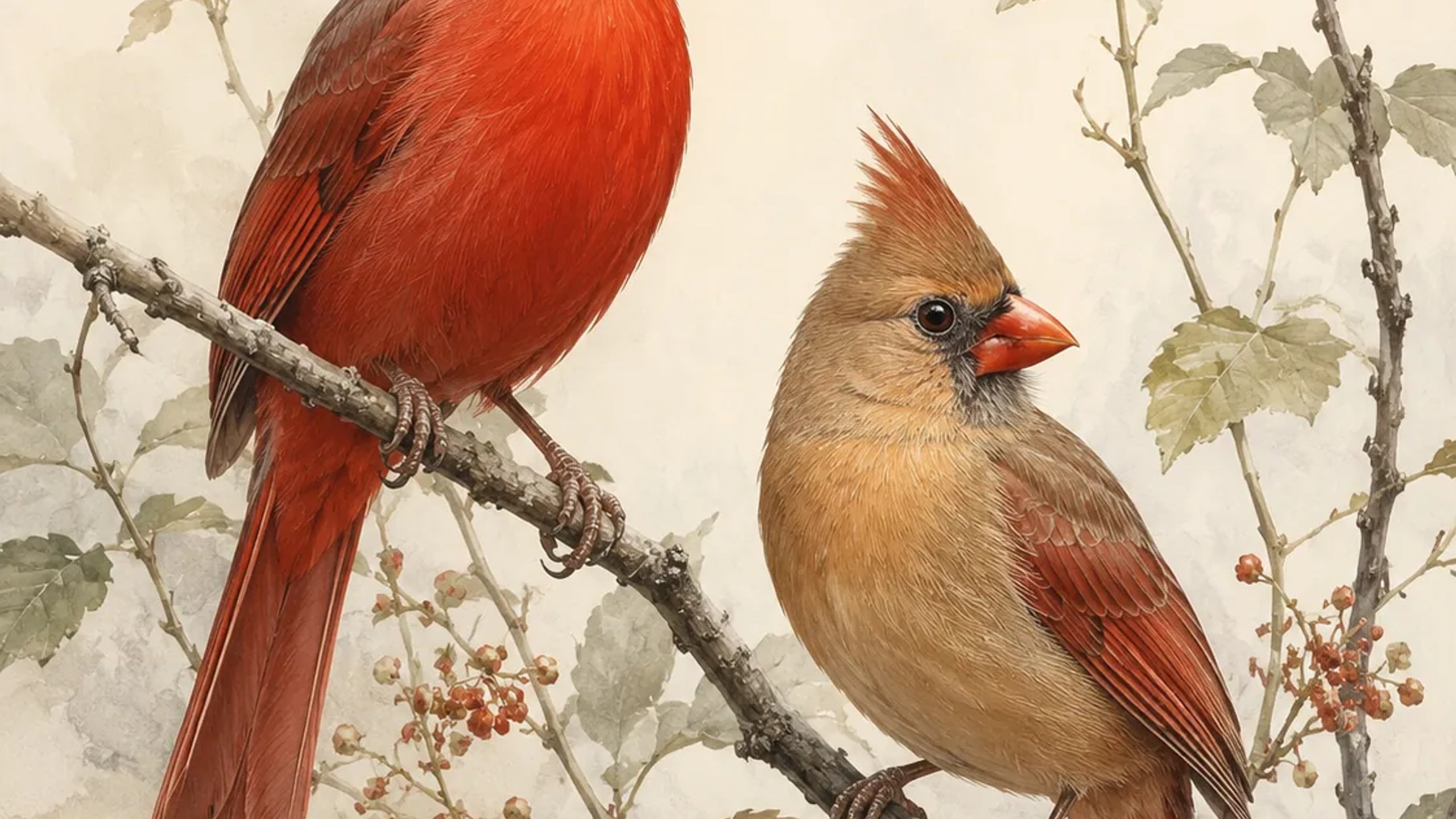
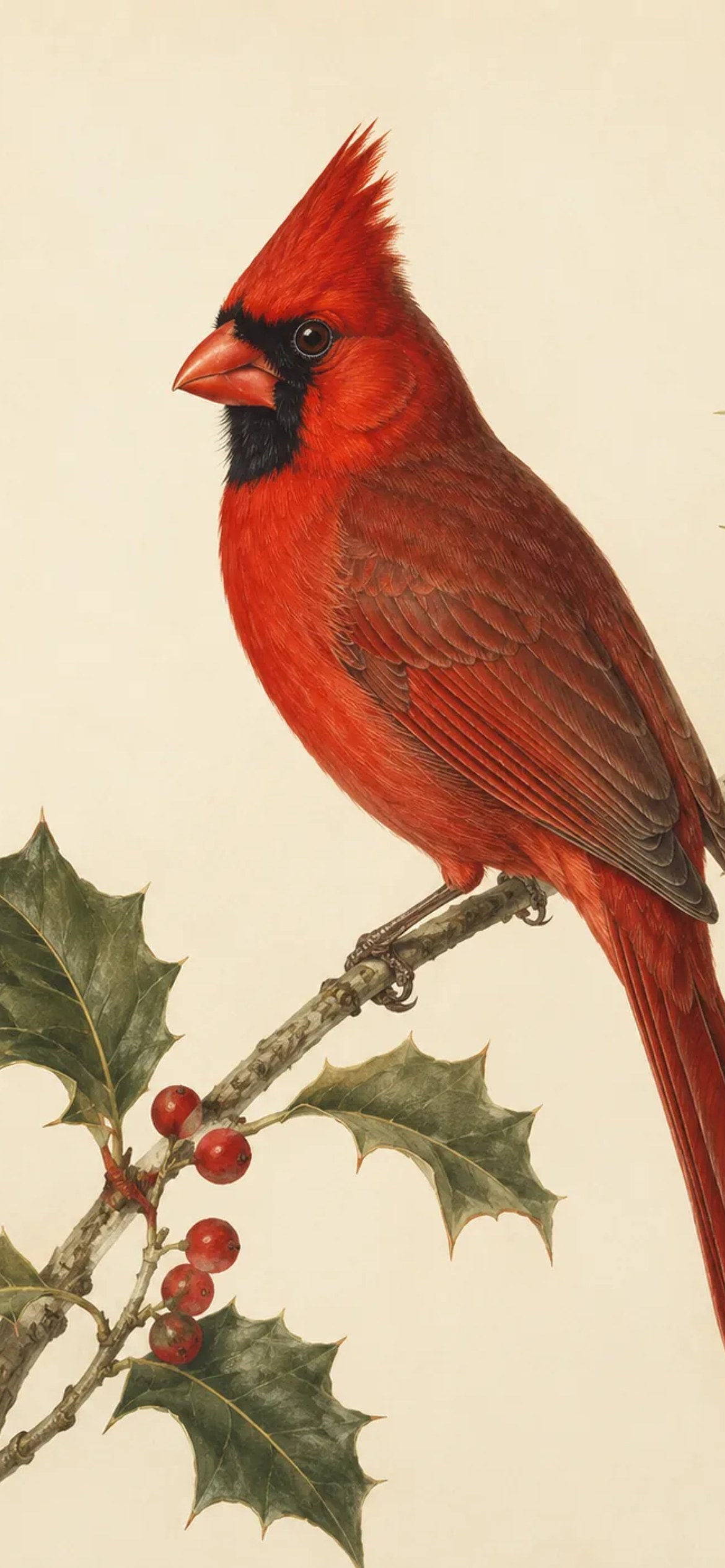
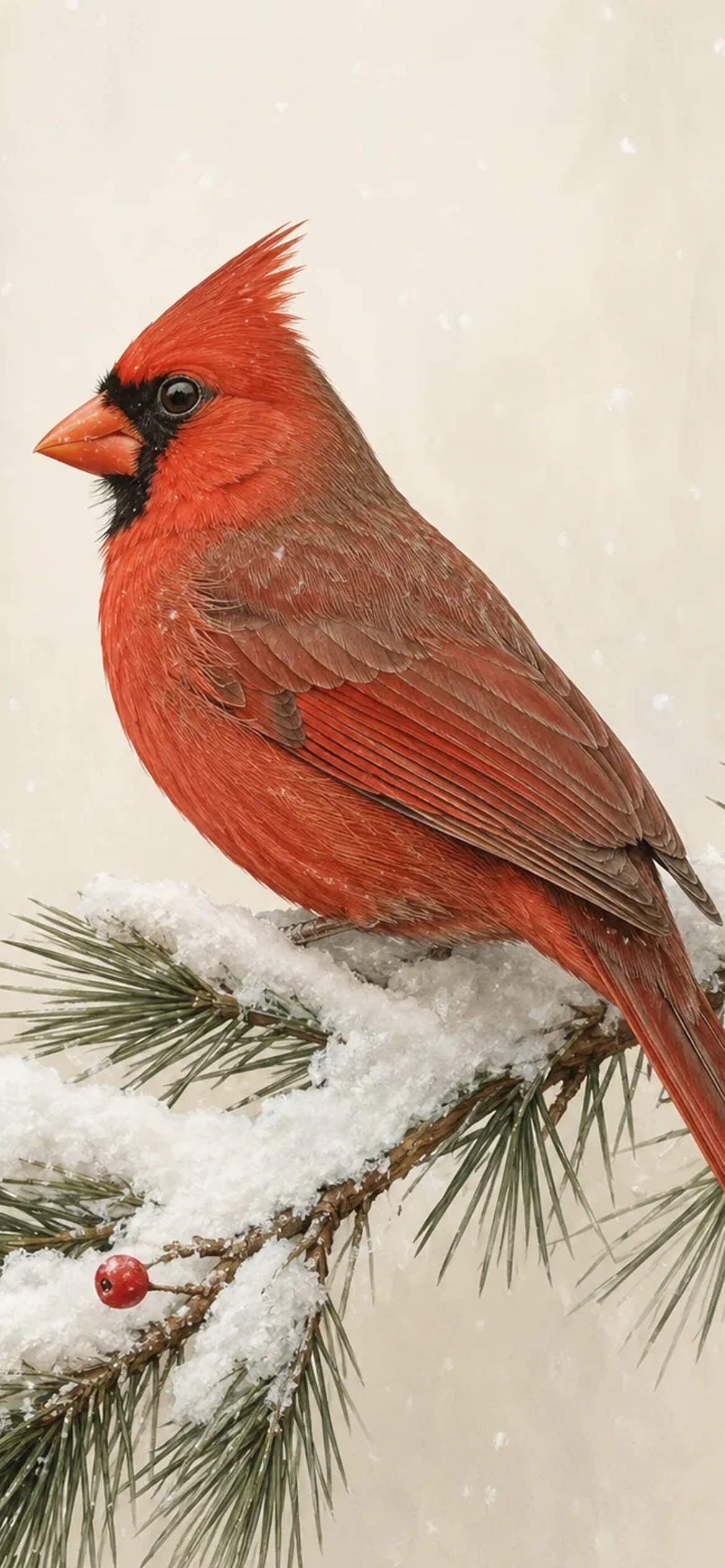
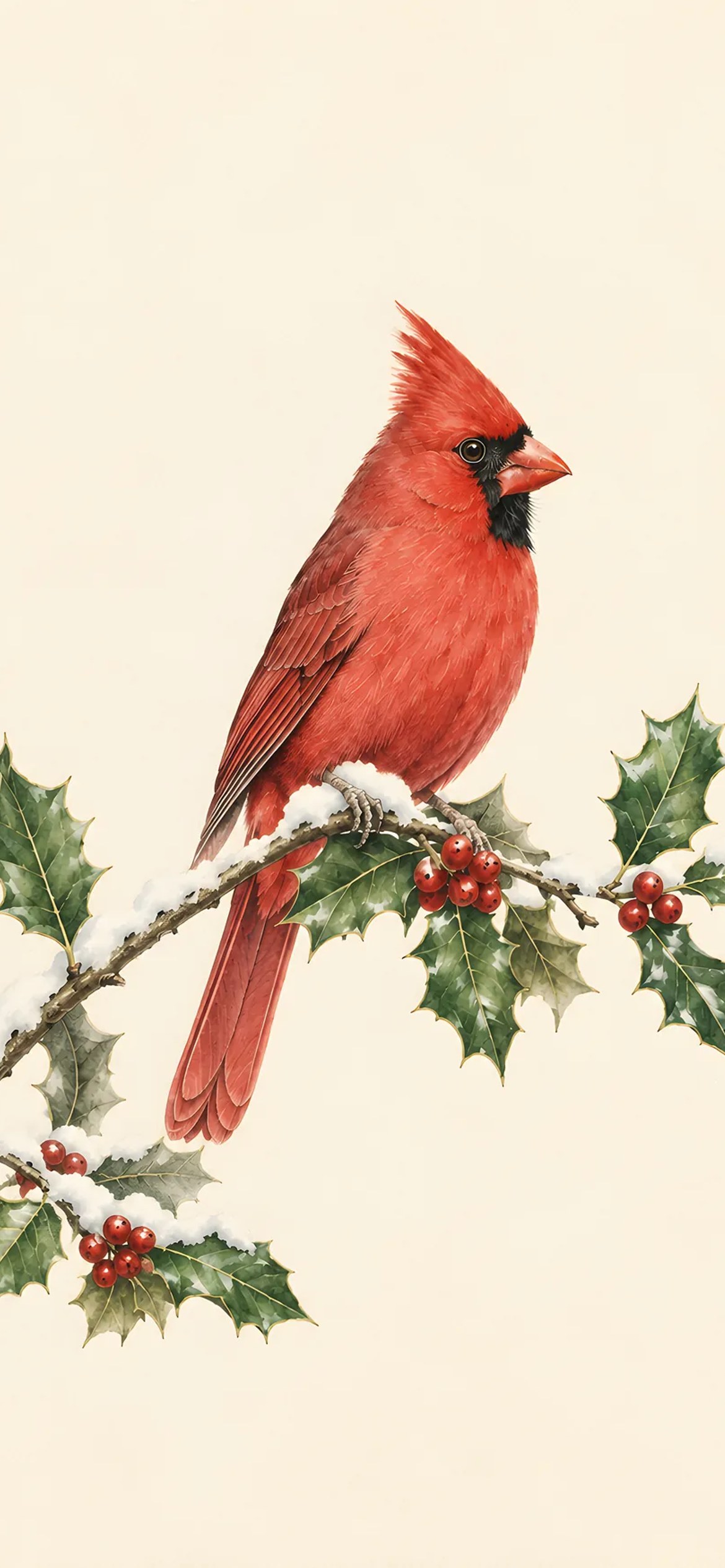
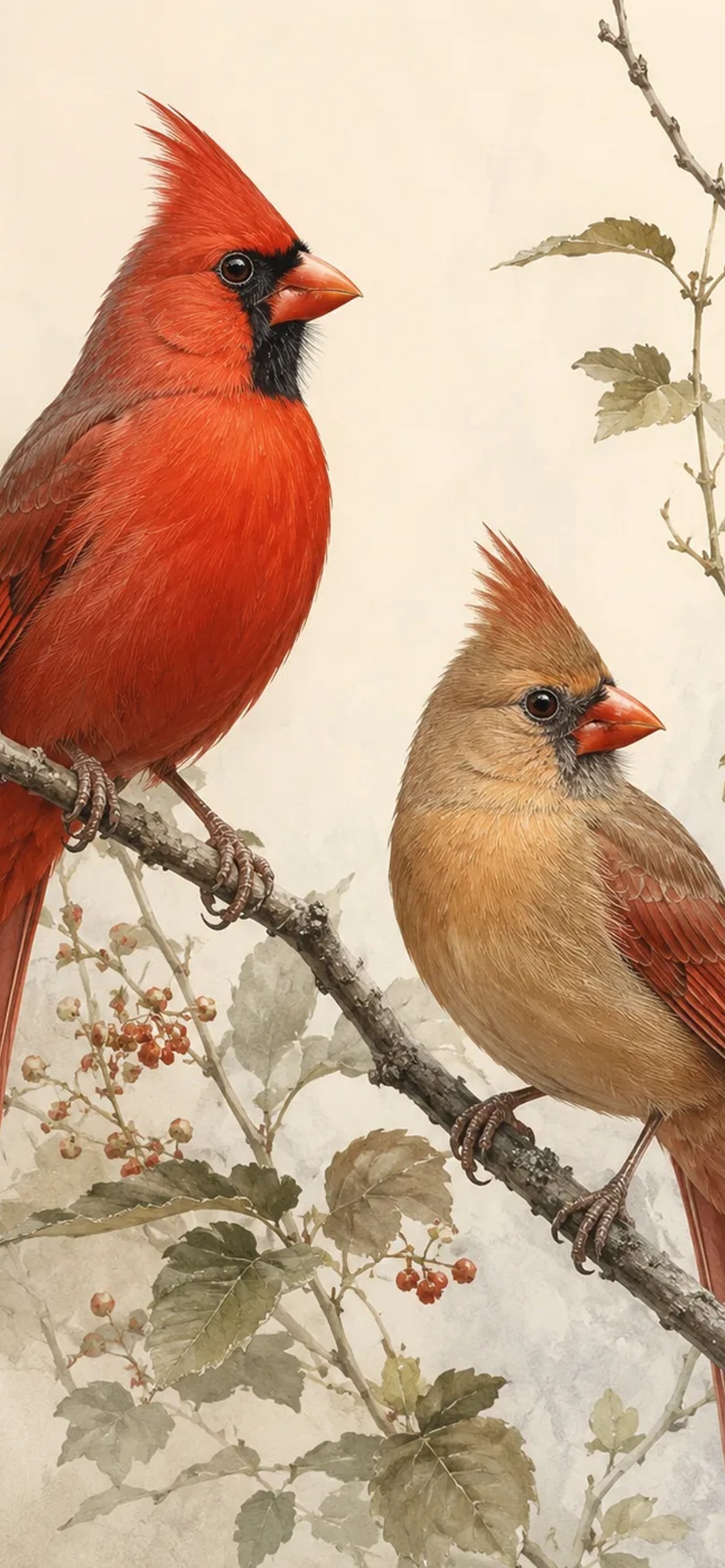
Four Audubon-style cardinal plates, sized as wallpapers for your phone and your desktop. Yours for an email, and they download straight away.
Why we write these
The answer, not the rumour.
Most bird questions have a real answer and a popular one, and they are rarely the same. These pieces go looking for the first.
Browse every storyIdentification 22
- Robin vs Cardinal (crest yes, crest no) Two seconds. One feature. Crest yes, you have a cardinal. Crest no, you have a robin. Everything else in this guide is decoration.
- Pyrrhuloxia vs Northern Cardinal: How to Tell Them Apart A grey bird with a parrot's bill in an Arizona mesquite is not a sick cardinal. It is a Pyrrhuloxia, and the bill alone tells you everything you need to know.
- Birds that look like ducks (but are not ducks) Half the birds in a city park pond are not ducks. The coot, the gallinule, the grebe and the loon all swim in the same water for completely different reasons.
- Birds that look like flamingos (most are not flamingos) Nine out of ten pink-bird sightings in Florida are Roseate Spoonbills, not flamingos.
- Birds that look like hawks (a rule that ends the confusion) Every soaring bird gets called a hawk. The wing shape rule separates four families in two seconds. Once you know it you cannot un-know it.
- Birds that look like herons (the neck rule) Cranes, storks, ibises and spoonbills all look like herons until they take off. Watch the neck. Herons fold theirs in flight. Nothing else does.
- Birds that look like crows (the tail test) Every black bird gets called a crow. Most are not. The tail is the fastest sort: crows fan it, ravens wedge it, grackles keel it, starlings have almost none.
- The dinosaur in your back garden (and the one in your fridge) Every bird alive is a dinosaur. Most of them have updated the look. A few have not.
- The birds that look like dragons There is exactly one bird that deliberately paints itself the colour of fire. There are several that look like pterosaurs in flight.
- The birds that look like chickens (and the one that is) A domestic chicken is a wild bird from a Thai forest with a publicist.
- Birds that look like Cedar Waxwings (the flock test) A single Cedar Waxwing is hard. A flock of 60 Cedar Waxwings stripping a hawthorn in three minutes is impossible to mistake.
- Birds That Look Like Hummingbirds Sunbirds, honeyeaters, and sphinx moths fill the hummingbird niche on every continent - but only one group can truly hover. Here is how to tell them apart.
- Birds that look like goldfinches (the bill rule) Five birds trip up even experienced birders when they look at a yellow visitor. Bill shape settles the question in under two seconds.
- Birds That Look Like Egrets Six white wading birds are routinely mistaken for egrets. Bill shape and leg color separate them all - here is the fastest field guide.
- Birds that look like cranes (and the one flight tell that settles it) Great blue herons, egrets, and wood storks all get called cranes. The neck in flight settles it every time - cranes extend, herons fold.
- Birds That Look Like Chickadees (And How to Tell Them Apart) Six birds trigger chickadee confusion at the feeder - titmice, nuthatches, and chickadee lookalikes. One field mark separates each. Here is which one.
- Birds That Look Like Cedar Waxwings Four birds get mistaken for Cedar Waxwings. One is a genuine confusion species. Here is how to separate them by plumage, range, and flock behaviour.
- Birds That Look Like Cardinals Five birds are reliably confused with the Northern Cardinal. Here is how to separate each one by bill shape, crest, and range in under a minute.
- Birds That Look Like Bluebirds (And How to Tell Them Apart) Four blue birds get mistaken for bluebirds regularly. One field mark handles most cases - until the Mountain Bluebird breaks the rule entirely.
- Birds That Look Like Blue Jays Six North American birds share the Blue Jay's bold blue coloring but differ in size, crest, range, and markings. Here is how to tell them apart.
- Birds That Look Like Bats at Dusk: Swifts, Nighthawks, and Swallows At dusk, swifts, nighthawks, and swallows are routinely mistaken for bats. Three field marks separate them in low light - here is what to look for.
- Birds that look like bald eagles (and the one tell for each) Most 'eagle' sightings are turkey vultures or ospreys. Learn the one field mark that separates each lookalike from a true Bald Eagle.
Biology & behaviour 95
- Why Are Some Birds Blue Blue jays, bluebirds, and indigo buntings carry no blue pigment whatsoever. Their colour is pure physics - microscopic nanostructures in each feather barb scatter light so that only blue wavelengths reflect back to your eye.
- Why Is a Woodpecker Drumming on My House A woodpecker hammering your gutter at dawn is not damaging your house - it is broadcasting. Learn what drumming actually is, which species do it, and how to stop it humanely.
- Do cardinals mate for life? Yes, mostly, with caveats. Cardinal pairs stay together across years and across broods.
- Why cardinals stay in winter Almost every bright-coloured songbird in eastern North America migrates south for winter. The cardinal does not.
- Yellow Cardinals: The Enzyme That Didn't Fire A yellow cardinal is a Northern Cardinal missing one enzyme. That single biochemical gap produces a bird most birdwatchers never encounter in the wild.
- Why have the cardinals left my feeder? Cardinals vanish from feeders every summer. Three overlapping events in their biology explain why - and why you should expect it, not worry about it.
- Why Do Cardinals Fly Into Windows Cardinals attack windows because they genuinely believe a rival is there. Here is why the illusion is so convincing, and what actually stops it.
- Why do cardinals come out in the snow? Cardinals don't come out more in snow - they were always there. Snow removes the camouflage of summer and makes a resident bird impossible to miss.
- Why Cardinals Cover Themselves in Ants Cardinals rub live ants through their feathers in a behaviour called anting. The purpose is debated - the formic acid story is less settled than it looks.
- Why Are Male Birds More Colorful Than Female Birds? Male birds are colorful because females chose them that way - and females stayed dull because natural selection punished the ones who were not.
- White Cardinals: What Leucism and Albinism Actually Do to a Cardinal's Colour White cardinals are real, rare, and genetically fascinating. Here is what leucism and albinism actually do to a Northern Cardinal's colour - and why they do it differently.
- Where to Hang a Hummingbird Feeder Shade, cover, and sight lines matter more than height. Here is exactly where to hang a hummingbird feeder so the nectar stays fresh and the birds keep coming back.
- Where do cardinals sleep at night Northern cardinals announce their roost with a chip call, then vanish into a thicket.
- Where Do Cardinals Build Their Nests The female cardinal builds every nest alone, from scratch, while her mate sings nearby.
- Where Are Cardinals Found Northern Cardinals live from Maine to Mexico, but their real story is how far north they have pushed in a single century - and why your feeder is the reason.
- What to Feed Cardinals in Winter Cardinals don't leave when it gets cold. Here's the feeder setup, seed selection, and one habit that determines whether they stay or move on.
- What string is safe for birds Not all string kills birds the same way. Which fibers break under tension and which do not is the practical dividing line between safe and dangerous.
- What Is a Group of Cardinals Called A group of cardinals is called a college, conclave, or radiance. The names borrow from the Catholic Church - and the flock behavior earns every one of them.
- What Does It Mean When You See Two Cardinals Two cardinals at the feeder almost always signal one biological event - and the 'mates for life' story most people tell is only half the picture.
- What does it mean when you see a cardinal The cardinal-as-messenger belief is newer than most people realise. Here is where it came from, what biology actually explains, and why both answers matter.
- What do falcons eat Falcons eat mostly birds - an enormous variety of them. The peregrine alone hunts 450 documented North American species.
- What Do Crows Eat Crows eat almost anything - earthworms, carrion, eggs, grain, and stolen fish. Their diet reveals a mind built less around hunger than around opportunity.
- What Do Cardinals Eat Northern cardinals eat seeds, fruit, and insects - but what they eat shapes how red he looks in March. A close look at the cardinal's diet and bill.
- What Do Blue Jays Eat Blue Jays eat almost anything, but the acorn habit is what shaped North American forests.
- What Do Baby Cardinals Eat The cardinal at your feeder is a seed-cracker by habit, but it raises its nestlings almost entirely on insects.
- What Colors Do Birds Not Like Birds see four color channels, including ultraviolet. Which colors trigger alarm and which invite approach - and why the answer depends entirely on context.
- What Animals Eat Cardinals Cardinals nest low, feed on the ground, and the males are impossible to miss. Here are the predators that exploit those facts, and what actually protects them.
- Understanding Bird Behavior Through Play A bird that stops playing is signaling trouble before any other symptom appears. Here is how to read play behavior and what changes deserve attention.
- Types of Blue Birds in North America No bird produces blue pigment. Every blue you see is borrowed physics - and that changes how you read the Indigo Bunting, the bluebird, the jay.
- Types of Black Birds in North America North America's black-plumaged birds span five distinct families. Learning which family you're looking at is the shortcut that makes every ID after it easier.
- Rocky Mountain Birds: How Elevation Sorts the Species The Rockies hold five stacked bird communities sorted by altitude. The species at the trailhead and the summit share almost no overlap - here's why that matters.
- Plants That Attract Northern Cardinals The plants that bring Northern Cardinals to your yard do more than draw them in. The right native fruit shapes how red the male looks come spring.
- Oklahoma birds: three biomes, one state bird list Oklahoma sits where the Great Plains, the Ozarks, and the Cross Timbers converge. That collision zone explains why 480+ species pass through or breed here.
- Male vs Female Cardinal: The Colour Gap Is a Conversation Male cardinals are red, females are brown - but that colour gap is not decoration. It is a year-round biological exchange between two birds who both sing.
- Are cardinals territorial? From April to August a male cardinal is one of the most violent songbirds in North America.
- Cardinal Without a Crest? Flat Crest or Bald Head Explained A smooth-headed cardinal may have a lowered crest, juvenile feathers or a temporary bald molt. Learn how to tell the difference.
- Cardinal eggs: size, colour, clutch facts, and what comes next Cardinal eggs are pale greenish-blue with brown speckles and hatch in about 12 days. Here is what the clutch looks like and what happens next.
- Cardinal Molting: Why Cardinals Look Bald in Late Summer A bald cardinal in late summer is usually molting. Learn what normal head-feather loss looks like, when feathers return and when to worry.
- Cardinal Fledglings: Age, Color, Feeding and When to Help Cardinal fledglings leave the nest at 7-13 days old. Learn their color, feeding timeline, parent care and when a young bird really needs help.
- How smart are cardinals? Cardinals learn songs, pass knowledge to their young, and were filmed using gravel as a tool. Their intelligence is real - just not corvid intelligence.
- How Long Do Cardinals Live? The average wild cardinal lives 3 years - but that figure hides the real story. A cardinal that survives its first year is built to last much longer.
- How Do Birds Get Their Colors Bird color comes from pigments birds borrow from food and from physics conjured in feather nanostructure. The blue jay has no blue pigment at all.
- Facts About Cardinals The male cardinal's famous red is not for your admiration. It is a dietary record directed at one reader: his mate. Here is what the verified science shows.
- Exotic Birds: What Their Lifespan Actually Means for You African Greys routinely outlive the people who buy them. Understanding exotic bird lifespans changes every question about whether to keep one.
- Do Wild Birds Have Fleas? Wild birds carry fleas, lice, mites, and ticks - but parasites are not a sign of sickness.
- Do Wild Birds Eat Walnuts? Many wild birds eat walnuts, but how you offer them matters. Jays, crows, woodpeckers, and nuthatches treat the walnut as a problem to solve - here is how each one solves it.
- Do Wild Birds Eat Lettuce? Wild birds eat lettuce, but goldfinches are after the seeds, not the leaves. Romaine is safe and nutritious; iceberg is mostly water and nearly worthless.
- Do owls have ears? (The answer is not what you see) Owls have ears - but not the ones you see. The tufts on a Great Horned Owl are display feathers. The real ears are hidden, asymmetrical, and built for darkness.
- Do Owls Attack Cats and Dogs? Great Horned Owls can attack small pets, but the real threat is narrower than most warnings suggest. Here is what the biology actually shows.
- Do Male Cardinals Feed Their Young? Male Northern Cardinals feed their young from hatching through two months after fledging - and shoulder the whole job when females are re-nesting.
- Do Hummingbirds Migrate in Winter? Most North American hummingbirds migrate south in winter, but the trigger is not cold or hunger.
- Do Hawks Hunt at Night? Hawks are daytime hunters and their eyes are built for it. Here is why darkness belongs to owls, what happens at dusk, and the one hawk that breaks every rule.
- Do Hawks Eat Birds? Hawks eat birds - some do almost nothing else. Here is which species are built for it, which are not, and what it means when one finds your feeder.
- Do Falcons Migrate? Some falcons travel 15,000 miles a year. Others never leave the bridge they were born under. Which one you are watching depends on its subspecies.
- Do Falcons Mate for Life? Falcons appear to mate for life, but research on urban peregrines suggests the ledge matters more than the partner. The distinction changes everything.
- Do Cardinals Migrate? Cardinals do not migrate. The same male you see in July is there in January, surviving on fat reserves, fluffed feathers, and the seeds you leave out.
- Do Cardinals Kiss? What looks like cardinal kissing is mate feeding - beak-to-beak seed transfer. The science says it's less romance than a nutritional job interview.
- Do Cardinals Eat Worms? Cardinals eat some worms, but their bill tells you the real story. The bird you see at your feeder is built for seeds.
- Do Cardinals Eat Suet? Cardinals eat suet, but they struggle with the cage-style feeders designed for woodpeckers. Here is which suet types work and how to serve them correctly.
- Do Cardinals Eat Pine Cones? Cardinals cannot pry open pine cones - their beaks are built to crack seeds, not lever scales.
- Do Cardinals Eat Peanuts? Cardinals eat peanuts readily, but the form matters more than the fact.
- Do Cardinals Eat Other Birds' Eggs? Cardinals are often spotted near other birds' nests and suspected of raiding them. The evidence says otherwise - and their bill tells the whole story.
- Do Cardinals Eat Meat? Cardinals eat insects - technically animal protein - but are not meat-eaters in any useful sense.
- Do Cardinals Eat Grape Jelly? Cardinals will sample grape jelly but it is not their food. Grape jelly is oriole food. Here is why the distinction matters for your feeder setup.
- Do Cardinals Eat Caterpillars? The cardinal everyone pictures at a feeder is also a caterpillar hunter - and that insect diet is what makes the next generation of cardinals possible.
- Do Cardinals Chase Away Hummingbirds? Cardinals do chase hummingbirds, but not because hummingbirds are rivals. Understanding that difference changes how you should set up your yard.
- Do Bluebirds and Cardinals Get Along? Bluebirds and cardinals share ranges across eastern North America but rarely compete. Here is why their biology keeps them out of each other's way.
- Do Blue Jays Mate for Life? Blue jays form year-round pair bonds that often last across multiple breeding seasons. Here is what ornithologists actually know, and what remains uncertain.
- Do Blue Jays and Cardinals Get Along? Blue jays dominate cardinals at feeders in 94% of observed interactions. Here is what the data actually says about how these two birds share a yard.
- What makes a falcon a falcon Falcons evolved their predatory shape independently from hawks. The Peregrine's near-extinction and recovery explains why that distinction matters.
- Cleaning Hummingbird Feeders With Vinegar White vinegar cleans hummingbird feeders safely and leaves no residue. Here is the method, the Audubon-verified schedule, and the real disease risk.
- The bird seven states claimed: why the cardinal won the state bird wars Seven US states share the Northern Cardinal as their state bird. The story of how that happened is stranger and more deliberate than most people realise.
- Can You Eat Penguins? Penguin meat is legal nowhere, tastes like oily fish and beef cooked together, and the law that protects them came directly from the era that nearly wiped them out.
- Can You Eat Cardinals? Eating a Northern Cardinal is a federal crime under the Migratory Bird Treaty Act of 1918.
- Can Wild Birds Eat Oats? Uncooked oats are one of the best budget bird foods you can offer in winter. The cooked version is the one that causes harm - here is exactly why.
- Can Penguins Have Twins? Most penguins lay two eggs but raise one chick. A few species break that rule entirely. Here is what penguin clutch biology actually tells us.
- Can Penguins Fly? Penguins cannot fly, but the real story is what their wings became instead - and the evolutionary cost that made them the deepest-diving birds on Earth.
- Birds that like shiny things (and the magpie myth that won't die) The thieving magpie is one of ornithology's most durable myths. Research shows magpies are wary of shiny objects; the real collectors are bowerbirds.
- Birds in the Cardinal Family The cardinal family holds 53 species from Canada to Argentina. Only three are actual cardinals. Two were tanagers until DNA said otherwise.
- The Best Place to Hang a Hummingbird Nest (and Why That's the Wrong Question) Hummingbird nests cannot be hung. Cornell's NestWatch says sold 'hummingbird houses' are decorative at best. Here is what the female actually looks for.
- What do penguins eat? An Emperor Penguin dives 500 metres for fish in water near freezing and holds his breath for 22 minutes. The penguin diet is not a list of foods.
- Are There Blue Cardinals? No blue cardinal exists or can exist. The blue crested bird at your feeder belongs to a different genus entirely, and its colour works by different physics.
- The birds we owe (a short history of forgetting the vulture) In the 1990s India approved a painkiller for cattle. The drug was harmless to cows and lethal to vultures.
- Are Hummingbirds Territorial? Hummingbirds are among the most territorial birds in North America. Here is the metabolic reason behind every chase, dive-bomb, and bill-jab at your feeder.
- Are Cardinals Songbirds? Yes, the Northern Cardinal is a true oscine songbird. Here is what that means, why the female sings too, and what makes their duets unusual among backyard birds.
- Are Cardinals Rare? No - and the Numbers Are Stranger Than You'd Expect The Northern Cardinal is not rare. Partners in Flight puts the global breeding population at 130 million - here is what that number actually means.
- Are Cardinals Endangered? The Northern Cardinal is not endangered. With 130 million individuals and a range still pushing north, it is one of North America's most secure songbirds.
- Are Cardinals Aggressive? Cardinals are not bullies by nature. But from January through September, a male will fight hard for his patch - including his own reflection.
- The African Fish Eagle: How a Cry Became a Continent's Voice National bird of four countries, the African Fish Eagle is also one of Africa's most efficient raptors. Here is what the call is actually doing.
- Birds that eat dead animals: what carrion-eating birds actually do From Turkey Vultures that smell decay at parts-per-trillion to a bearded vulture that drops femurs from 300 feet - how carrion-eating birds actually work.
- The bird the joggers learned to fear In the winter of 2015 a tourist running in a Berkeley park was hit in the back of the head with no perpetrator in sight. Then it happened again.
- Do owls eat foxes? A Great Horned Owl will kill a fox cub. A fox will kill an owlet. The relationship is mutual predation, and the winner of any particular encounter has nothing to do with species and everything to do with circumstance.
- Do owls migrate? A Barred Owl in Pennsylvania will die within 10 km of where it hatched.
- Do wild birds lay unfertilized eggs? A wild robin will not lay an egg unless she has mated. A domestic chicken will lay an egg whether she has met a male or not.
- Can eagles pick up dogs? An eagle can lift roughly a third of its own body weight. The dog-snatching internet folklore is, with one specific exception, mostly wrong.
Backyard & feeding 26
- How to Attract Blackbirds to Your Yard North American blackbirds, the Red-winged, Yellow-headed, and Common Grackle, are marsh-edge flock birds with vivid displays. Learn the food, feeder style, and habitat cues that draw them in.
- How to Attract Owls to Your Garden Owls come to a garden for two things - prey and a safe place to roost or nest. Here is exactly how to provide both, and the one action that matters more than any nest box.
- How to Attract Painted Buntings Painted Buntings only visit feeders within their narrow two-part breeding range - coastal SC, GA, and FL, or south-central TX, OK, and LA. Here is exactly what to offer them and why the cover beside the feeder matters more than the feeder itself.
- How to Attract Woodpeckers to Your Yard Suet, peanuts, and a standing dead tree will bring most woodpecker species to your yard. Learn which food attracts which bird, and why leaving a snag standing beats any feeder.
- How to Build a Wood Duck Nest Box Wood Ducks are cavity nesters that readily accept a well-built box. Here are the exact dimensions, mounting specs, and maintenance steps that give a hen the best chance of raising two broods.
- Where to See Ducks in Wooded Wetlands Wooded wetlands hold Wood Ducks and Hooded Mergansers, not the open-water ducks most people picture. Here is how to find them at the tree-water edge, from dawn movement to the rising squeal that alerts you before you ever see the bird.
- Where to See Kingfishers on a River Kingfishers need three things on a river and you find them where all three meet. Learn to read a river stretch for clear water, exposed perches and earthen banks, then wait for the bird to come to you.
- Where to See Marsh and Wetland Birds Freshwater cattail marshes hold more bird species per acre than almost any other North American habitat, but most of those birds are heard long before they are seen. Learn when to go, what to listen for, and how to find the skulkers.
- Where to See Painted Buntings Painted buntings breed in two distinct populations, a narrow coastal strip from the Carolinas to Florida and a broader south-central range across Texas, Oklahoma, and Arkansas. Here is exactly where and when to find them.
- The Christmas birds (four backyard species who stay through winter) Most colourful North American songbirds leave for winter. The four who stay - Cardinal, Chickadee, Goldfinch, Bluebird - are the backbone of what Americans actually mean when they say 'Christmas birds'. Here is who they are, what they need, and why they end up on every other holiday card.
- Cardinals in the snow The single most-photographed wild bird in North America is a male cardinal against fresh snow.
- How to attract Northern Cardinals to your yard A cardinal does not want a tube feeder, a tidy garden, or a midday visit. He wants the things he has wanted for two million years.
- Wet seed is not just bad seed - it is a disease delivery system Birds will eat wet seed, but the real problem is what grows in it within hours. Here is what the research says about mold, disease, and feeder hygiene.
- Where to Hang a Suet Feeder Suet feeder placement decides which birds show up and which stay away. Here is how height, cover, and feeder type shift the odds in your favour.
- What Color Attracts Birds (and Why You're Seeing It Wrong) Birds see four color channels, including ultraviolet. The red feeder you hung is doing half the job you think. Here is what color actually pulls birds in.
- The One Seed That Earns Its Place at Every Feeder Black-oil sunflower seed is the most widely eaten feeder food in North America. Here is why it works, which birds eat it, and how to offer it well.
- How to keep crows away from bird feeders and yards The American crow is one of the smartest birds in North America. Keeping it off your feeders requires understanding how its intelligence works against you.
- Do bluebirds and cardinals get along? The two birds want different food, different feeders, different nest sites and different parts of your garden. The question is not whether they get along.
- Do cardinals use birdhouses? No. A cardinal who finds a birdhouse in his territory will not enter it. The bird who built a city of holly is not asking you for a wooden box on a stick.
- What to feed cardinals in winter A wintering cardinal burns through his fat reserves every single night. The right feeder gets him through January.
- How to hang bird feeders the right way Where you hang a feeder shapes which birds visit and how safe they are. Get the window distance and cover distance right and everything else follows.
- How to Attract Birds to a Birdhouse Most birdhouses sit empty not from lack of birds but from the wrong hole size, bad placement, or going up too late. Here is how to get yours occupied.
- How Much Bird Seed Should I Put Out? The answer is not a cup or a scoop - it is whatever disappears cleanly in two days. Here is the rule, by feeder type, season, and seed.
- How to Attract Chickadees to Your Yard Chickadees will visit a new feeder within days. Here is exactly what food, feeder setup, and yard changes bring them in and keep them year-round.
- Why Birds Are Not Coming to Your Feeder An empty feeder almost always has one fixable cause. Here are the seven reasons birds stop coming - and which one most people overlook first.
- The best place for a bird feeder is closer to the window than you think Where you hang a bird feeder determines whether birds visit, survive hawk strikes, and live through window collisions. The distance rule will surprise you.
Pet birds 31
- Why Doesn't My Bird Play with Toys? A bird ignoring its toys is not broken - it is cautious. Here is what prey-animal psychology tells us about why birds refuse to play and how to change that.
- Why Does My Bird Attack His Toys Your bird shredding, biting, and battering his toys is not aggression. It is foraging, territory, and hormones doing their job in a cage.
- Where Do Parrots Come From? Parrots trace their roots to ancient Gondwana, not South America. Here is what the fossil record and molecular research actually show about where these birds came from.
- When and How Do Toucans Sleep? Toucans sleep tucked into tight balls in tree cavities, bill folded onto the back and tail snapped forward.
- What toys do birds like - and why the answer is mostly foraging Most bird toys collect dust. Research on captive parrots shows why: the wrong toy ignores the one behavior that fills 40-75% of a wild bird's day.
- What Do Toucans Eat Toucans eat mostly fruit, but their diet shifts with the season, and captive birds require careful iron management. Here is what that means in practice.
- What Do Toucans Drink Toucans get most of their water from fruit, not from drinking. Here is how that shapes their wild behaviour - and what it means if you keep one.
- What do parrots like to play with? Parrots are built to forage, manipulate, and problem-solve for hours each day.
- What Can Parrots Eat Parrots evolved to eat unripe seeds, not fruit salad. Here is what the research says they need, what will kill them, and why the seed bowl fails.
- Types of Green Parrots: What Makes a Parrot Green Green is not a parrot pigment - it is a structural trick. Here are the species worth knowing, from Australia's wild budgies to Brooklyn's monk parakeets.
- Why your parrot screams - and what actually stops it Parrots scream because they are birds, not because they are misbehaving. Understanding why changes everything about how you respond.
- The Role of Sound in Bird Toys Sound is not decoration in a bird toy - it is the mechanism. The toys that hold a parrot's attention are the ones the bird can control, not just hear.
- The Importance of Toys for Pet Birds Without toys, pet birds feather-pluck, scream, and deteriorate. Here is why enrichment is not optional for any caged bird, and how to get it right.
- The Benefits of Foraging Bird Toys Foraging toys give pet birds the mental work they are built for. Here is what they do for your bird, which types to start with, and why boredom is the real welfare issue.
- The hardware inside your bird's toy is the part most likely to harm it Bird toy safety starts with the metal, not the wood. How to read hardware, choose materials, and avoid the zinc and lead exposure that harms pet birds.
- The Puerto Rican parrot is not saved yet The Puerto Rican parrot dropped from 13 wild birds to around 1,000. One hurricane proved that number is not as safe as it sounds.
- What you are actually agreeing to when you get a macaw A macaw can outlive its owner by 20 years. That single fact changes every question you should ask before buying one - here is what experienced keepers know.
- Interactive vs Passive Bird Toys: Why Your Parrot Needs Both Most cages are stocked wrong - too many puzzle toys, not enough chewing material, or vice versa. Here is how to get the balance right for your bird.
- How to Introduce Toys to a Fearful Bird Most toy introductions fail not from bad technique but from impatience. Here is the step-by-step method that works with even the most anxious pet bird.
- How to Disinfect Bird Toys Dirty bird toys harbour bacteria and mould that a healthy bird cannot outrun.
- How to Choose Age-Appropriate Bird Toys Match your bird's toys to its life stage. Research on captive parrot welfare shows that getting this wrong costs more than boredom - and why.
- How Often Should You Change Bird Toys? Rotate toys every one to two weeks, inspect weekly for damage, and replace broken toys the same day. Here is why timing matters as much as the toys themselves.
- How Many Toys Should a Bird Have? Three to five toys, rotated every two weeks, is the working answer. But the number matters far less than the type - and most cages get this backwards.
- How Long Does a Parrot Live? Parrots can outlive their owners by decades. A cockatoo at Brookfield Zoo reached 82. Here is what actually determines how long your parrot will live.
- Do Toucans Migrate or Hibernate? Toucans are permanent year-round residents of the Neotropics. They don't migrate or hibernate - and the reason why comes down to that famous bill.
- Do Toucans Make Good Pets? Toucans can bond with owners but carry a metabolic flaw that kills most captive birds: iron storage disease. Here is what the research actually says.
- What your parrot is actually asking for when it shreds your furniture Wild parrots forage 4-8 hours a day. Your pet gets a bowl. Here is what that gap costs the bird, and how a few cheap household materials close it.
- What bird toys are actually for Bird toys exist because captive parrots spend 47 minutes a day doing what wild birds spend 6 hours on. Here is what the research says about fixing that.
- Bird Enrichment Beyond Toys Toys are just the beginning. The real driver of parrot behaviour - good and bad - is whether the bird gets to work for its food the way nature designed it to.
- Can you have a penguin as a pet? No. Not legally, not practically, not ethically. The interesting question is what people actually mean when they ask.
- Parrot types: choosing the bird who will outlive you Most parrot rehoming sanctuaries are full of African Greys and Macaws given up by owners who did not understand the bird would still be alive in 2065.
Birds by state 102
- Red Birds in Maryland: Cardinal, Tanager, Finch, and the Winter Arrivals Maryland sits in the heart of the Atlantic Flyway, and its red birds span every season: the cardinal at the feeder all year, the Scarlet Tanager burning through the oak canopy in May, and irruptive finches arriving only when the boreal forests fail. Here is when and where to find each one.
- Red Birds in Massachusetts: Cardinal, Tanager, Finches, and the Winter Irruptives Massachusetts has a cardinal at every feeder and a Scarlet Tanager hidden in its oaks.
- Red Birds in Michigan: Cardinal, Tanager, Finch, and the Boreal Irruptives Michigan's red birds run from the cardinal at the feeder on a January morning to a Scarlet Tanager burning in the oak canopy in May - and in the right winter, an irruption of redpolls that turns a birch stand pink.
- Red Birds in Wyoming Wyoming's red birds are mountain specialists. Red Crossbills, Cassin's Finches, and Pine Grosbeaks live where most birders don't look - high in the conifers.
- Red Birds in Wisconsin Wisconsin's red birds divide by latitude: cardinals hold the south all year, while crossbills and Pine Grosbeaks only come when the boreal cone crop fails.
- Red Birds in West Virginia West Virginia's Appalachian forests hold more red-plumaged species than most eastern states, from year-round cardinals to summer tanagers at elevation.
- Red Birds in Washington State Washington's Cascade Range divides red-bird country in two. Here are the species on each side and why the divide matters more than you'd expect.
- Red Birds in Virginia Virginia's red birds span four distinct ecosystems - from the Blue Ridge to the Chesapeake coast.
- Red Birds in Vermont Vermont's red birds split into two ecologies: lowland yard birds like the cardinal and the birds of the boreal zone above 2,000 feet.
- Red Birds in Utah Utah's red birds divide by elevation. House Finches own the desert, Cassin's Finches the mountain belt, and Red Crossbills are nomads that may not stay.
- Red Birds in Texas Texas has more red-plumaged birds than almost any other state. The interesting part: their red comes from four entirely different biological sources.
- Red Birds in Tennessee: Cardinal, Tanager, and Finch Tennessee hosts three entirely red songbirds in a single breeding season. Here is how to tell them apart and where each one lives.
- Red Birds in South Dakota South Dakota divides neatly into two bird worlds: the cardinal-and-finch east and the crossbill-and-grosbeak Black Hills west. Here are the red birds in each.
- Red Birds in South Carolina South Carolina holds four genuinely red birds, and which ones you see depends almost entirely on where in the state you stand. A field guide to finding them.
- Red Birds in Rhode Island Rhode Island holds ten red-plumaged species, but only one arrives from South America every May looking like a bird from the wrong hemisphere.
- Red Birds in Pennsylvania Pennsylvania holds 11 red-plumaged species. Knowing which elevation each inhabits tells you more than any checklist can about where to look and why.
- Red Birds in Oregon Oregon's Cascades split the state into two birding worlds. This guide covers every red-plumaged species, from crossbills to sapsuckers, and where to find them.
- Red Birds in Oklahoma Oklahoma holds three genuinely red bird species: a year-round resident, a summer breeder, and a vivid western outlier. Here is how to tell them apart.
- Red Birds in Ohio: Cardinal, Tanager, and the Others Ohio's red birds range from the cardinal at your feeder to the Scarlet Tanager hidden in the oak canopy. Here is who they are and when to find them.
- Red Birds in North Dakota North Dakota hosts red birds across every season - from year-round House Finches to irruptive winter redpolls and the cardinal pushing its range northwest.
- Red Birds in North Carolina North Carolina has more red bird species than most eastern states. The cardinal is year-round, the tanagers split by elevation, the finches swap by season.
- Red Birds in North America North America's red birds span 10+ species, from cardinals to crossbills. Here is how their colour works, where to find each one, and how to tell them apart.
- Red Birds in New York New York has five reliable red-plumaged species. Two define the state's birding year: one arrives in May and leaves by October, one never leaves.
- Red Birds in New Mexico New Mexico's desert-to-alpine elevation lets you watch a Pyrrhuloxia at dawn and a Painted Redstart by noon. Here are the red birds and where to find them.
- Red Birds in New Jersey New Jersey hosts four regularly occurring red birds, each tied to a different habitat and season. Here is how to find and identify them.
- Red Birds in New Hampshire New Hampshire has more red birds than most birders expect - from spruce-fir crossbills at 4,000 feet to cardinals creeping north into southern suburbs.
- Red Birds in Nevada Nevada is the driest state in the US, but its desert springs and mountain forests hold nine red-plumaged species - if you know where water is.
- Red Birds in Nebraska Nebraska hosts four distinct red-bird stories: resident Cardinals, migrant tanagers, roving crossbills, and House Finches from two directions.
- Red Birds in Montana Montana's red birds live mostly in the mountains. The Red Crossbill's crossed bill is the best argument for why elevation shapes everything about what you find up there.
- Red Birds in Missouri Missouri hosts four distinctly red bird species across its oak forests and backyards. Here is how to tell them apart and when to find each one.
- Red Birds in Mississippi Mississippi stacks red birds unusually well - year-round cardinals, breeding Painted Buntings, and Summer Tanagers in the pine-oak woodlands.
- Red Birds in Minnesota Minnesota hosts red birds from three ecological worlds: boreal forest, mature hardwood, and suburb. Which ones you see depends entirely on where you stand.
- Red Birds in Maine Maine's red birds divide into two camps: the nomads tied to spruce cones and the residents tied to berry shrubs. Knowing which is which changes what you see.
- Red Birds in Louisiana Louisiana holds five red-plumaged birds across four seasons: a year-round cardinal, a breeding tanager, two spring migrants, and a winter finch.
- Red Birds in Kentucky Kentucky has three genuinely red breeding birds and they barely share a habitat. Here is how to tell them apart and where in the state to find each one.
- Red Birds in Kansas Kansas sits where eastern woodland meets open prairie, and that boundary is exactly where its red birds concentrate - from year-round cardinals to summer tanagers and breeding Painted Buntings.
- Red Birds in Iowa Iowa has five genuinely red birds, but four of them will not come to your feeder. Here is where to find each one, and what season to look.
- Red Birds in Indiana Indiana's red birds range from the cardinal at every feeder to the Scarlet Tanager hidden in old-growth oak. Knowing where to look changes what you see.
- Red Birds in Illinois Illinois has 11 red-plumaged species, from the ubiquitous cardinal to the Scarlet Tanager nesting unseen in the oak canopy above Shawnee.
- Red Birds in Idaho Idaho's mountain forests hold Red Crossbills year-round, but the bird you see today may be gone by October. Here is why, and what else turns red in Idaho.
- Red Birds in Hawaii: Two Stories, Two Altitudes Hawaii's red birds split into two stories: native honeycreepers clinging to high-altitude forest, and introduced birds thriving in the lowlands they vacated.
- Red Birds in Georgia: Cardinal, Tanager, and Bunting Across Three Zones Georgia spans mountains to coast, and its red birds sort themselves by zone: cardinal statewide, two tanager species by elevation, Painted Bunting on the barrier islands.
- Red Birds in Florida: Four Species Worth Knowing Florida holds red birds year-round - from the ubiquitous Northern Cardinal to the harder-to-find Painted Bunting. Here are the four species worth knowing.
- Red Birds in Delaware Delaware's eight red bird species span two tanager habitats, year-round cardinals, and a seasonal hummingbird whose throat patch earns a second look.
- Red Birds in Connecticut: Four Species, Three Very Different Stories Connecticut has four genuinely red birds. One arrived less than a century ago. One hides in the oak canopy all summer. Each has a different story.
- Red Birds in Colorado Colorado stacks its red birds by elevation: House Finches below 6,000 feet, Cassin's Finches in the pines, Red Crossbills at the lodgepole belt.
- Red Birds in California: Four Species, Four Shades of Red California's four main red birds each earn their colour differently - diet, elevation, and latitude all shape the shade. A field guide to telling them apart.
- Red Birds in Arkansas: A Field Guide to the Species Worth Knowing Arkansas holds more red-plumaged species than most states. Here is how to separate them, when to find them, and where the distinctions actually matter.
- Red Birds in Arizona Arizona's collision of desert and mountain biomes produces red birds found nowhere else in the US.
- Red Birds in Alaska Alaska has five red-plumaged birds that stay through winter. Here is what they are, where to find them, and why they are built for the cold.
- Red Birds in Alabama Alabama hosts four genuinely red birds, each producing that colour through a different biological route. Here is what separates them and where to find each one.
- Orange Birds in Wyoming Wyoming's orange birds range from the flame-headed Western Tanager of the Rockies to the canyon-haunting Say's Phoebe.
- Orange Birds in Wisconsin Wisconsin's orange birds range from the Baltimore Oriole in every backyard elm to the state bird itself. A field guide to who's who and when to look.
- Orange Birds in West Virginia West Virginia's Appalachian forests hold the only warbler in North America with a blazing orange throat, plus orioles and a redstart in full flame.
- Orange Birds in Washington State Washington's Cascades split the state into two orange-bird worlds: Varied Thrushes in the rainforest, Bullock's Orioles in the eastern cottonwoods.
- Orange Birds in Virginia: The Six Species Worth Knowing Six orange-plumaged birds visit or live in Virginia, from the year-round American Robin to the flame-throated Blackburnian Warbler in the Appalachian hemlocks.
- Orange Birds in Vermont Vermont hosts four distinctly orange breeding birds, from the Baltimore Oriole of open river groves to the Blackburnian Warbler burning in the spruce canopy.
- Orange Birds in Utah: Orioles, Tanagers, and the Altitude Gradient Utah's orange birds sort by elevation. Bullock's Orioles hold the cottonwood bottoms, Western Tanagers own the high conifers, and robins bridge the gap year-round.
- Orange birds in Texas: a field guide by region and season Texas holds the only US population of Altamira Oriole and draws six oriole species each year. Here are the orange birds to look for, by region and season.
- Orange Birds in Tennessee Tennessee's orange birds range from the chestnut Orchard Oriole nesting in every county to the Blackburnian Warbler's flaming throat high in the Smokies.
- Orange Birds in South Dakota South Dakota's orange birds split along a geologic line. Western Tanagers own the Black Hills pines; Baltimore Orioles work the east.
- Orange Birds in South Carolina South Carolina's coastal lowcountry holds the densest Painted Bunting breeding population on the Atlantic coast. Here is what orange birds to expect and when.
- Orange Birds in Rhode Island Nine orange-plumaged birds visit or breed in Rhode Island, from the Baltimore Oriole in May to the American Robin year-round. Here is what to look for and when.
- Orange Birds in Pennsylvania Pennsylvania hosts six species with genuine orange plumage, from the Baltimore Oriole's flame-orange breast to the Blackburnian Warbler's fire-orange throat in hemlock forest.
- Orange Birds in Oregon: Four Species Worth Knowing Oregon's orange birds are sorted by habitat, not season. The tanager owns the high conifers, the oriole owns the cottonwoods, and only one of them stays all year.
- Orange Birds in Oklahoma Oklahoma sits where the Baltimore Oriole's eastern range meets the Bullock's Oriole's western range. Here are the orange birds you can expect, and when.
- Orange Birds in Ohio Ohio sits on two major migration routes. In May, its Lake Erie shoreline concentrates more orange birds per square mile than almost anywhere in North America.
- Orange Birds in North Dakota Three oriole species, the American Robin, and the Northern Flicker bring orange to North Dakota. Here is where each fits and when to look.
- Orange Birds in North Carolina North Carolina's three regions each carry different orange birds - a blaze-orange warbler in high spruce, two orioles in river valleys, towhees everywhere.
- Orange Birds in North America North America's orange birds span orioles, tanagers, hummingbirds, and more.
- Orange Birds in New York Baltimore Orioles, Blackburnian Warblers, and Orchard Orioles all pass through New York each May. Here is who arrives when, and where to find them.
- Orange Birds in New Mexico New Mexico's Rio Grande bosques and mountain forests hold five distinct orange-plumaged species. Here's who they are, where they appear, and when.
- Orange Birds in New Jersey: Eight Species Worth Knowing New Jersey hosts eight orange-plumaged birds, from the flame-orange Baltimore Oriole to the subtler Eastern Towhee. Here is when and where to find each one.
- Orange Birds in New Hampshire New Hampshire hosts four orange birds, from lawn robins to fiery Blackburnian Warblers in the White Mountains spruce belt. Where to find each one.
- Orange Birds in Nevada Nevada's desert oases funnel Bullock's Orioles, Western Tanagers, and eight more orange species through a handful of cottonwood corridors.
- Orange Birds in Nebraska Nebraska sits at the seam where eastern and western orioles meet and interbreed. Here is what that means for every orange bird in the state.
- Orange Birds in Montana Montana's conifer forests and cottonwood rivers host nine orange-plumaged species, but one - the Western Tanager - earns a trip on its own.
- Orange birds in Missouri Missouri holds two breeding orioles, the American Robin, and the American Redstart. When each arrives, what it looks like, and where to find it.
- Orange Birds in Mississippi Mississippi hosts Summer Tanagers, Baltimore Orioles, and Painted Buntings. The pine-oak woodlands are the real story, not just the famous Gulf Coast.
- Orange Birds in Minnesota Six orange-plumaged birds breed or pass through Minnesota regularly. Here is how to tell them apart and where each one actually lives in the state.
- Orange birds in Michigan: six species worth knowing Michigan's six most reliably seen orange birds, from the state's brick-chested emblem to a warbler with the only orange throat in North America.
- Orange birds in Massachusetts Seven orange-plumaged birds visit or breed in Massachusetts, from the flame-orange Baltimore Oriole to the flicker whose color hides until it flies.
- Orange Birds in Maryland Maryland's state bird wears the colours of a seventeenth-century coat of arms.
- The orange birds of Maine and the brief window to find them Maine's orange birds arrive on a tight schedule. Baltimore Orioles reach the state mid-May and some begin leaving by July. Here is how to find them in time.
- Orange birds in Louisiana Louisiana sits at the end of the Gulf crossing. The orange birds you find here - orioles, tanagers, warblers - earned their colours getting here.
- Orange Birds in Kentucky Kentucky sits where Appalachian forest meets the Interior Lowlands, which is why it holds both tanager species and two orioles in the same county.
- Orange birds in Kansas Kansas sits where two oriole ranges collide and hybridize. Here are the orange birds to find, when they arrive, and what the overlap means for birders.
- Orange Birds in Iowa Iowa's orange birds range from the flame-black Baltimore Oriole to the subtler Orchard Oriole and year-round robin. A field guide to finding them.
- Orange birds in Indiana: five species worth knowing Five orange-plumaged birds breed in or pass through Indiana each year, from two oriole species to the American Redstart. Here is how to tell them apart.
- Orange Birds in Illinois Illinois orange birds split into two groups: the residents that chose the state's river corridors, and the migrants that stop only because the flyway leaves them no choice.
- Orange Birds in Idaho Idaho's orange birds arrive in May and leave by August. Here's how to tell the Western Tanager, Bullock's Oriole, and Black-headed Grosbeak apart.
- Orange Birds in Hawaii Hawaii's orange birds are among the rarest on Earth. The Iiwi's story is not about rarity for its own sake - it is about altitude running out.
- Orange Birds in Georgia From nesting Blackburnian Warblers in the Blue Ridge to year-round towhees, Georgia's orange birds cover five families. Here's who they are.
- Orange Birds in Florida: The Accidental Colonist and Its Seasonal Companions Florida's orange birds range from a permanent tropical colonist in three SE counties to autumn warbler migrants. Here's which species, where, and when.
- Orange Birds in Delaware Ten orange-plumaged birds visit Delaware's marshes and forests, but the Baltimore Oriole is the one worth timing your calendar around.
- Orange Birds in Connecticut Nine orange-plumaged birds visit Connecticut year-round. The Baltimore Oriole is the headliner, but the full list rewards a closer look at any season.
- Orange Birds in Colorado Colorado's orange birds span three distinct habitats: cottonwood river corridors, montane conifer forests, and alpine meadows.
- Orange birds in California: a field calendar California's orange birds arrive and depart on a reliable schedule. Know when to look and you'll find six distinct species across coast, valley, and mountain.
- Orange Birds in Arkansas Arkansas sits at the front edge of the spring oriole migration. Which orange birds arrive, when, and how the Ozarks and the Delta divide them.
- Orange Birds in Arizona Five orange birds you can find in Arizona, from the flame-faced Bullock's Oriole in cottonwood groves to the year-round Vermilion Flycatcher at desert streams.
- Orange birds in Alaska Two orange birds define Alaska: the copper Rufous Hummingbird, record holder for longest hummingbird migration, and the Varied Thrush of old spruce forest.
- Orange Birds in Alabama Alabama hosts orange-toned birds in every season. Here is which species to expect, when to look, and what their colour actually costs them.
Gifts & decor 10
- Birds of Prey Wall Art: Choosing Eagle, Hawk, Falcon and Osprey Prints How to choose birds of prey wall art by species, room, composition and gift occasion, with eagle, hawk, falcon and osprey print comparisons.
- Hummingbird Wall Art: Choosing the Right Print for a Room or Gift How to choose hummingbird wall art by species, colour, composition, room and gift occasion, with framed and unframed print options.
- Owl Wall Art: Choosing Barn, Great Horned, Snowy and Woodland Owl Prints How to choose owl wall art by species, palette, room and gift occasion, with Great Horned, Barn, Snowy and woodland owl print comparisons.
- Best Gifts for Cardinal Lovers A gift guide for the cardinal lover in your life, prints first, then the feeders, seed, mugs and books that make the everyday sightings better.
- Audubon-Style Prints for a Gallery Wall: How to Arrange Them How to arrange Audubon-style bird prints into a gallery wall that actually works: odd numbers, spacing, mixed sizes, one species or several.
- Cardinal Memorial Gifts: When a Cardinal Appears A gentle guide to cardinal memorial gifts, for someone who has told you a cardinal visited after a loss, and what to give that honours it without overreach.
- Cardinal Wall Art: Meaning, Placement and Choosing a Print Where cardinal wall art belongs in a home, which colours pair with cardinal red, and how to choose between the classic prints.
- Christmas Cardinal Decor and Prints Why the cardinal became a Christmas bird, and how to use cardinal prints and decor well on a mantel, table or tree this December.
- 15 Thoughtful Gifts for Bird Lovers Who Have Everything Fifteen gifts for the bird lover who already has the feeders, the field guide and the binoculars. Prints first, then the categories worth adding.
- State Bird Prints: The Complete 50-State Guide A guide to our 50-state bird print collection: what a state plate is, who to buy one for, and how the signature-species galleries work.

A real person reads this Spotted something we got wrong? hello@askaboutbirds.com