Free shipping to the US, Canada & Europe
Identification
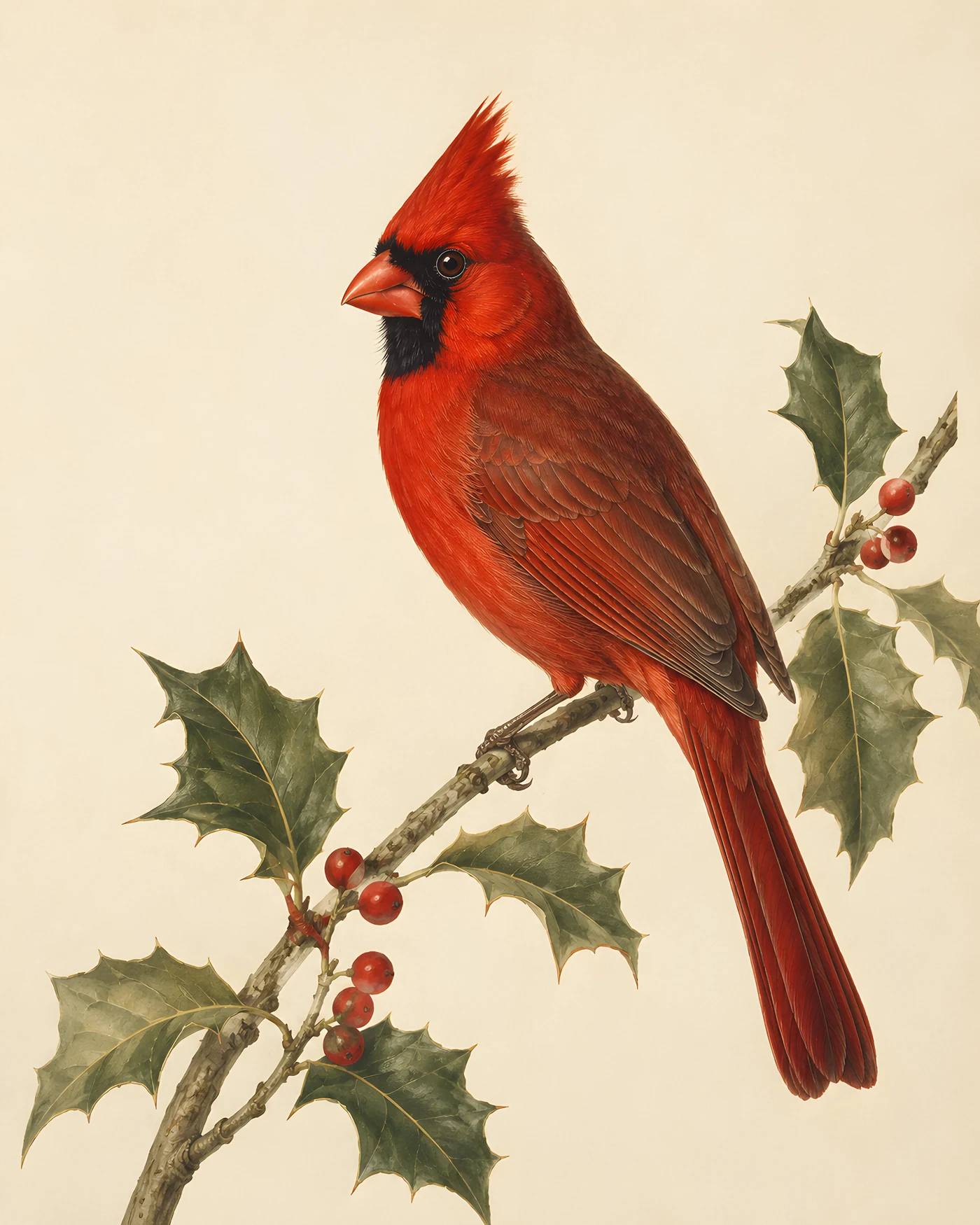
Two seconds. One feature. Crest yes, you have a cardinal. Crest no, you have a robin. Everything else in this guide is decoration.
May 19, 2026 5 min read
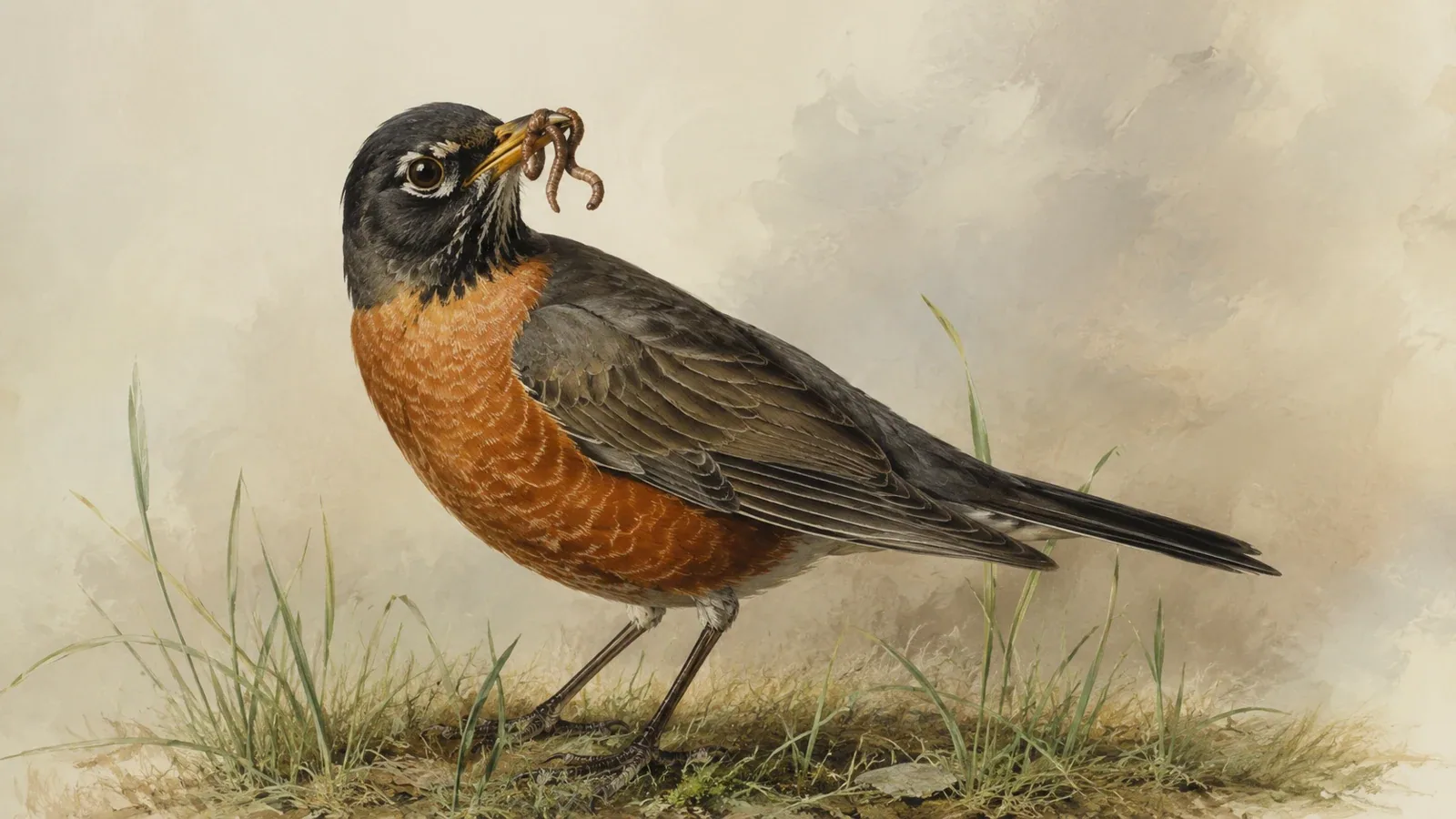
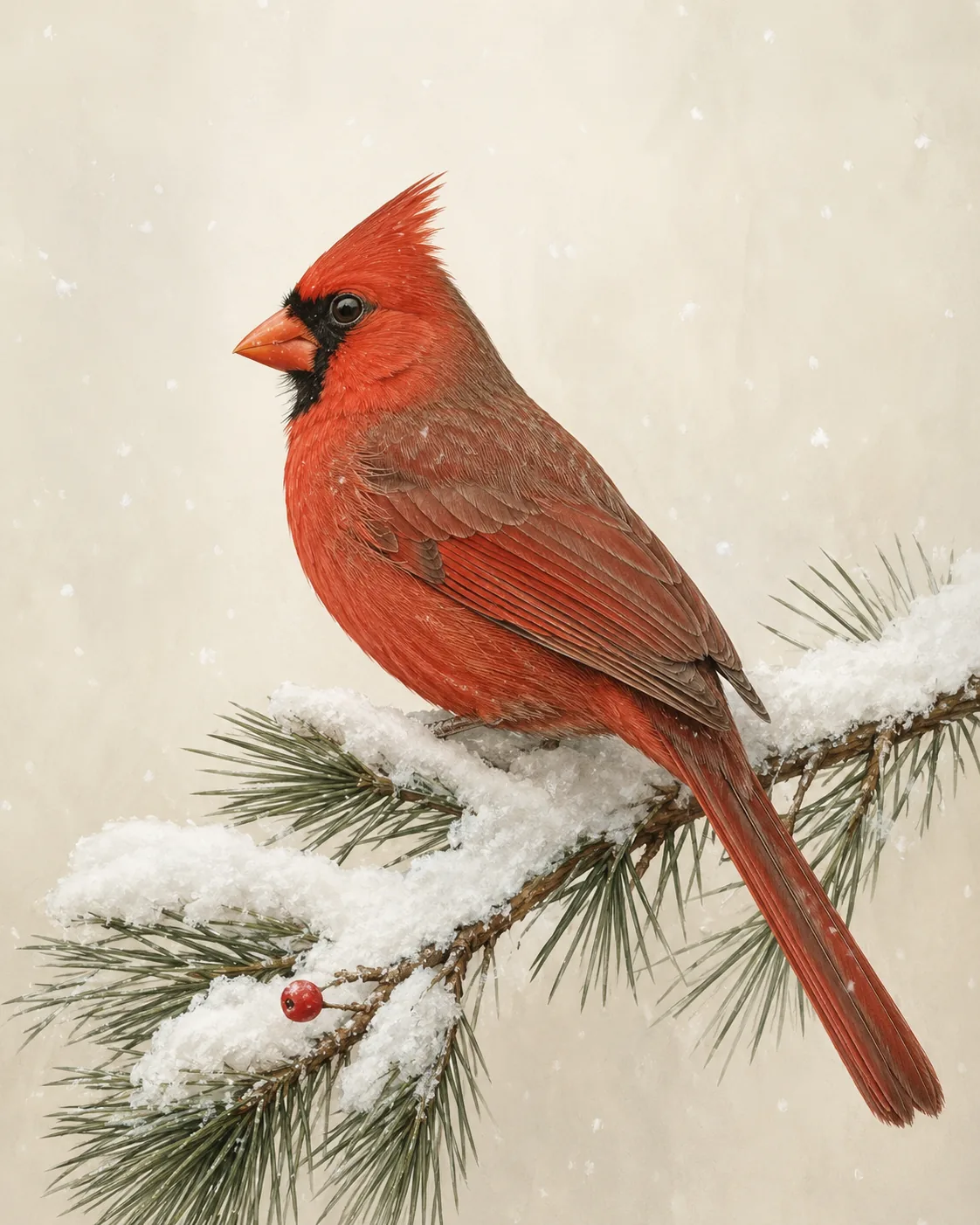
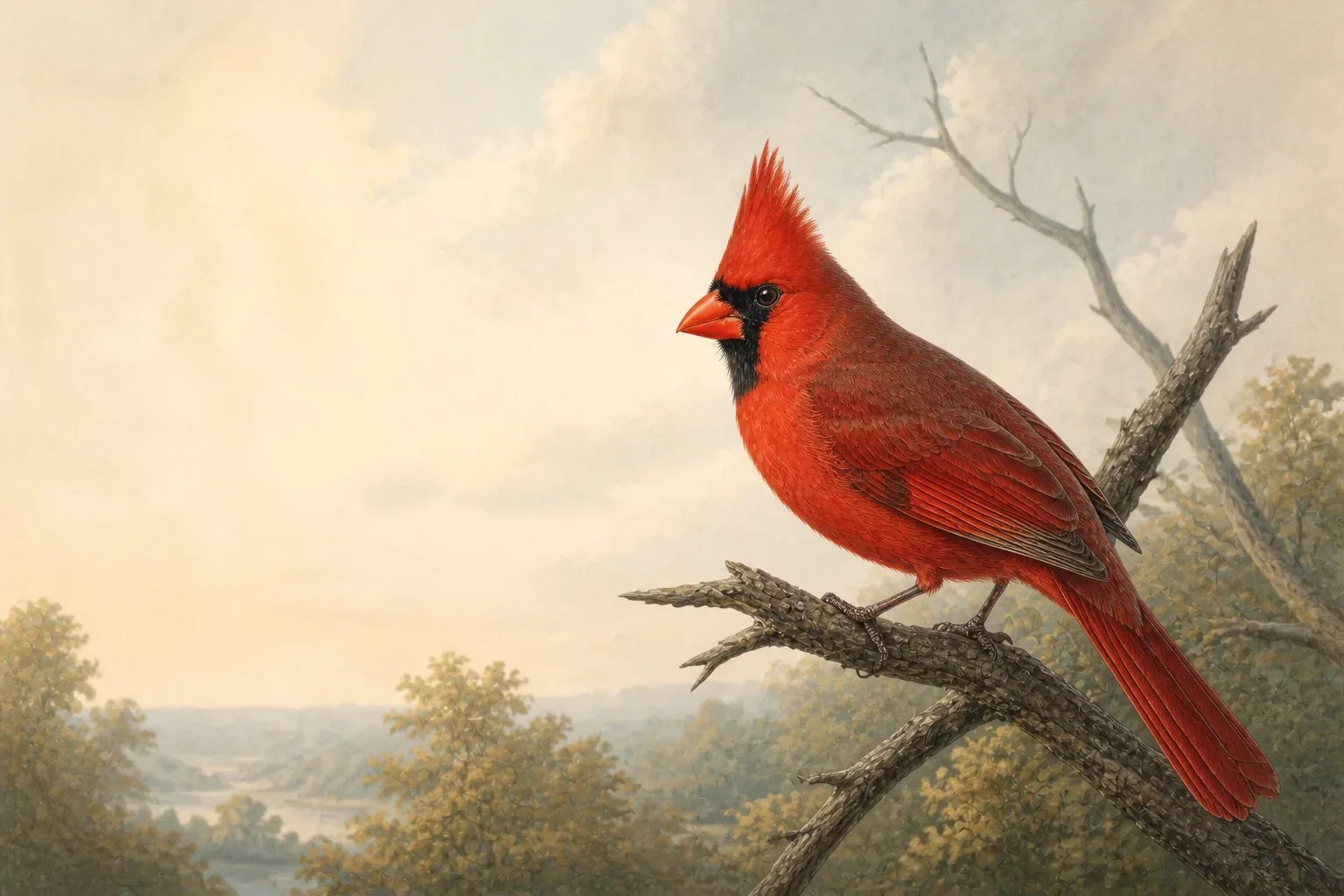
The whole question takes two seconds if you look at the right thing. The American Robin has no crest. The Northern Cardinal has a tall pointed crest, raised when alarmed, lowered when relaxed. That is the entire diagnostic.
Every other feature on this page exists to confirm what the crest already told you. If you ever find yourself in a hurry, stop reading at this paragraph.
| Bird | Crest |
|---|---|
| American Robin | No |
| Northern Cardinal | Yes |
Crest yes, cardinal. Crest no, robin. The rule works on males. The rule works on females. The rule works on juveniles. The rule works at distance. The rule works in poor light. The rule does not work if all you have is the breast colour, because both birds are red on the front, which is what makes them confusable in the first place.
| Feature | American Robin | Northern Cardinal |
|---|---|---|
| Crest | Smooth round head | Tall pointed crest |
| Family | Thrush (Turdidae) | Cardinal (Cardinalidae) |
| Length | 23 to 28 cm | 21 to 23 cm |
| Bill | Slim, straight, yellow | Heavy, conical, coral-pink |
| Male body | Slate grey back, brick-orange breast only | Bright red all over |
| Female body | Pale orange breast, grey back | Warm buff-brown |
| Foraging | Runs across lawns hunting worms | Perches in shrubs cracking seeds |
| Song | Cheerily cheer-up cheerio slurred phrases | Clear whistled cheer cheer cheer |
| Migration | Northern populations migrate | Year-round resident, never migrates |
A red-orange bird running across an open lawn at 7 am is a robin. A red bird at a sunflower feeder near a shrub is a cardinal. The habitats almost do not overlap.
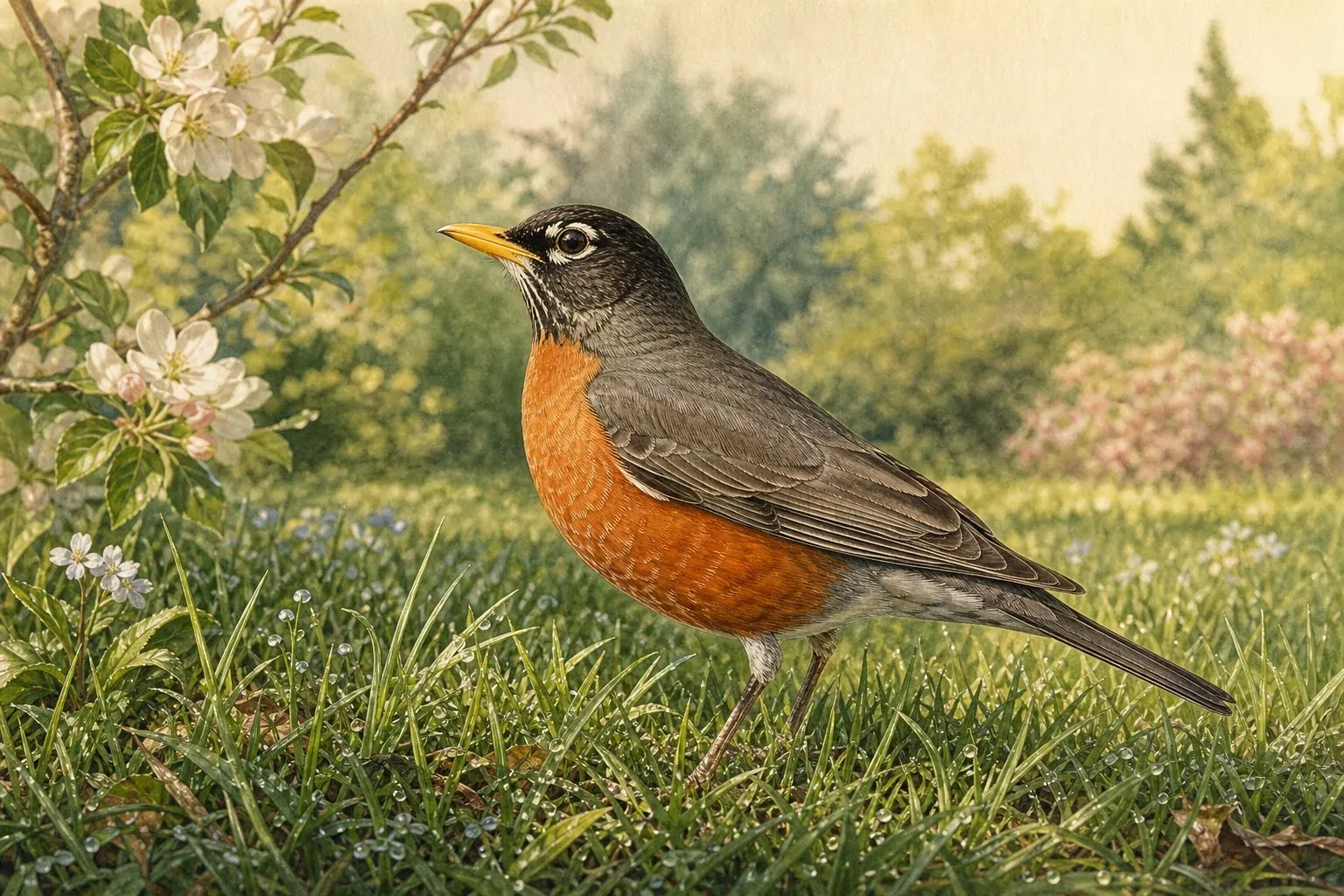
Robins hunt the ground. They drop from a low perch, run a few metres across short turf, stop, head-tilt, and either pluck a worm or move on. They will not visit a seed feeder. Their colour is brick-orange only on the breast - the back, head, wings and tail are all slate grey.
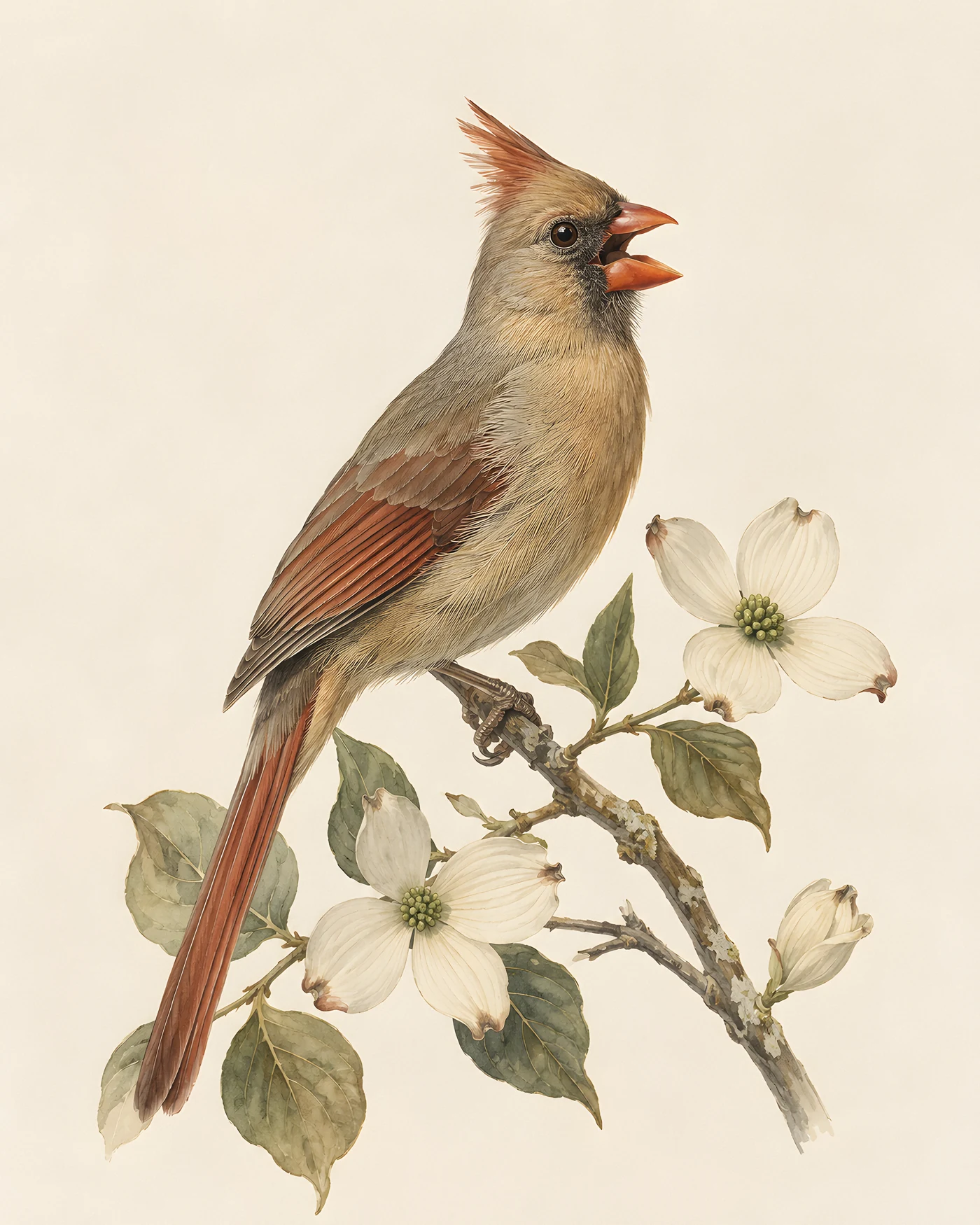
Cardinals hunt the seed feeder. They perch in dense shrubs and make trips out to the feeder, crack a sunflower seed, and retreat. The male is bright crimson on every visible surface. The female is warm buff-brown with rosy wings and a clear pink bill. Cardinals almost never hunt on open lawns and almost never appear in places without cover.
The two birds happily share a garden because they want different things from it.
If you cannot see anything else, the bill ends the question. A slim yellow bill is a robin. A heavy coral-pink conical bill is a cardinal.
The bills are doing different jobs. The robin’s slim bill is built for pulling worms and small insects. The cardinal’s heavy bill is built for cracking sunflower seeds and small fruits. The shapes are downstream of the food, and the food is downstream of the species’ ancestry: the robin is a thrush (worm-and-fruit eaters), the cardinal is a cardinalid (seed-and-fruit eater).
Both birds sing from high perches. The songs sound nothing like each other.
Cardinal phrases are louder and more piercing. Robin phrases are warmer and run together. A cardinal singing his territory boundary is unmistakable once you have heard one. A robin’s dawn chorus is the unmistakable soundtrack of suburban North American mornings.
The males could not be more different. The females, glimpsed briefly, can look similar at distance: both birds are brownish, both are roughly the same size, both have some warmth in the breast.
The same crest rule applies. The female robin has no crest. The female cardinal has a clear crest with rust-red tips, and her bill is pink rather than yellow.
| Feature | Female robin | Female cardinal |
|---|---|---|
| Crest | None | Yes |
| Breast | Pale dusty orange | Buff with no orange wash |
| Bill | Yellow, slim | Coral-pink, heavy |
| Overall | Brownish-grey back, orange breast | Warm buff-brown with rosy wings |
The ranges overlap across most of the eastern half of the United States, but outside that overlap one or the other is usually scarce.
See Red birds in Texas for the most cardinal-rich state in the US.
A few other red and orange birds get into this conversation.
Full disambiguation at Birds that look like cardinals and Birds that look like robins.
From field guide to wall
See the birds from this guide as fine-art plates, printed to order and available framed or unframed.
Explore the collectionAs an Amazon Associate we earn from qualifying purchases. Linked products are ones we genuinely recommend.
 IdentificationBirds That Look Like Blue Jays
 IdentificationBirds That Look Like Bluebirds (And How to Tell Them Apart)
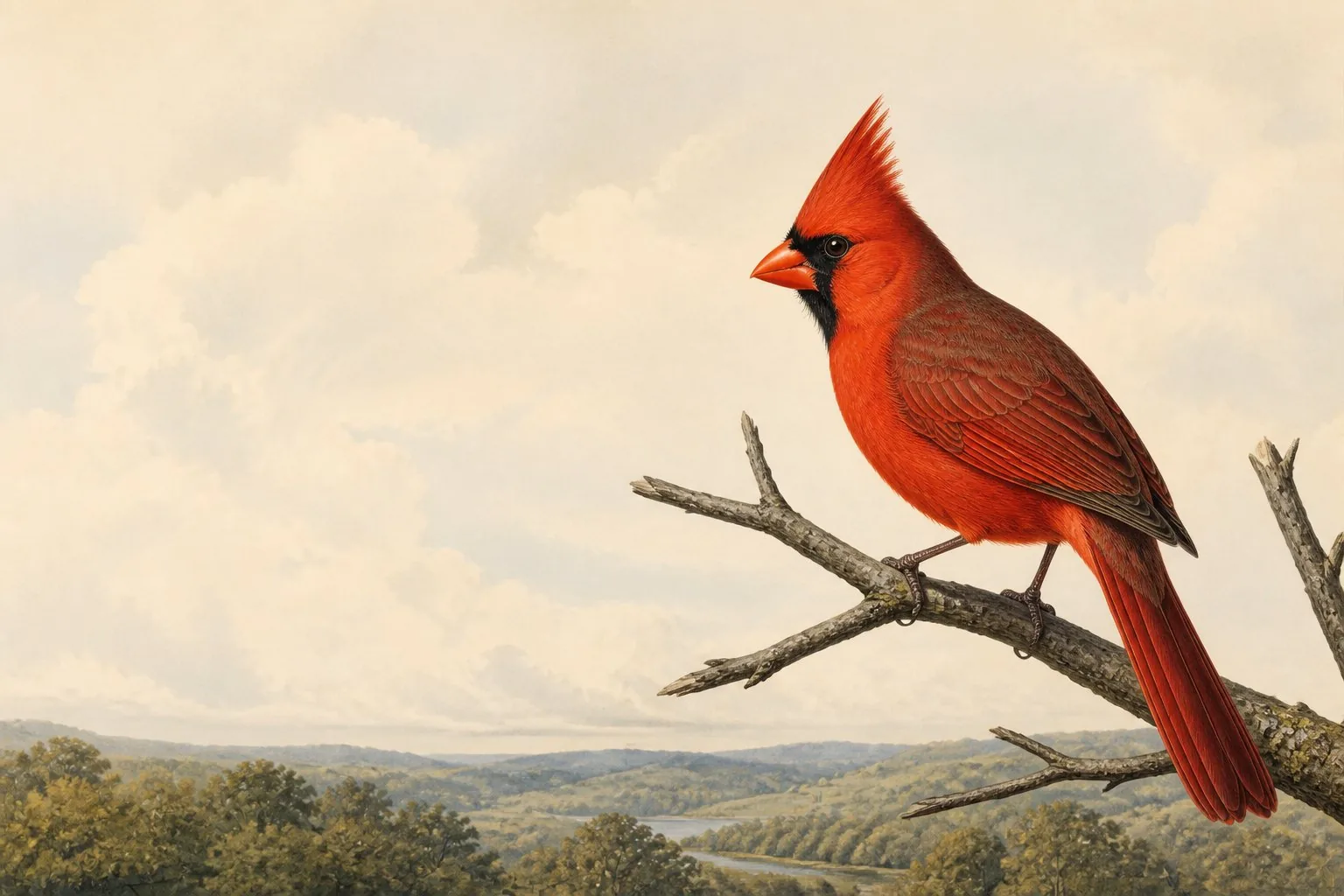 IdentificationBirds That Look Like Cardinals
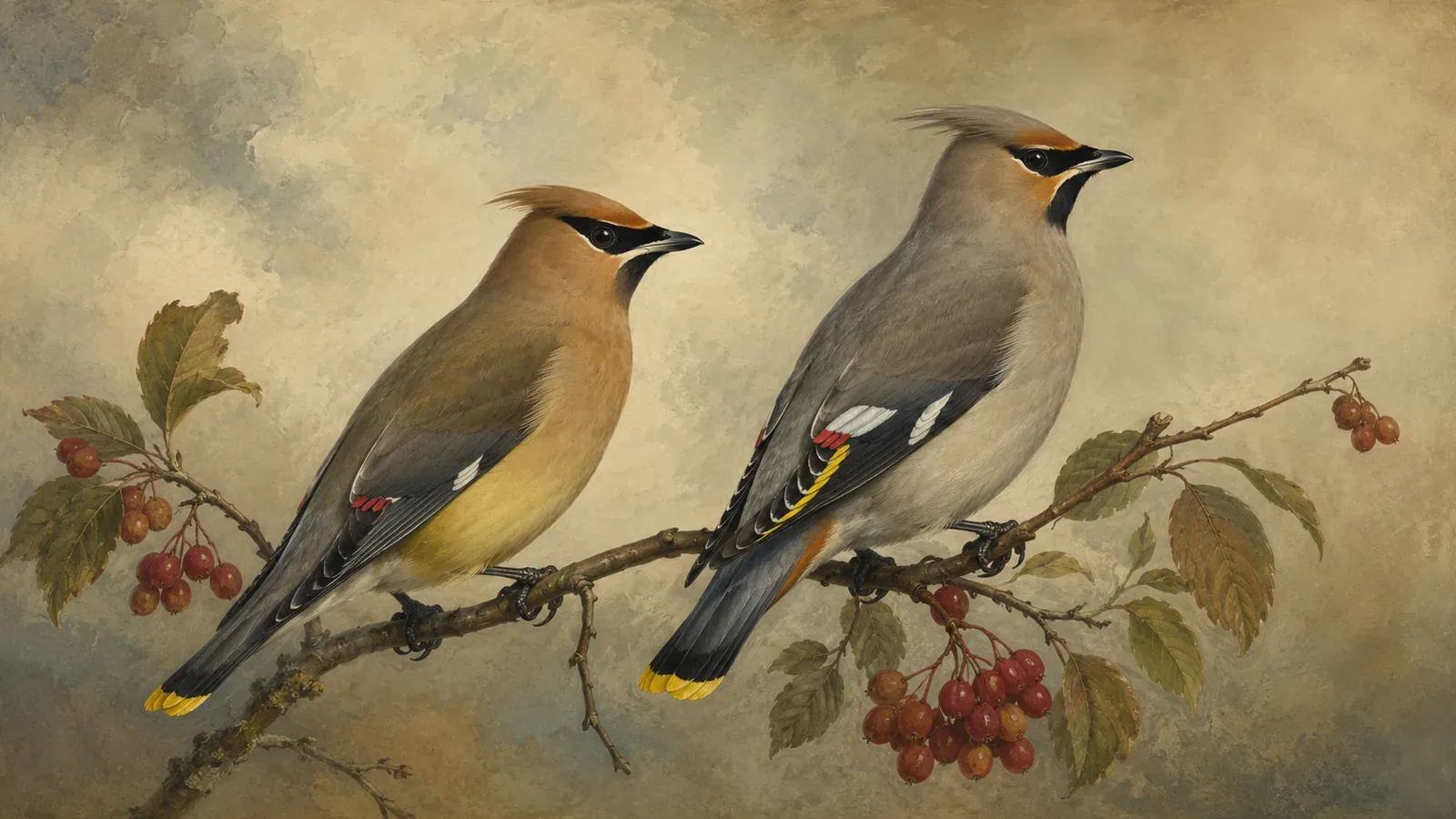 IdentificationBirds That Look Like Cedar Waxwings
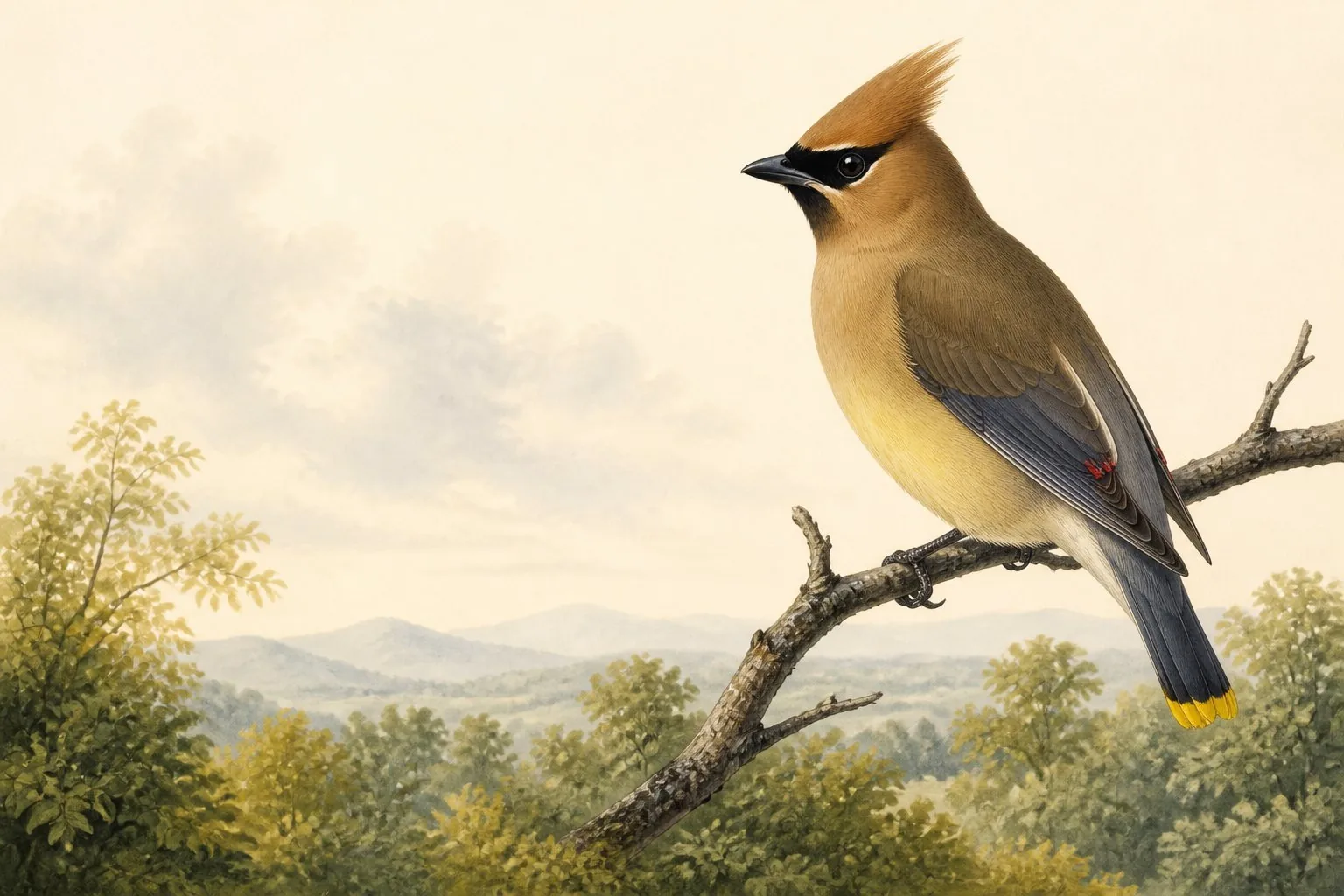 IdentificationBirds that look like Cedar Waxwings (the flock test)
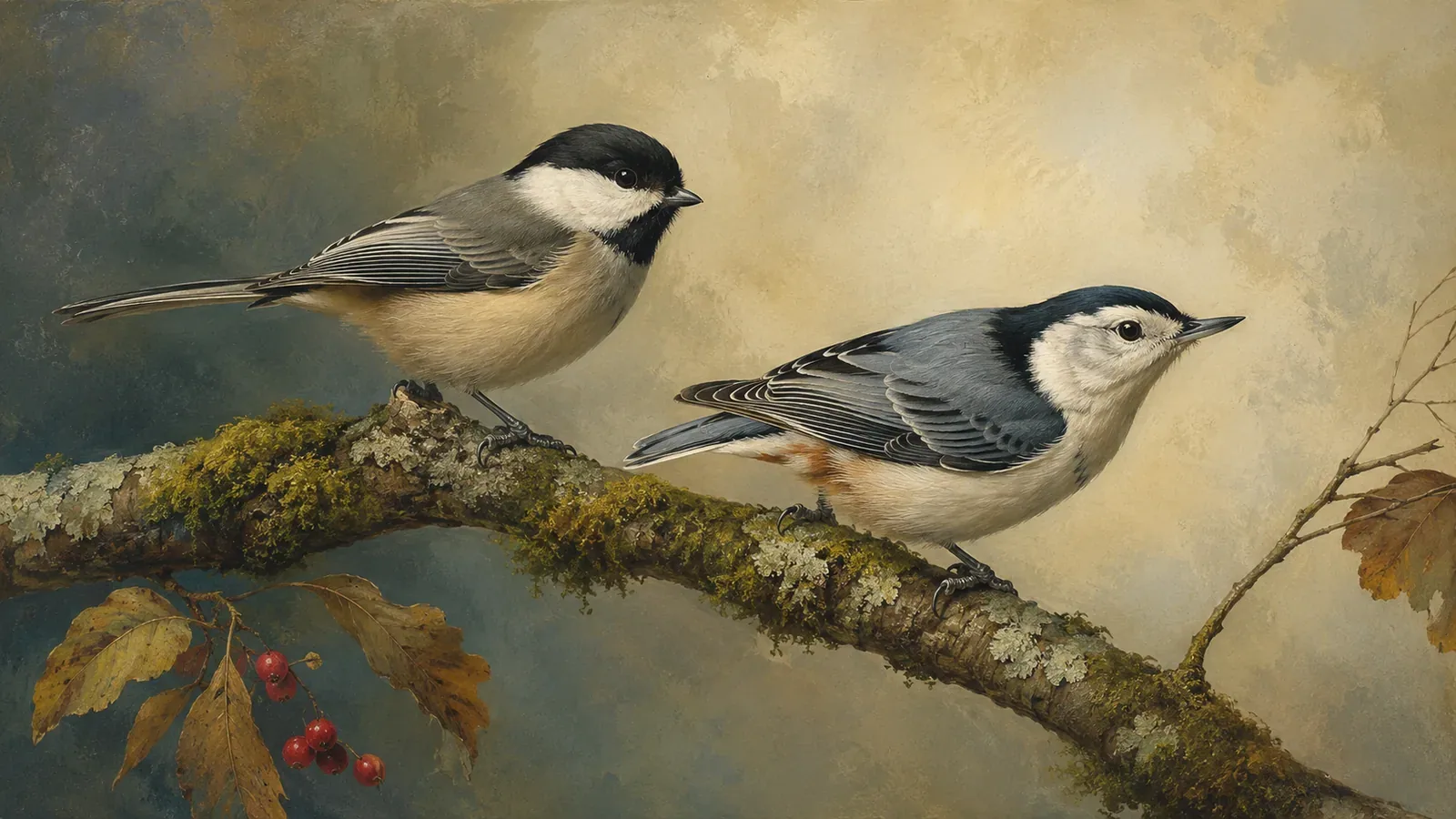 IdentificationBirds That Look Like Chickadees (And How to Tell Them Apart)
 May 19, 2026
 5 min read