Free shipping to the US, Canada & Europe
Pets
Foraging toys give pet birds the mental work they are built for. Here is what they do for your bird, which types to start with, and why boredom is the real welfare issue.
August 9, 2024 5 min read
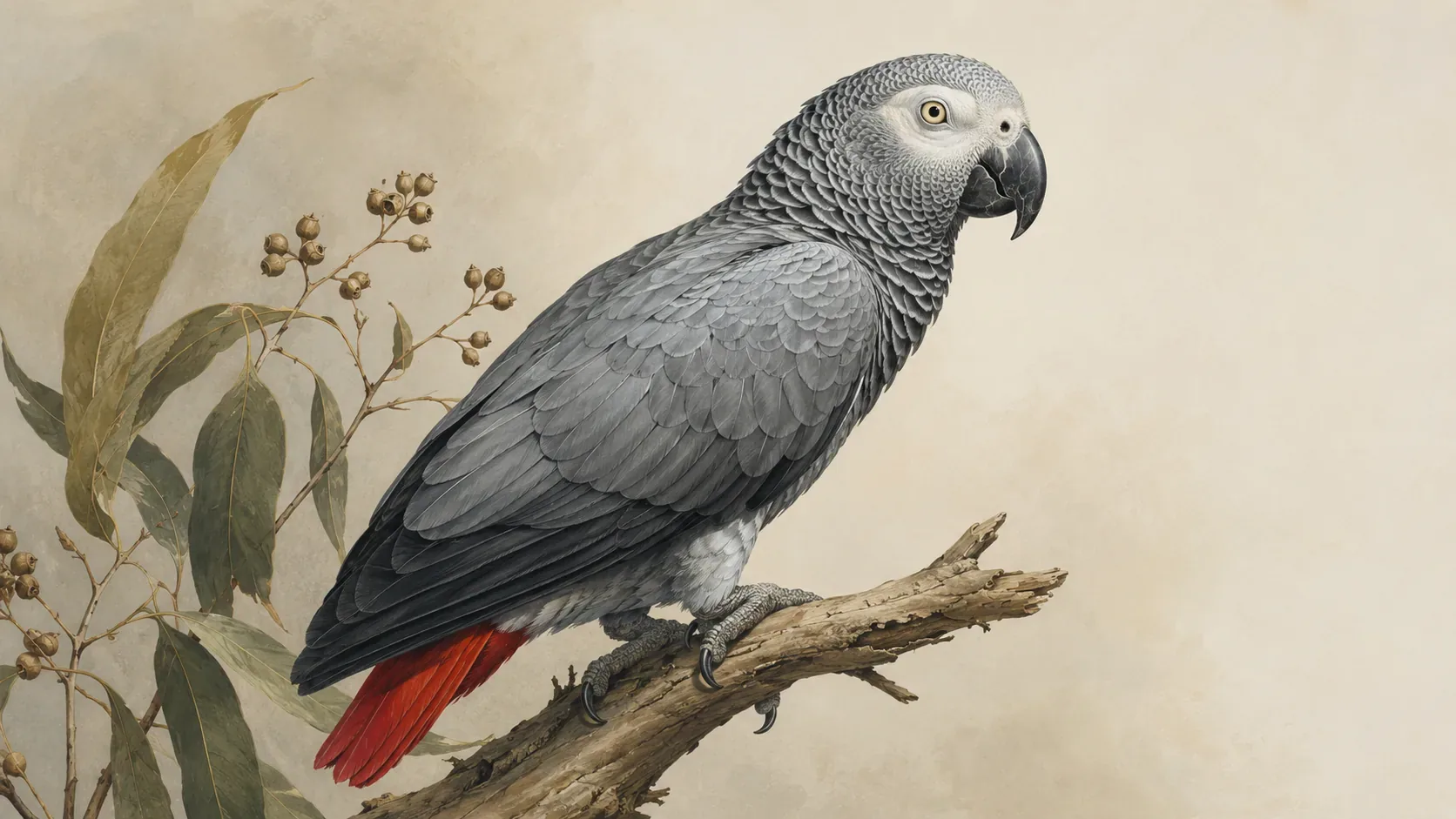
Watch a captive parrot pace along its perch for ten minutes and you are watching a brain with nothing to do.
Wild parrots, toucans, and most hookbills spend the better part of their day in active search. They probe bark, shred palm fronds, work seeds out of pods, and investigate anything that moves. The Cornell Lab estimates that many wild parrots spend four to six hours daily on food acquisition alone. A pet bird fed from a bowl gets the same caloric result in under two minutes. That leaves hours of unsatisfied cognitive drive - and that drive goes somewhere.
The thesis here is simple: foraging toys are not accessories. They are a welfare correction. A bird without foraging work is not a comfortable bird - it is a bored one, and boredom in a bird with a parrot’s intelligence produces a specific and visible set of problems.
Feather plucking is the most discussed. A bird that pulls its own feathers is commonly redirecting frustration or anxiety, and enrichment studies have shown consistent reductions in plucking frequency when foraging opportunities are introduced. But it is not the only signal. Repetitive calling, aggression toward cage furniture, stereotyped movement back and forth on a perch - these are the same category of behaviour. A bird that screams for attention at 6am and then again at dusk is not a badly trained bird. It is an under-occupied one.
The correction is not complicated. You hide the food.
A foraging toy does one thing: it puts an obstacle between the bird and the treat. The bird has to work out the obstacle. That act - solving a small mechanical problem, then receiving a food reward - engages the same circuits that would be active in the field. The reward is reinforcing. The problem-solving is itself satisfying. Birds will work harder than necessary for a treat they could get elsewhere, because the work has value independent of the food.
A bird that forages is not a bird doing tricks. It is a bird doing the thing it was built for.
Some links in this guide go to Amazon. They point to gear we would actually put in front of a bird, and we earn a small commission if you buy through them.
Start with the simplest possible version: a treat wrapped loosely in a sheet of plain paper. The bird shreds the paper to reach the food. That is the whole exercise, and for a bird that has never encountered a foraging toy it is enough for the first few sessions. Once it understands that the obstacle is worth attacking, you move to harder containers.
Good starting types for most pet birds:
If you are looking for guidance on matching the toy to the bird’s age or developmental stage, the post on how to choose age-appropriate bird toys covers the sizing and complexity question in more detail.
This matters. A foraging toy is designed to be destroyed. Whatever the bird gets through to, it may also consume fragments of. Stick to these materials:
| Material | Notes |
|---|---|
| Untreated pine, balsa, fir | All safe to chew and shred |
| Coconut shell | Durable and natural |
| Cotton, hemp, sisal | Unbleached, undyed only |
| Plain cardboard and paper | No inks, no adhesive |
| Bamboo | Sturdy; good for larger birds |
| Dried corn husks | Good texture variety |
Avoid dyed wood, galvanised metal hardware, anything with zinc content, and toys with loose fibres that can wrap around a toe or a tongue.
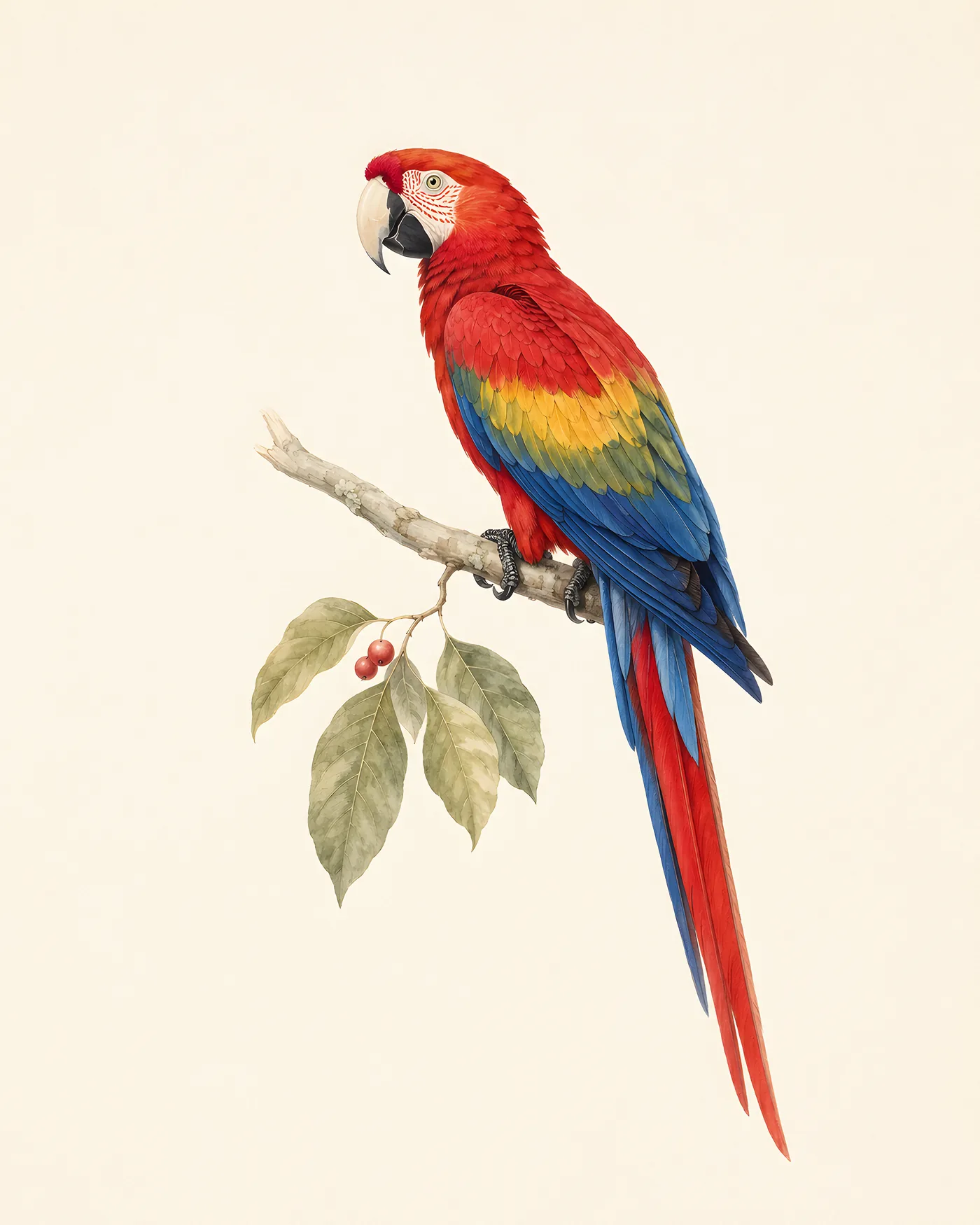
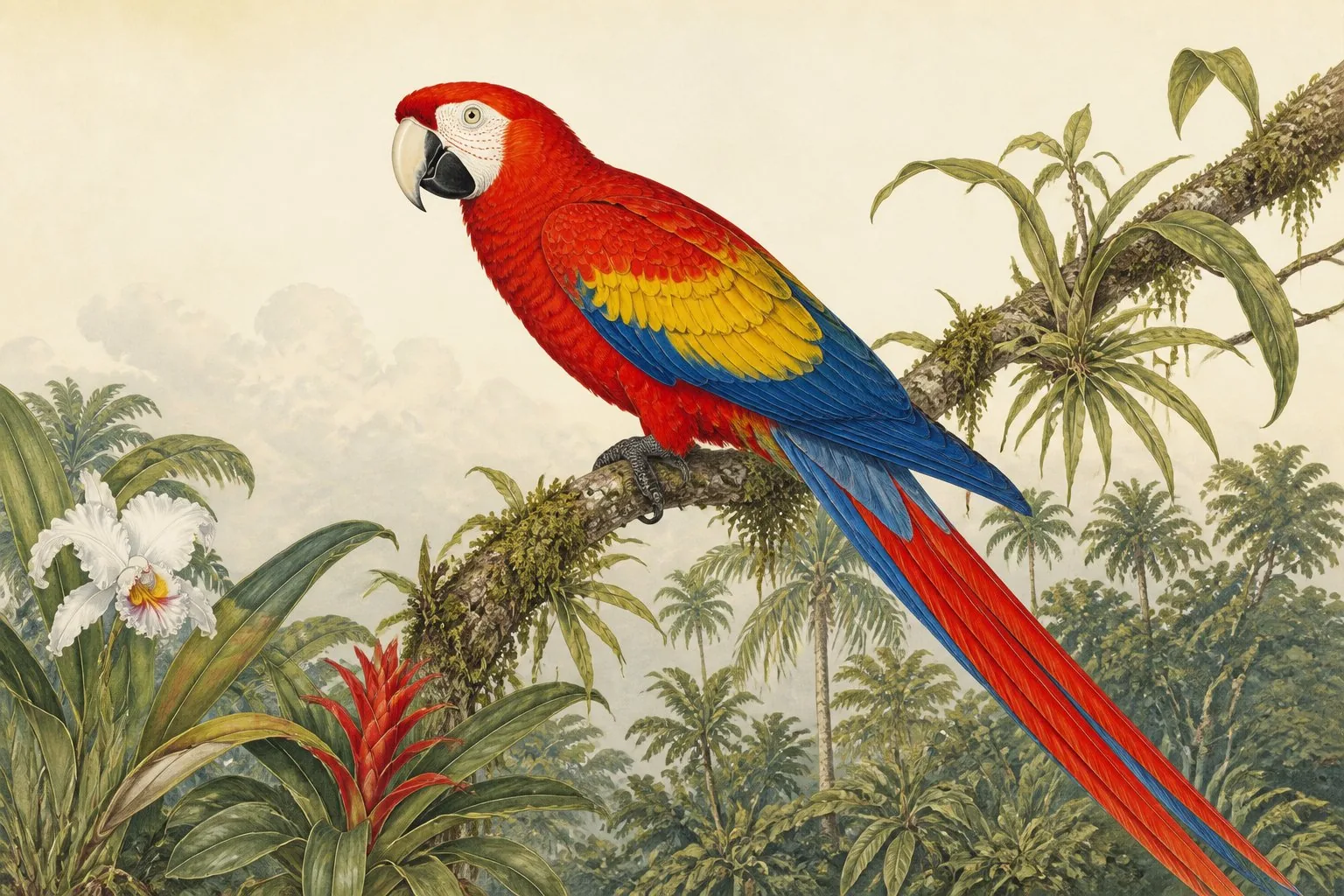
Foraging enrichment works best when paired with genuine variety in what is foraged for. A bird working hard to extract a pellet it already has in its dish is not as motivated as one working for a piece of papaya or a pine nut. A large bird like a scarlet macaw will happily crack a hidden nut it could find loose in seconds, simply because the effort is the point. Rotating the reward - not just the toy - keeps the behaviour fresh. For a broader look at what kinds of foods are appropriate across species, the guide to what parrots can eat is a useful reference.
The mistake most owners make is offering a toy that is too complex on the first introduction. The bird fails to access the treat, loses interest, and the toy gets ignored. Build in stages:
Once the behaviour is established you can rotate toy types freely. A foraging parrot will transfer its problem-solving to new toys without retraining. The skill generalises. Mounting a few of these toys on an open play stand outside the cage gives the bird a second foraging arena and a change of scene.
From field guide to wall
See the birds from this guide as fine-art plates, printed to order and available framed or unframed.
Explore the collectionAs an Amazon Associate we earn from qualifying purchases. Linked products are ones we genuinely recommend.
 August 9, 2024
 5 min read