Free shipping to the US, Canada & Europe
Biology
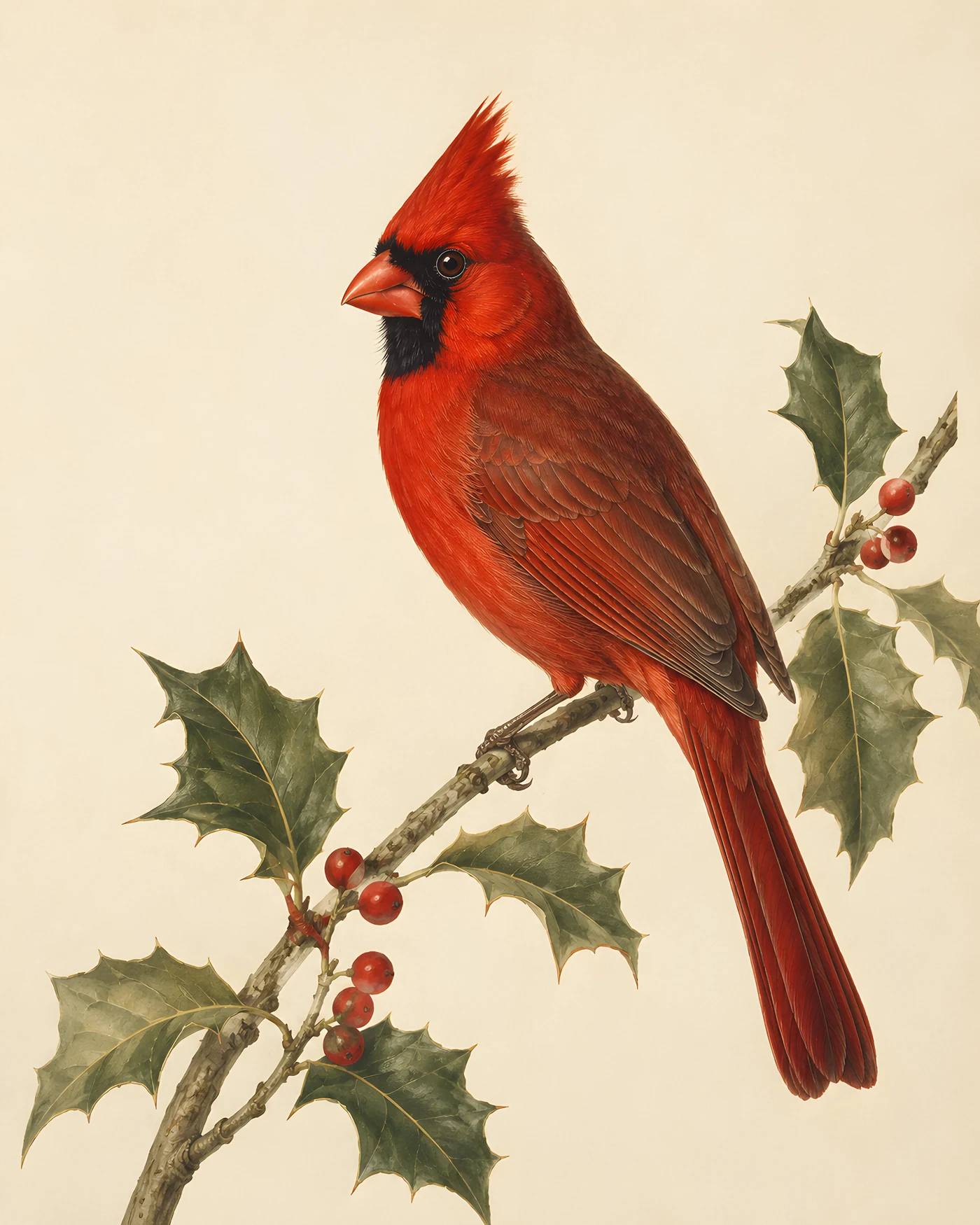
From April to August a male cardinal is one of the most violent songbirds in North America.
September 7, 2023 5 min read
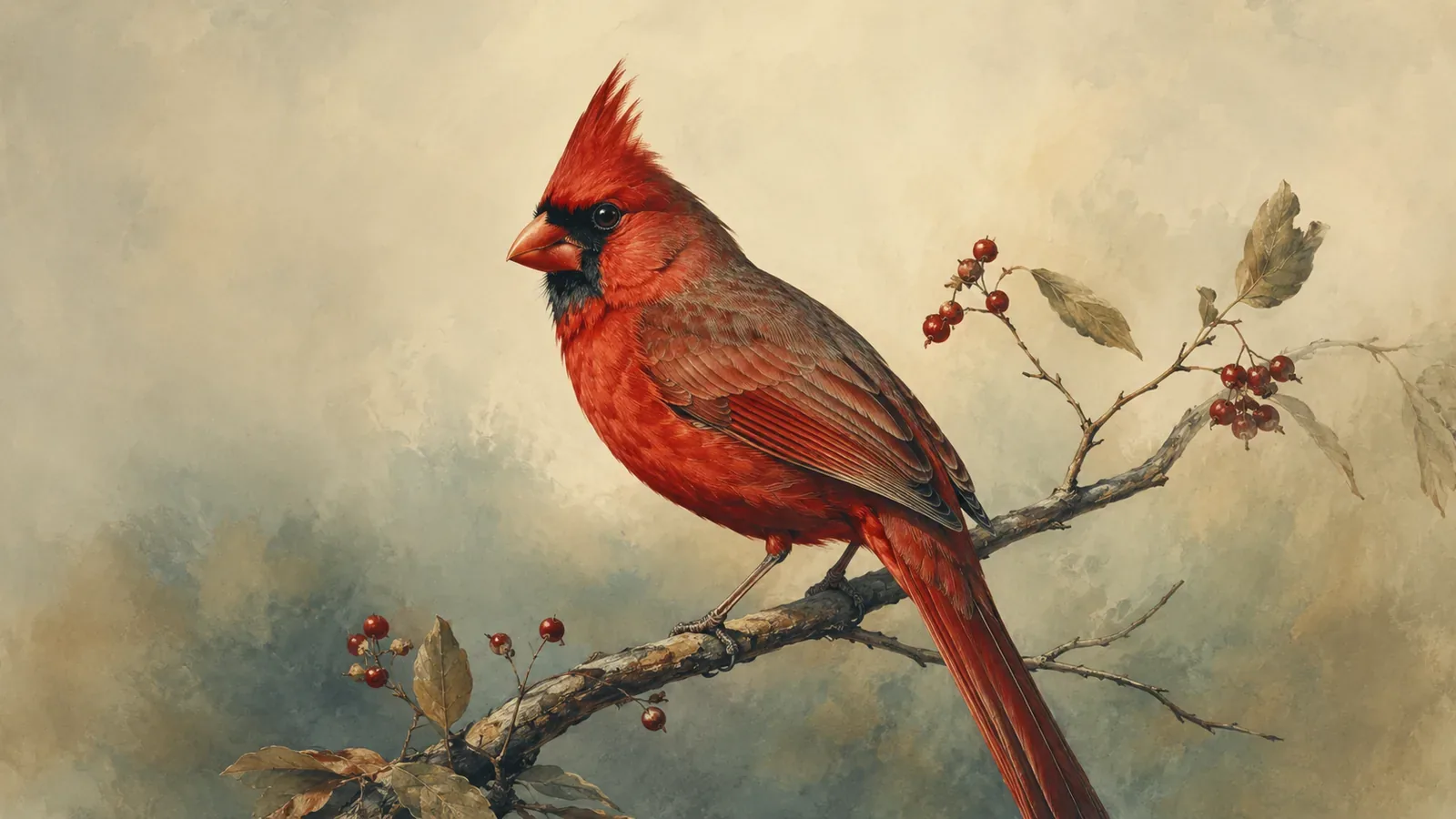
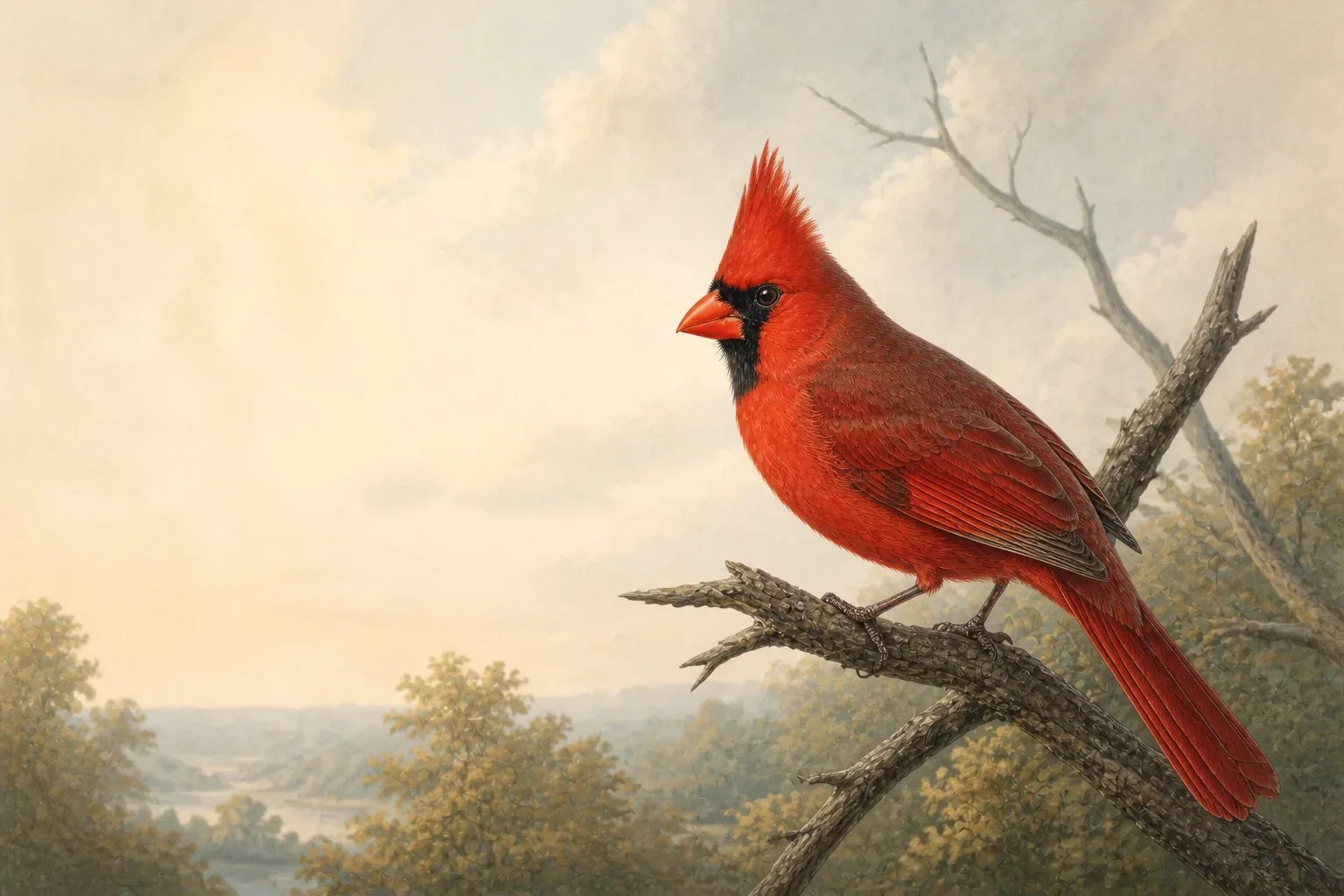
In April a male cardinal in suburban Ohio will start attacking a car wing mirror. He will hit it every morning for ninety seconds, withdraw to a nearby branch, and come back. He will do this for three weeks. He will do it whether you cover the mirror, whether you move the car, whether you scream at him from the kitchen window. The behaviour is not crazy. From his perspective it is fully rational: there is a male cardinal inside the mirror who keeps reappearing every time he checks, and the only acceptable response to that is to fight him until he leaves.
This is the cleanest demonstration anyone is going to get of how cardinal territoriality works.
Cardinals do not pass the mirror test. Neither do most birds. The mirror test - whether an animal recognises its own reflection - is a fairly demanding cognitive task. Magpies pass it. Crows pass it. Cardinals do not.
What the cardinal sees in the mirror is a male cardinal who shows up every time the cardinal himself approaches and disappears as soon as he retreats. From the bird’s point of view this is exactly what you would expect from a rival on the same patrol schedule. The reflection moves when he moves, retreats when he retreats, vanishes when he is not there to challenge it. The cardinal concludes that he has a rival who is somehow inside the glass.
He will fight the reflection until one of three things happens:
Closing the curtain from inside the house does not work. The reflection is on the outside of the glass. The fix has to be applied to the outside surface.
A male cardinal in April establishes a defended patch of habitat of roughly one to four hectares. He patrols the edges, counter-sings against neighbours, and attacks anything that registers as a male cardinal trying to enter.
Patrol behaviour:
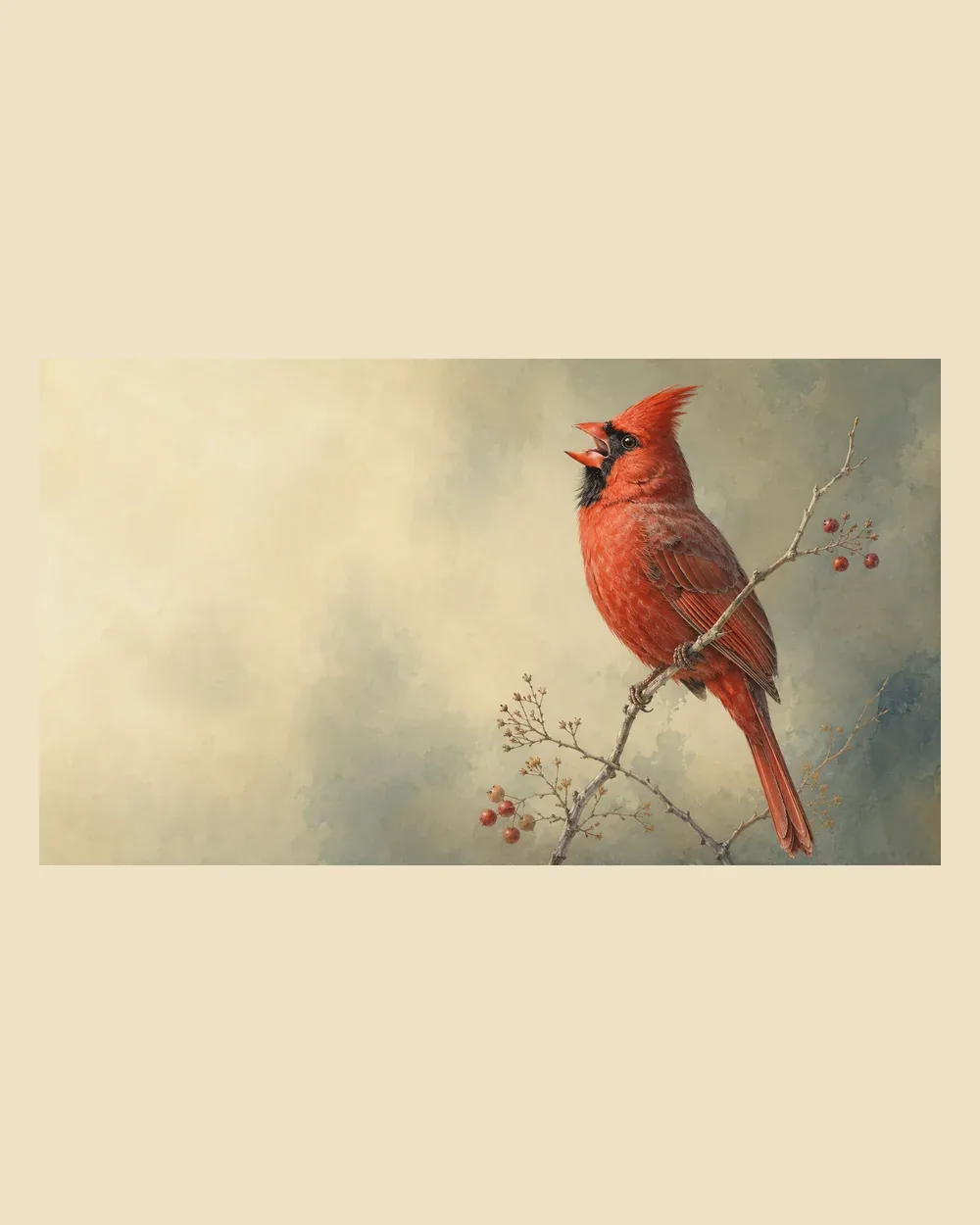
The drive is not constant. It is hormonal, triggered by lengthening daylight in late winter, and falls away again as testosterone declines in late summer.
| Period | Behaviour | What this means at your feeder |
|---|---|---|
| October to February | Sociable | Cardinals form loose winter flocks of 10 to 30 birds. Share feeders with most species. |
| March to September | Territorial | Pair up, defend territory. Males chase rivals. Females defend nests. |
The behavioural switch is roughly mid-March in southern populations and early April in the north. From that moment the same bird who shared the feeder with eight other cardinals in February will dive-bomb anything male and red that comes into his patch.
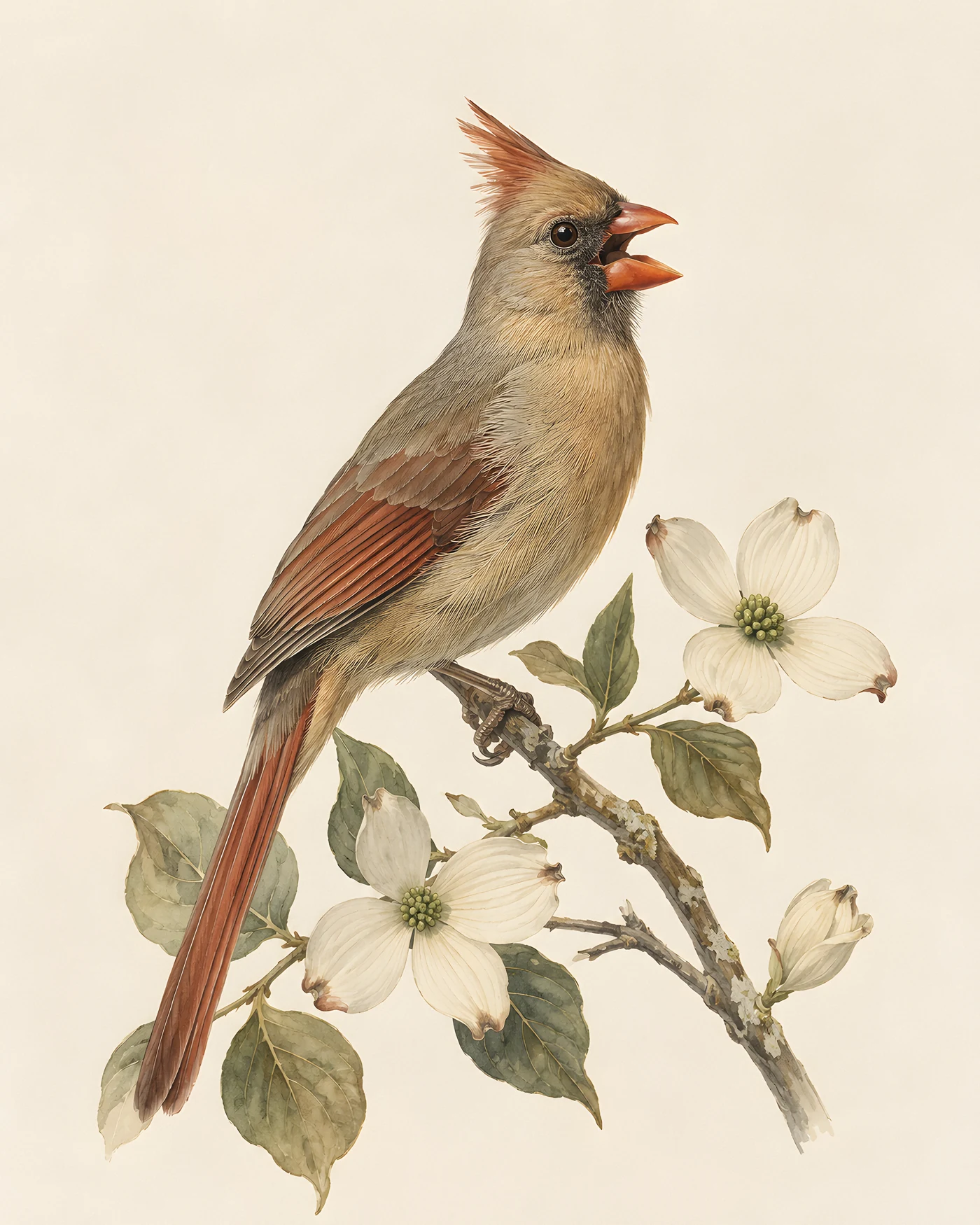
She defends the nest, not the territory.
Where the male patrols the wider perimeter, the female holds the nest site itself. A nesting female will confront anything that approaches the nest within a few metres: squirrels, blue jays, snakes, occasionally humans who get too close. Her defence is quieter than the male’s - sharp alarm calls and direct flights at the intruder - but it is more dangerous to actual nest predators because she stays on station.
The division of labour is consistent across most North American Cardinalidae. The male advertises and patrols. The female holds the nest.
If your feeder is inside an established cardinal territory in summer, the dominant male will try to control it. He may chase other cardinals away even from the same patch. The fix is not to remove him but to add more feeders, spaced 10 metres or more apart, so multiple territories overlap your garden and no single bird can hold all of them at once.
In winter the problem disappears. The same male will tolerate eight cardinals on the same hopper. His territoriality has been switched off by photoperiod and hormones until next March.
The only thing that works is breaking up the reflection from outside the glass. Options:
What does not work: closing blinds, putting up an interior decal, talking to the bird, washing the window. The reflection lives on the outside surface.
The behaviour ends naturally in late August. If you can hold out, the cardinal can.
From field guide to wall
See the birds from this guide as fine-art plates, printed to order and available framed or unframed.
Explore the collectionAs an Amazon Associate we earn from qualifying purchases. Linked products are ones we genuinely recommend.

 September 7, 2023
 5 min read