



The story of the bird
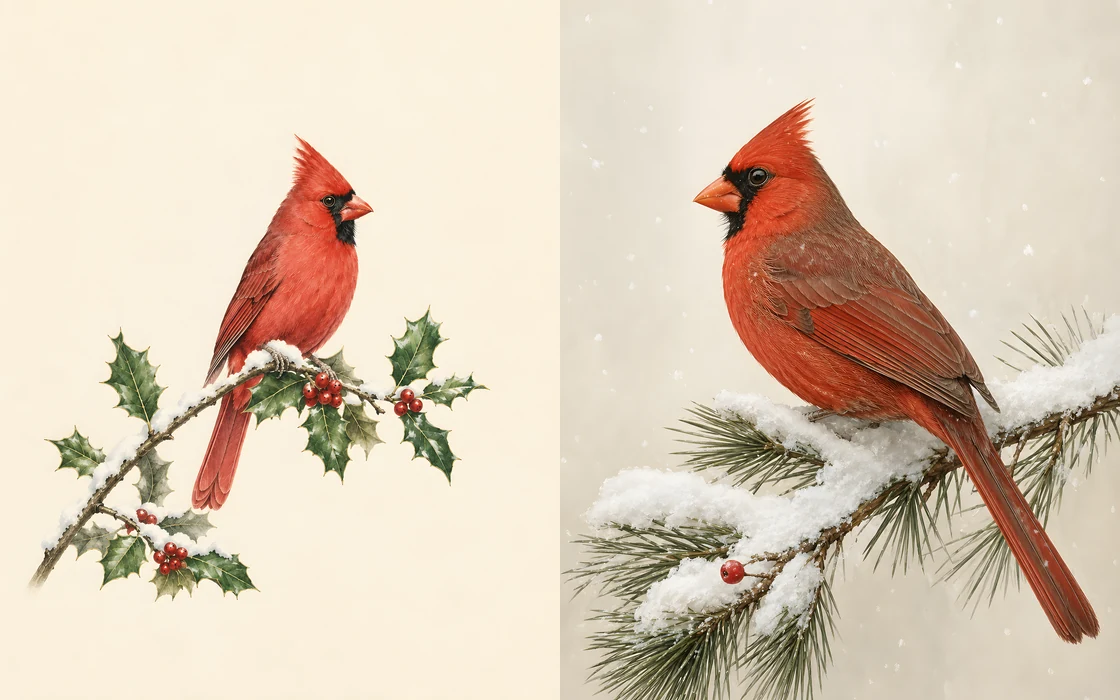
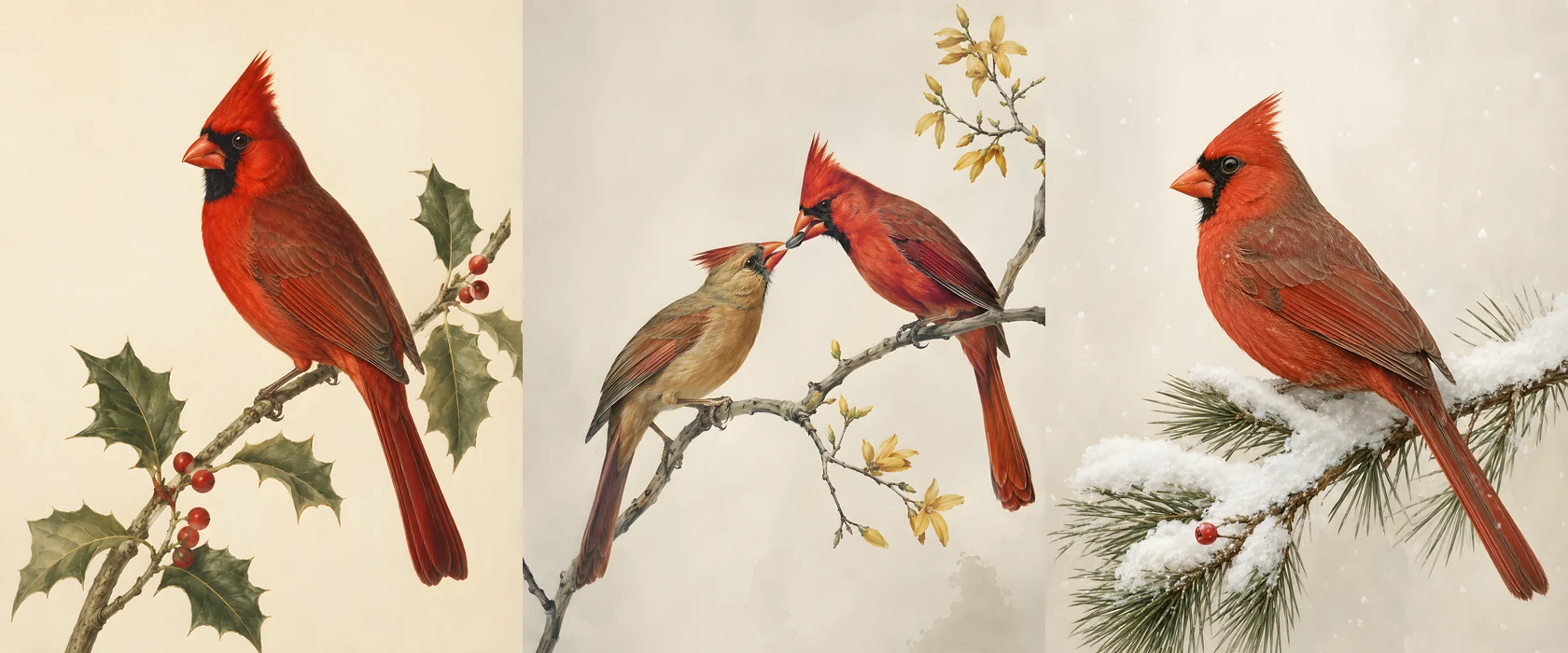
Three plates. One bird. One year. A gallery-wall set built for a stairwell or living room, and a gift that reads as considered rather than last-minute.
Three studies of Cardinalis cardinalis in the Audubon-style palette of cream, navy, sage and cardinal red - each plate complete in itself, the three together an argument about what the Northern Cardinal actually is across twelve months.
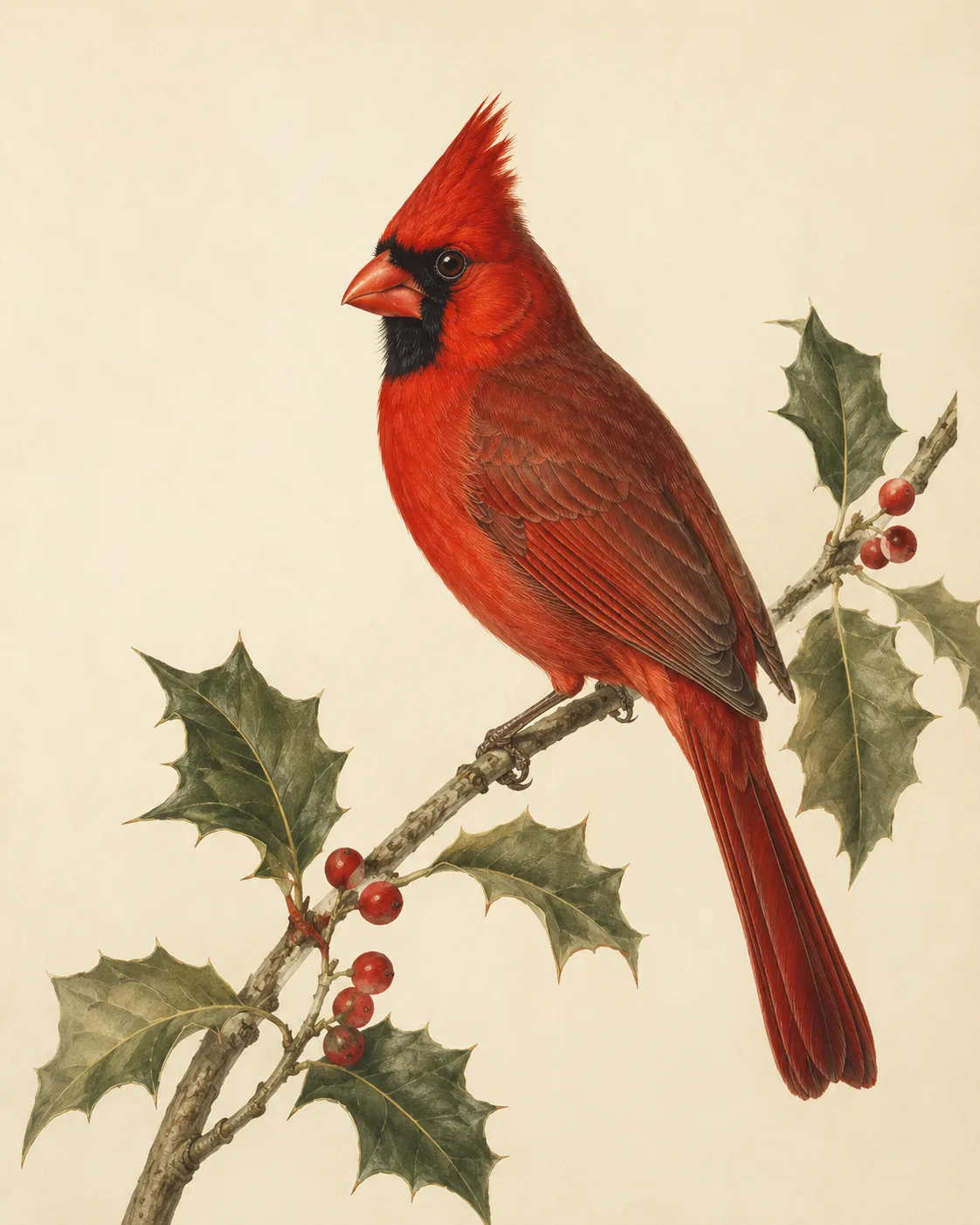
Cardinal Solo. The male in full crimson, alert on a berried holly branch. The portrait plate. His red comes from carotenoid pigments absorbed through his autumn diet. A well-fed cardinal in October becomes a brighter cardinal by March.
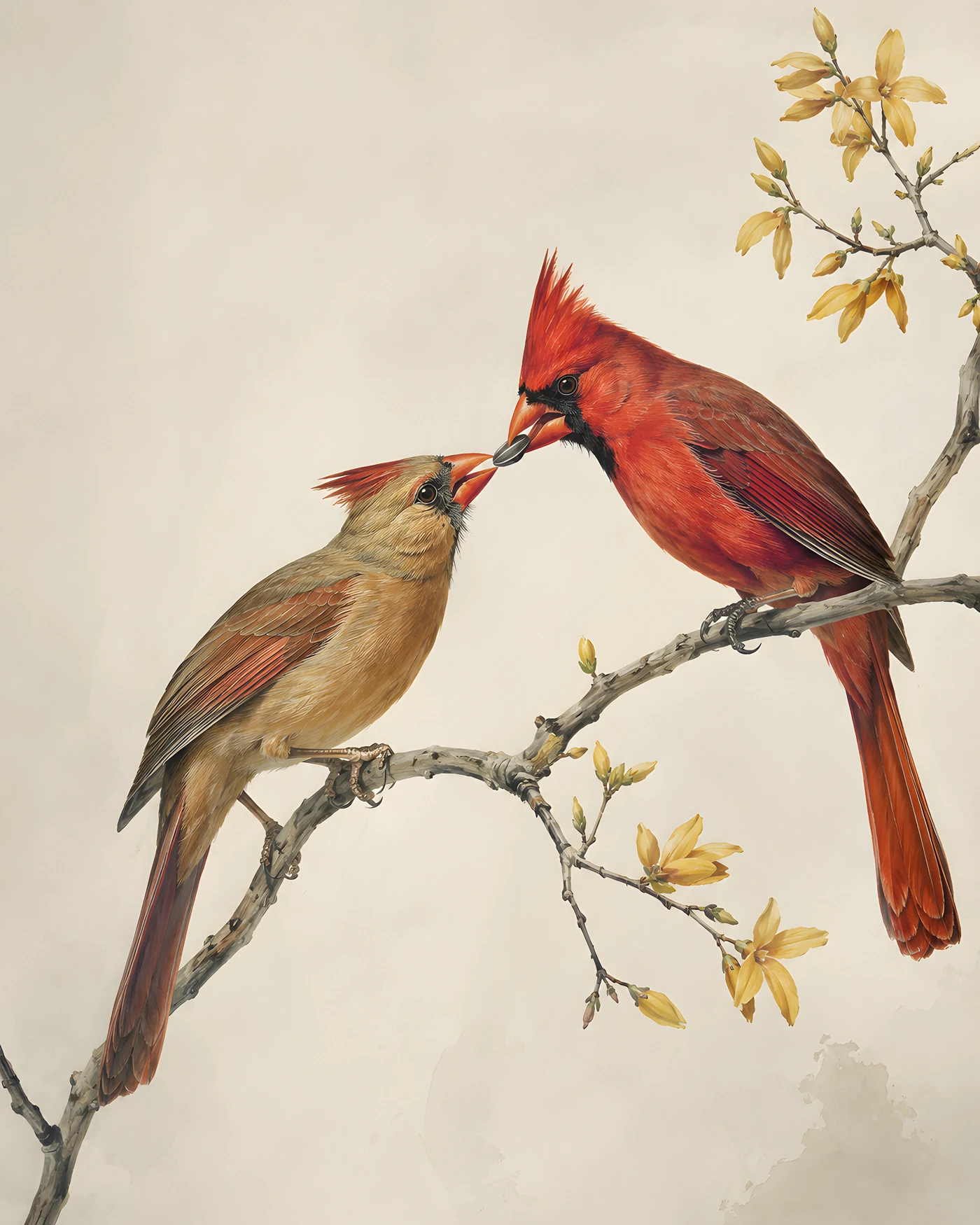
Cardinal Pair. Male and female together, the male passing a sunflower seed to the female’s bill. Mate-feeding is the behaviour: the male feeds the female while she incubates, a practice rare in North American songbirds and one of the reasons cardinal pairs tend to persist across multiple years.
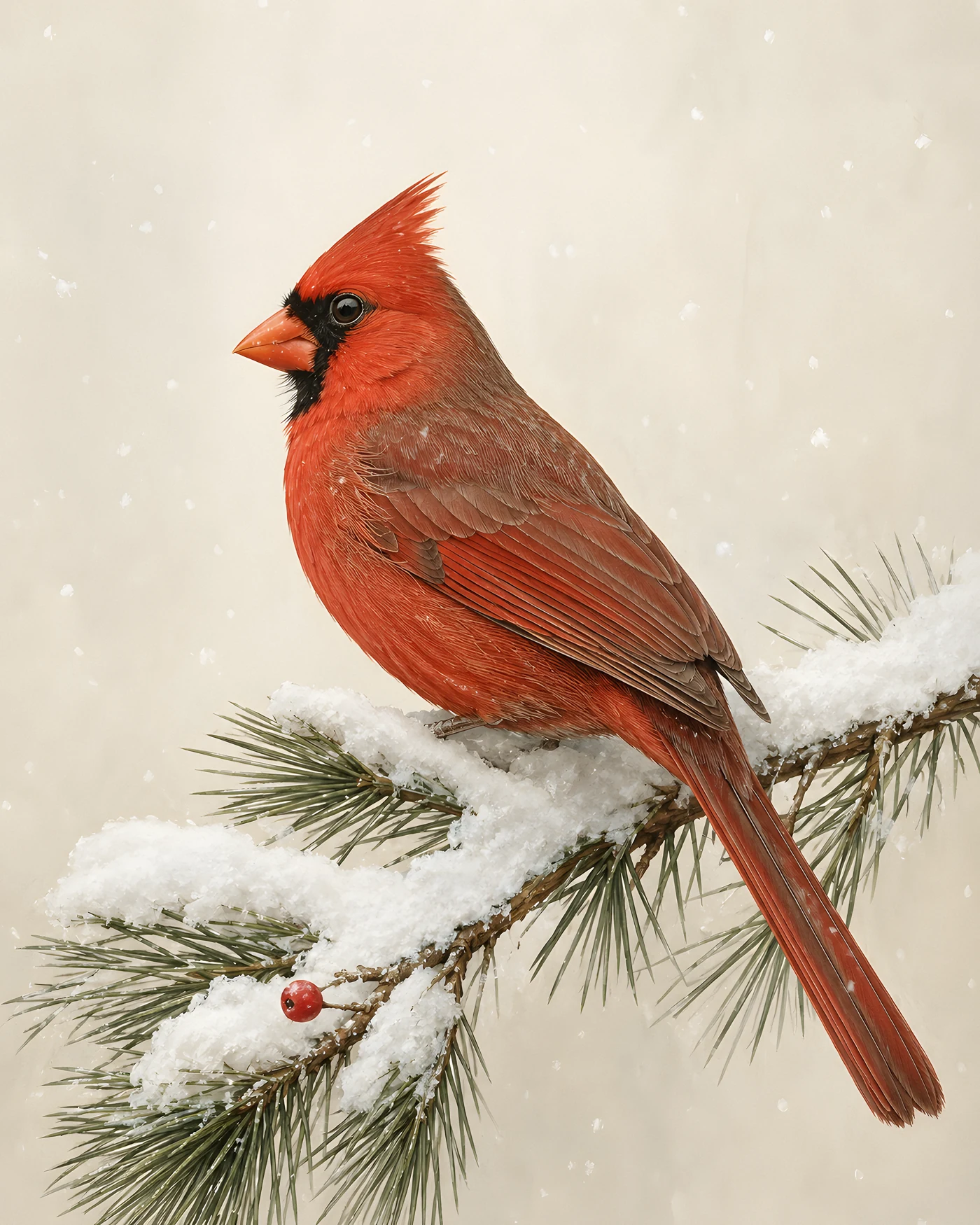
Cardinal in Snow. The male alone on a snow-covered pine bough, a single red berry in the fresh fall. The winter plate. The cardinal is the state bird of seven US states, more than any other species, and the high-contrast image of crimson against snow is the primary reason. He is there in January because he does not migrate. The bird at your December feeder is the same bird who bred there in April.
The colour palette is identical across all three plates. Each hangs alone. Together they read as one editorial statement about a bird who does not leave.
Made in the tradition of close, patient Audubon-style naturalist study.