



The story of the bird
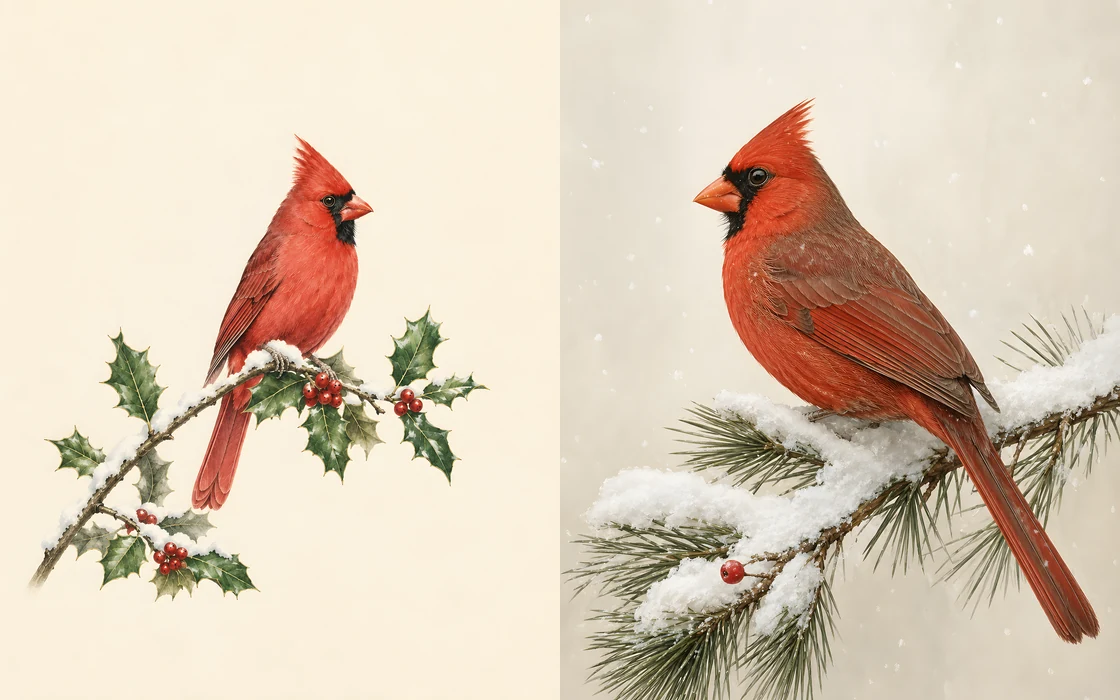
Two plates. The same bird at two moments in the year. Both in the Audubon-style palette of cream, navy and cardinal red.
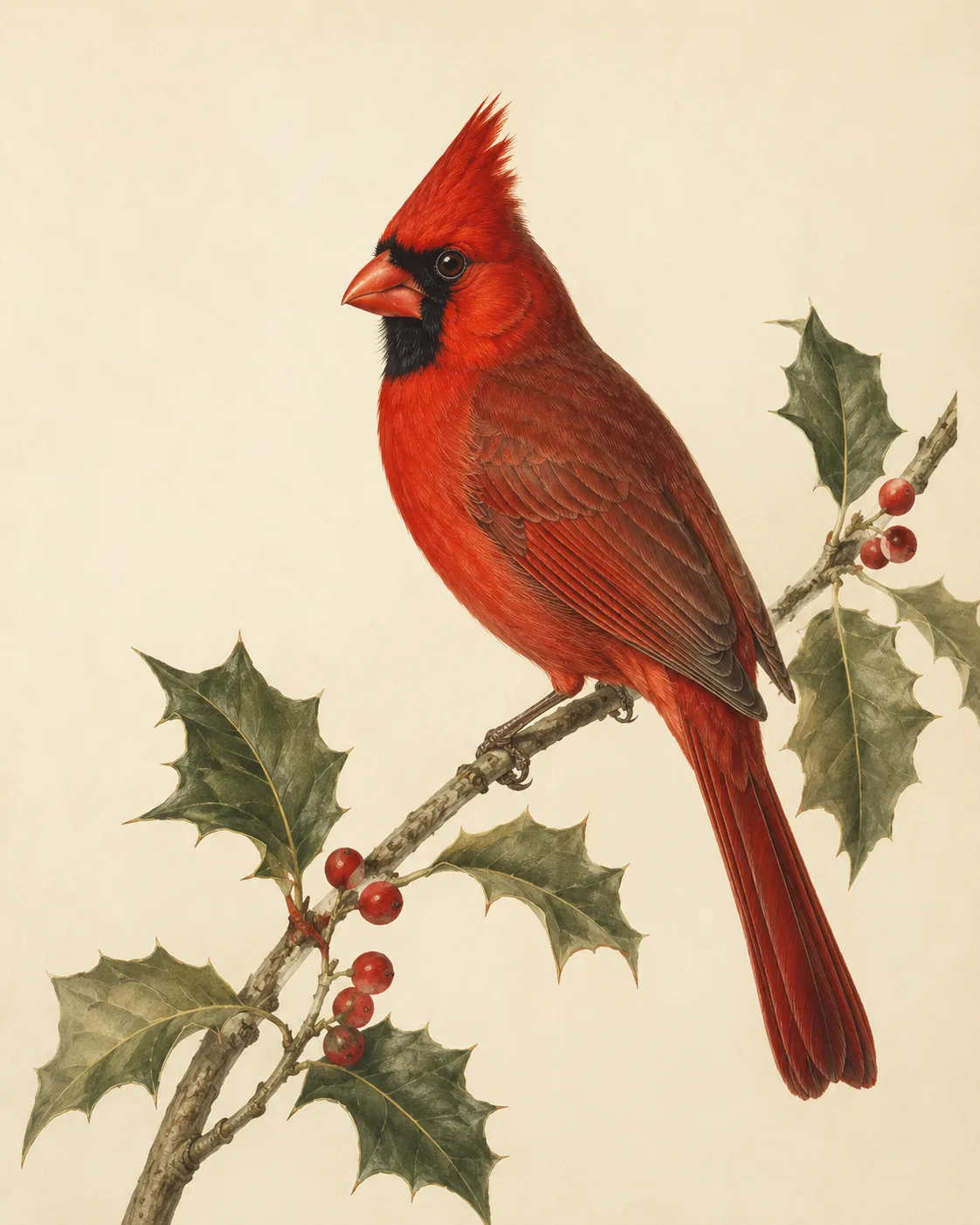
Cardinal on Holly. The male in full crimson, perched on a Christmas holly branch, bright against the dark leaves and red berries. The portrait plate. His red is carotenoid-based, built from the seeds and berries he ate the previous autumn. A male who fed well in October carries a deeper red in December.
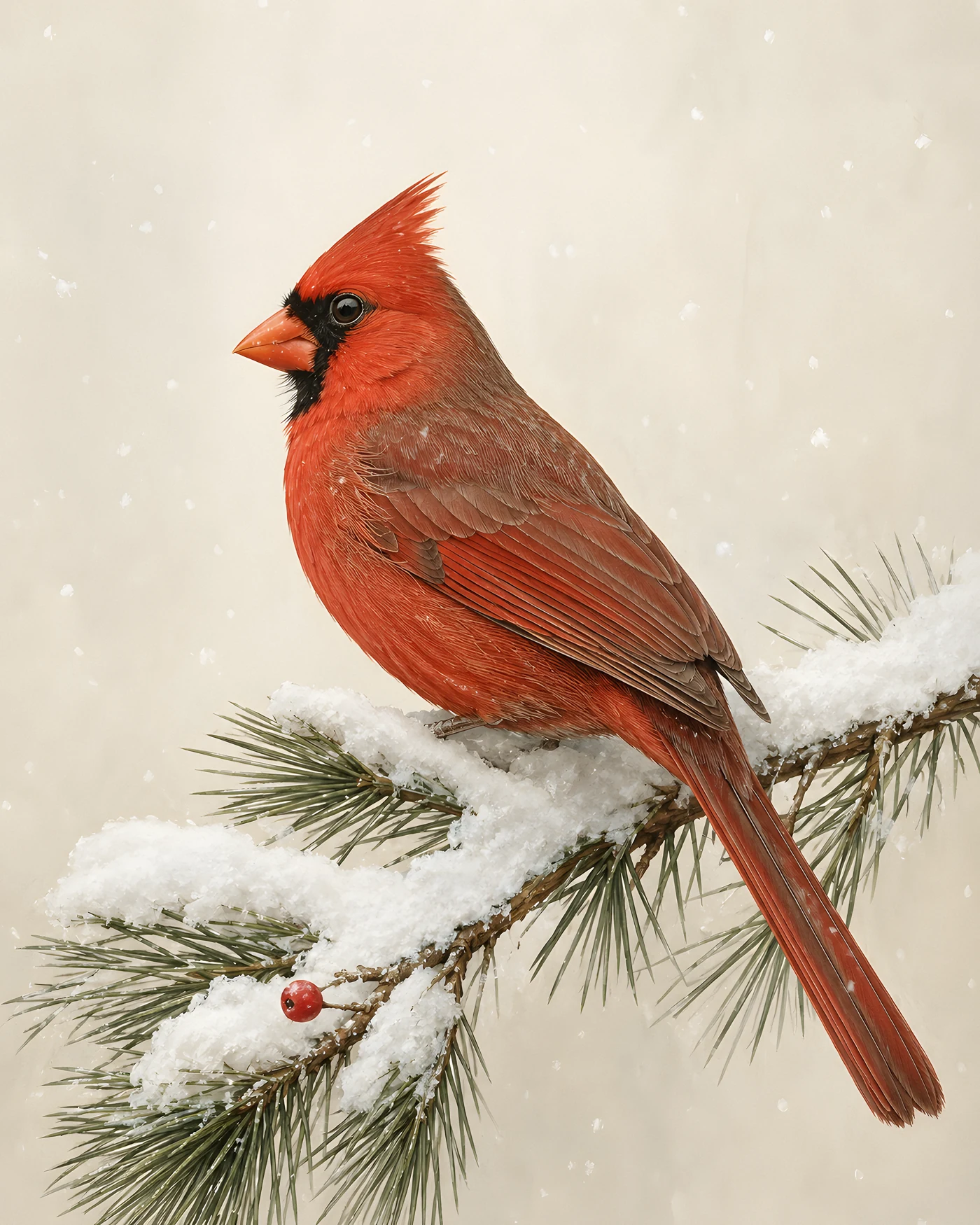
Cardinal in Snow. The same male, now on a snow-covered pine bough, a single red berry caught in the fall. This is the winter plate. The one most people come for.
Cardinalis cardinalis does not migrate. The bird at the holly branch in December is the same bird who nested in April. That fact - that he is there, in colour, against snow, while every other species has either left or gone to grey - is why the cardinal became the dominant bird of the American Christmas card. The high-contrast image of crimson against white is the most-photographed wild bird scene in North American backyard birding.
The Cardinal in Snow plate works without seasonal ornament. No ribbons. No overlays. The bird in his element, which is enough.
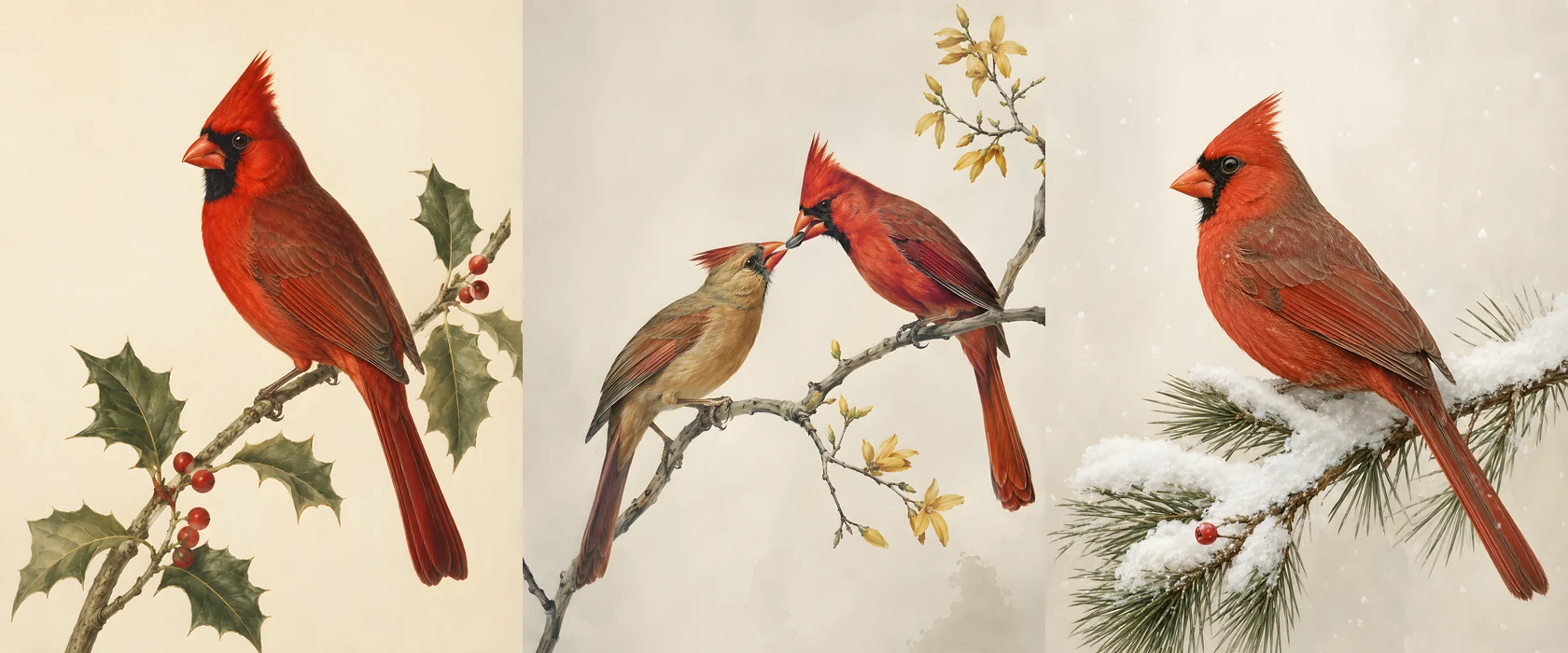
The two plates are designed to hang side-by-side or above a mantelpiece. The palette is restrained enough that they stay up past December.
Made in the tradition of patient Audubon-style natural history study.