

The story of the bird
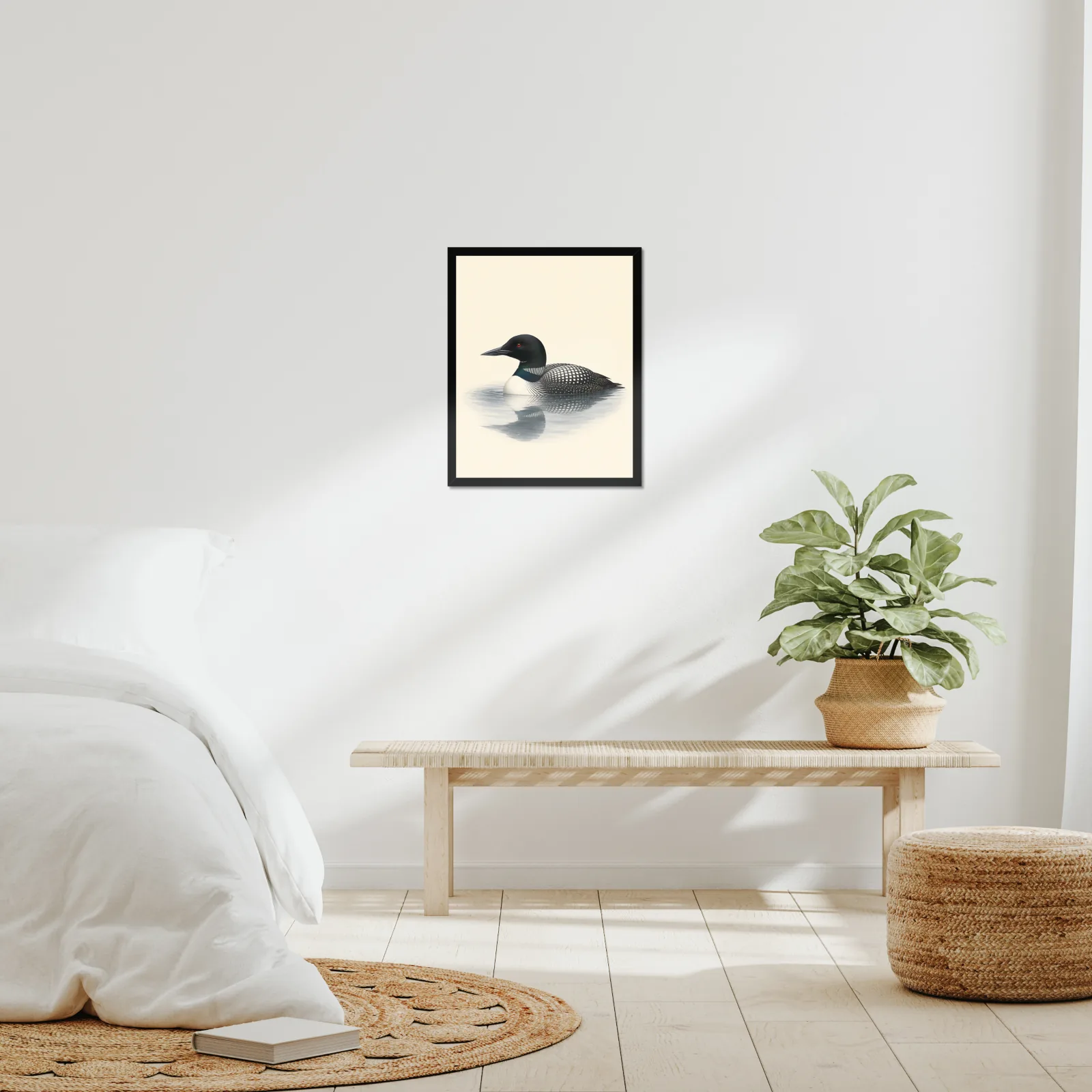
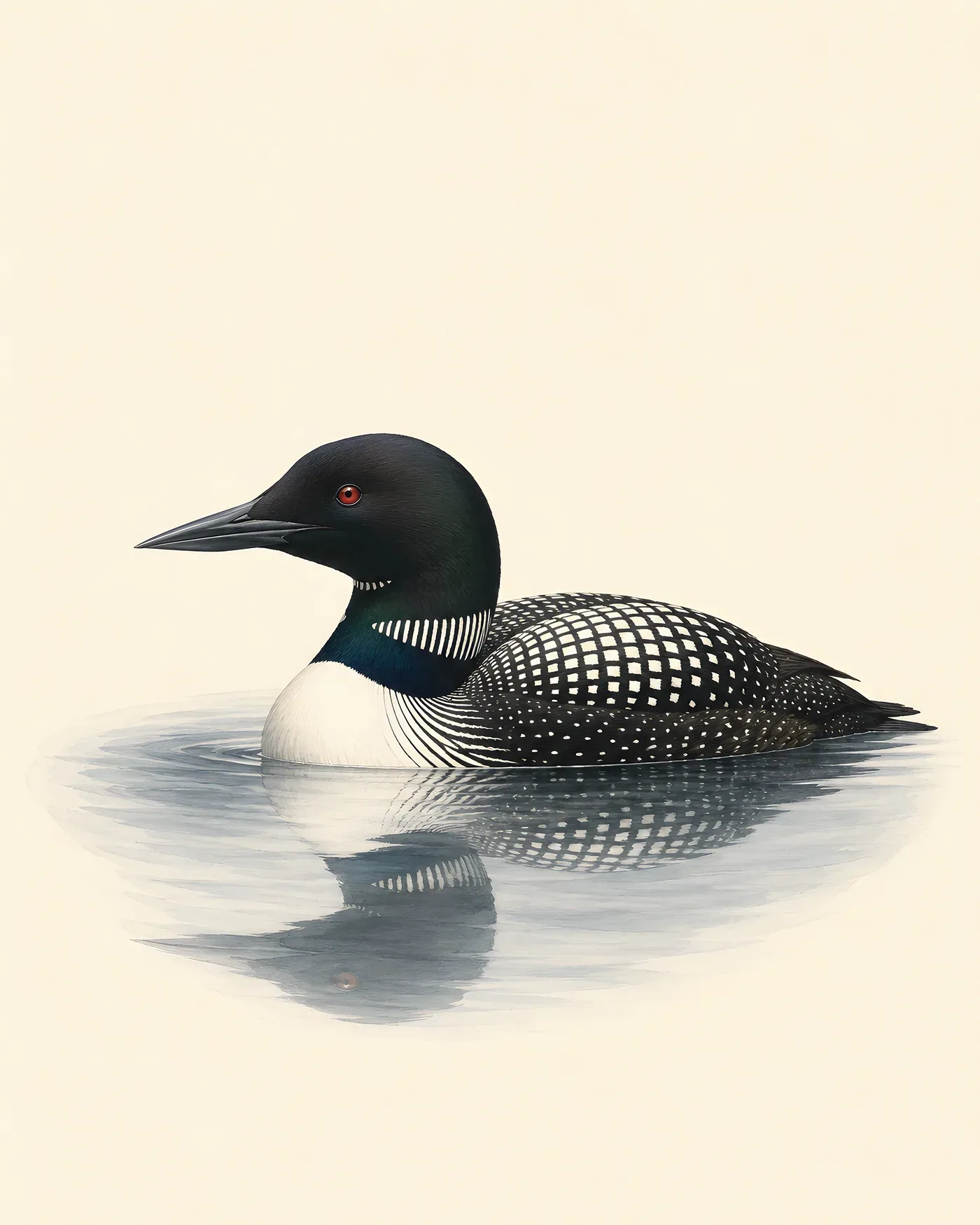
The water is the subject as much as the bird. Gavia immer rides low on a still surface, that dagger bill held level, the black head turned just enough to show the cardinal-red eye. Below, an exact double: the reflection holds every line of the bird, unbroken. The plate is in the quiet register of the Audubon tradition: no drama, only attention.
The loon’s plumage does the work in clear light. The back is a chequered black and white, precise as a printed textile. The throat carries a band of fine ivory stripes, visible only when the head turns. Against the plain water, these details read as the kind of beauty that takes a moment to arrive.
Gavia immer is a heavy bird, weighing up to six kilograms in breeding condition, and its bones are unusually dense for a bird, which lets it sink efficiently when it dives. It can go down forty metres and hold for over a minute in pursuit of fish. On land it is nearly helpless, those legs set so far back on the body that walking is barely possible. The bird is built entirely around the lake.
Pairs return to the same lake year after year. The wail that carries across still water is the male’s territorial call, a sound that covers miles and belongs to the northern lake as completely as the spruce line.
In the tradition of Audubon, the still-water plate was always the test of a natural-history artist. Reflection without fuss, water without a ripple to hide behind. This one passes it.
Full field guide: /species/common-loon/