

The story of the bird
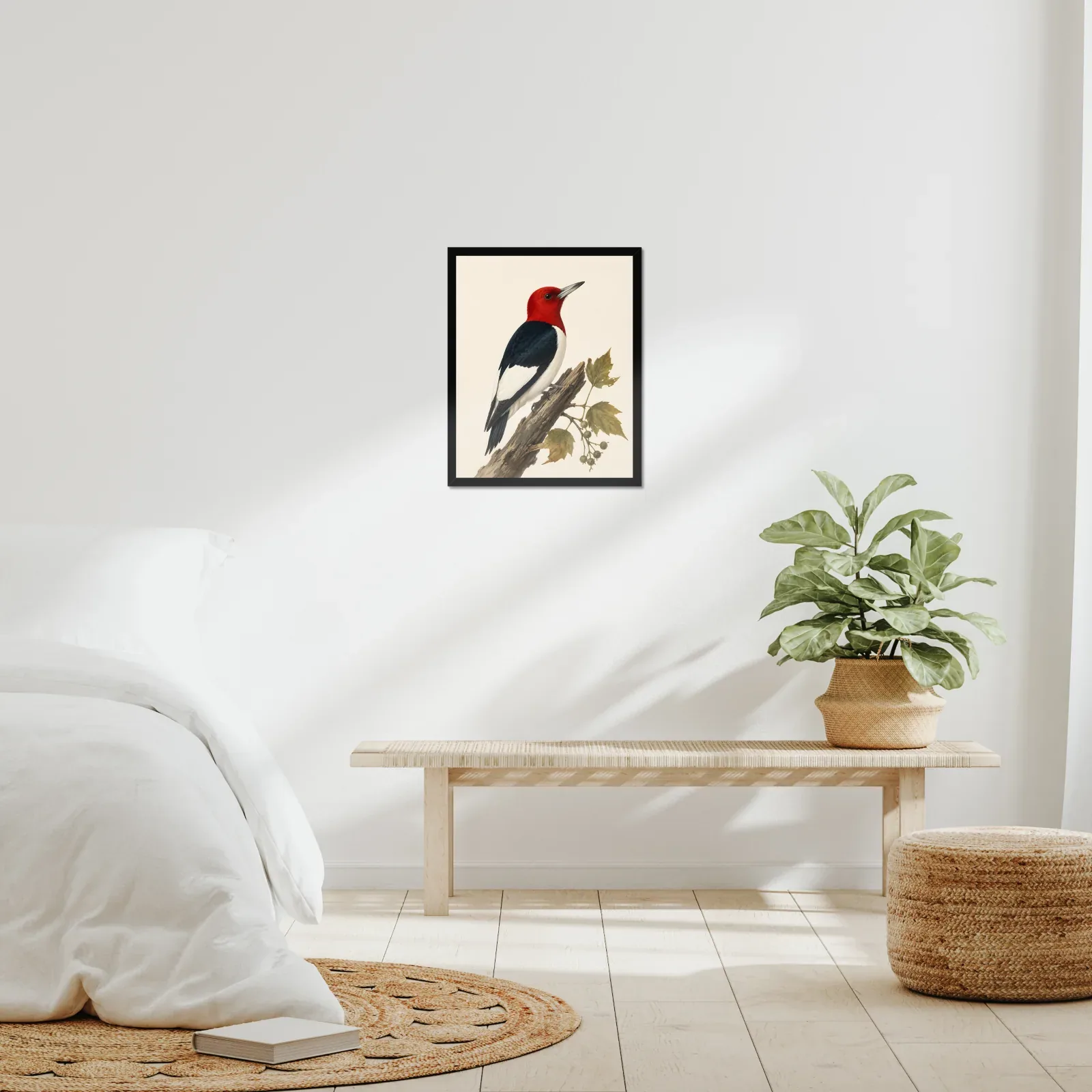
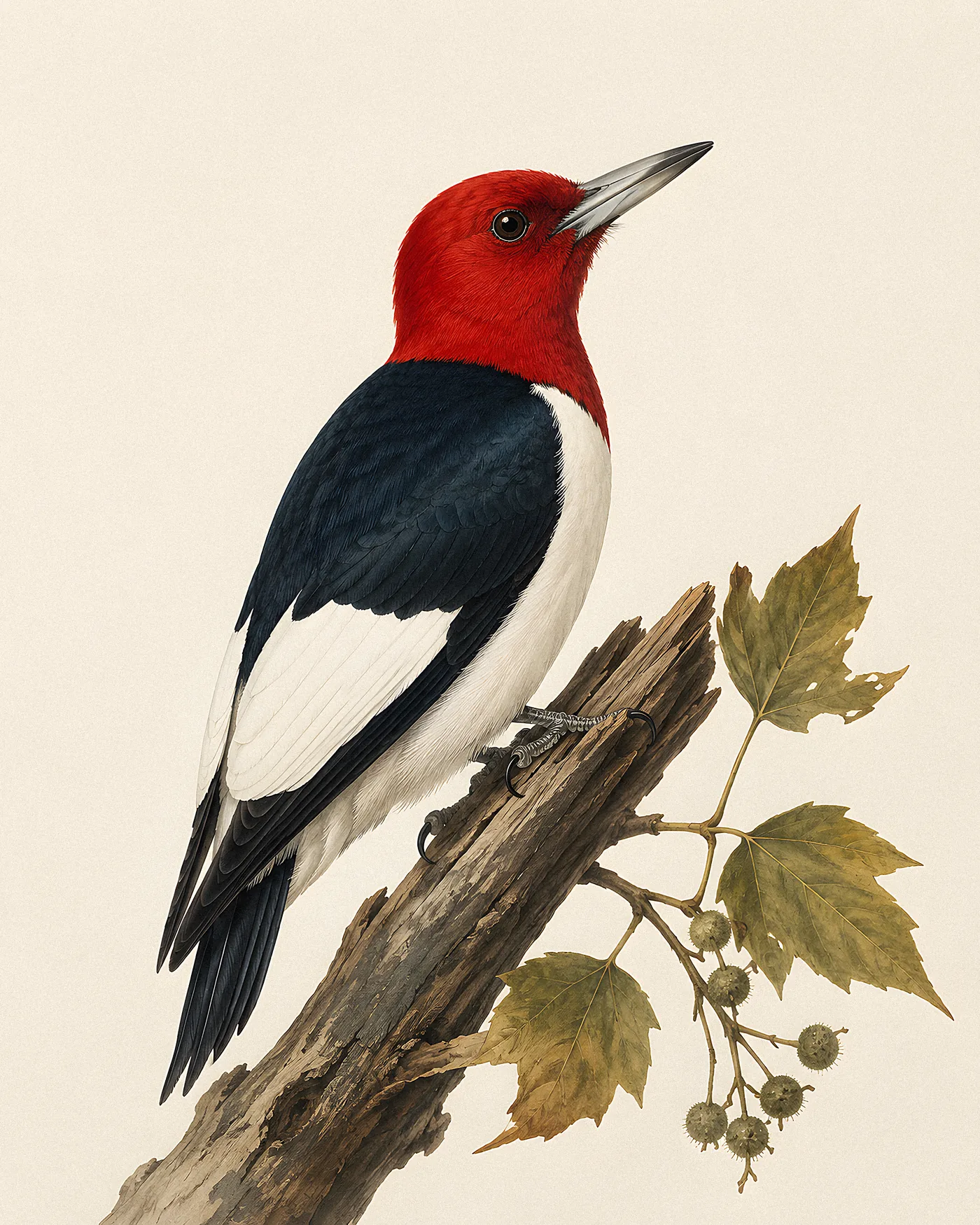
John James Audubon painted the Red-headed Woodpecker multiple times and called it the most beautiful woodpecker in the world. The judgment is defensible. Melanerpes erythrocephalus is tricoloured in the boldest possible way: the entire head and neck are blood-red, the body and rump are white, the wings and back are blue-black. No blending, no subtlety, no intermediate zones. Each colour holds its territory absolutely.
It is a large woodpecker, 7 to 9 inches, and it sits on snags and fence posts in the open, where the tricolour pattern can be appreciated at distance without binoculars. The flash of the white secondary patches in flight - visible against the dark wing - is one of the most distinctive flight patterns in North American birds. Audubon or not, everyone who sees this bird stops.
The Red-headed Woodpecker is a generalist in ways most woodpeckers are not. It catches insects in the air like a flycatcher, caches acorns and other food for winter like a jay, and excavates cavities in open woodland and savanna that other cavity-nesters then use. It is a keystone species in ecosystems that have very little keystone left.
The species has declined significantly since European settlement - open woodland with large snags is not something the modern landscape produces easily. That scarcity gives every sighting weight. It is a bird worth hanging on a wall, in part as a record that it still exists.
Paper and finish
Available in three sizes on Hahnemühle Photo Rag 308gsm - matte fine-art paper. Printed by Prodigi using pigment inks rated 100+ years under display conditions. Also available as a high-resolution digital download at $9.
| Size | Unframed | Framed |
|---|---|---|
| 8 × 10 in | $39 | $99 |
| 16 × 20 in | $69 | $149 |
| 24 × 30 in | $99 | $199 |
Framed prints are glazed, no mat. Frame colours: black, white or natural.