



The story of the bird
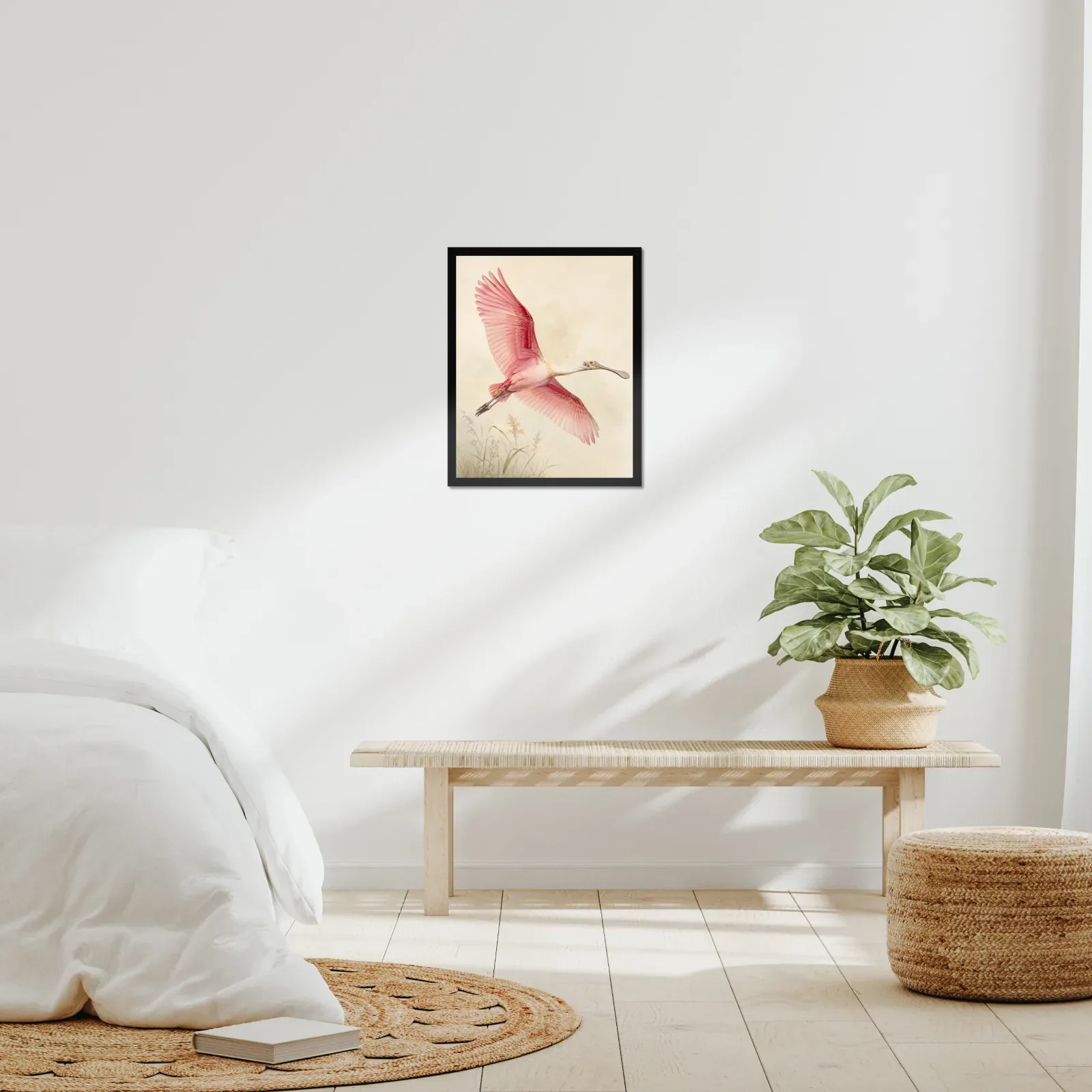
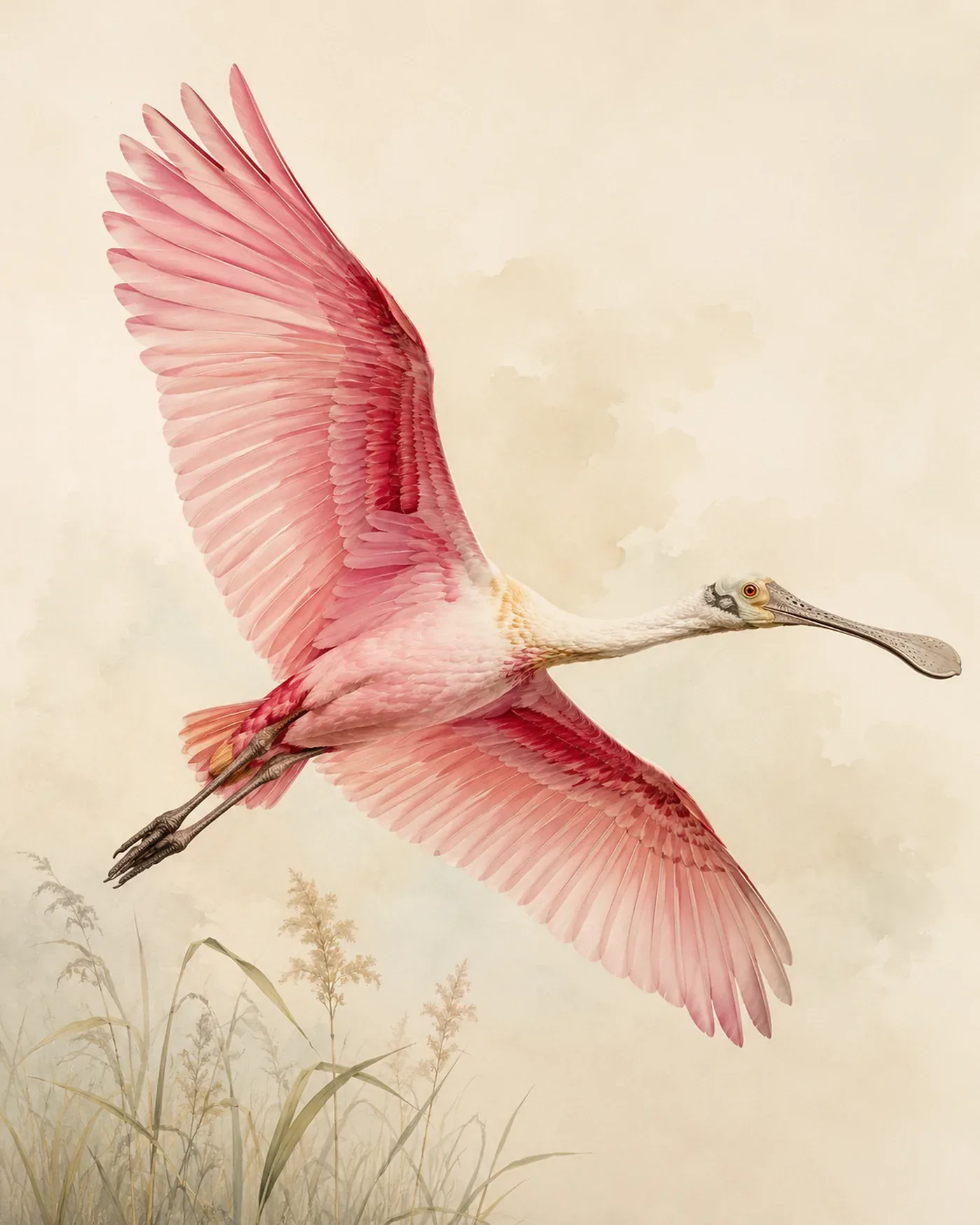
Wings open, the bird burns rose against the sky. Platalea ajaja mid-flight, neck stretched straight, that strange spatulate bill leading the way. The Audubon-style palette gives it a cream ground and deep wetland greens, and the spoonbill’s own gradient of pale blush deepening to scarlet at the shoulder. In flight, as the species file records, the neck is held straight out, not tucked, with slow steady wingbeats. A line of them crossing a sunset is a sight you do not forget.
The Roseate Spoonbill is the only spoonbill in the Americas. It stands over two and a half feet tall, with a wingspan that can reach more than four feet. The pink is dietary, the same carotenoid mechanism that colours a flamingo, accumulated from the crustaceans this bird filters from shallow lagoons. The bill is the instrument of that feeding: held open and partly submerged, swung side to side through the mud, snapping shut when it touches prey. The spoonbill feeds by feel, not by sight, which lets it work murky water in low light.
Once hunted near to vanishing for its plumes, it has since returned to the Gulf Coast marshes, the Florida coastline, and on south through Central and South America. Adult birds wear bare greenish skin on the head, no feathers at all. At rest the bird blushes from pale to deep coral. In flight, this plate shows, the whole wing spreads and the scarlet patches at the shoulder become visible.
A fine-art study in the tradition of Audubon, made for the wall.
Full field guide: /species/roseate-spoonbill/