



The story of the bird
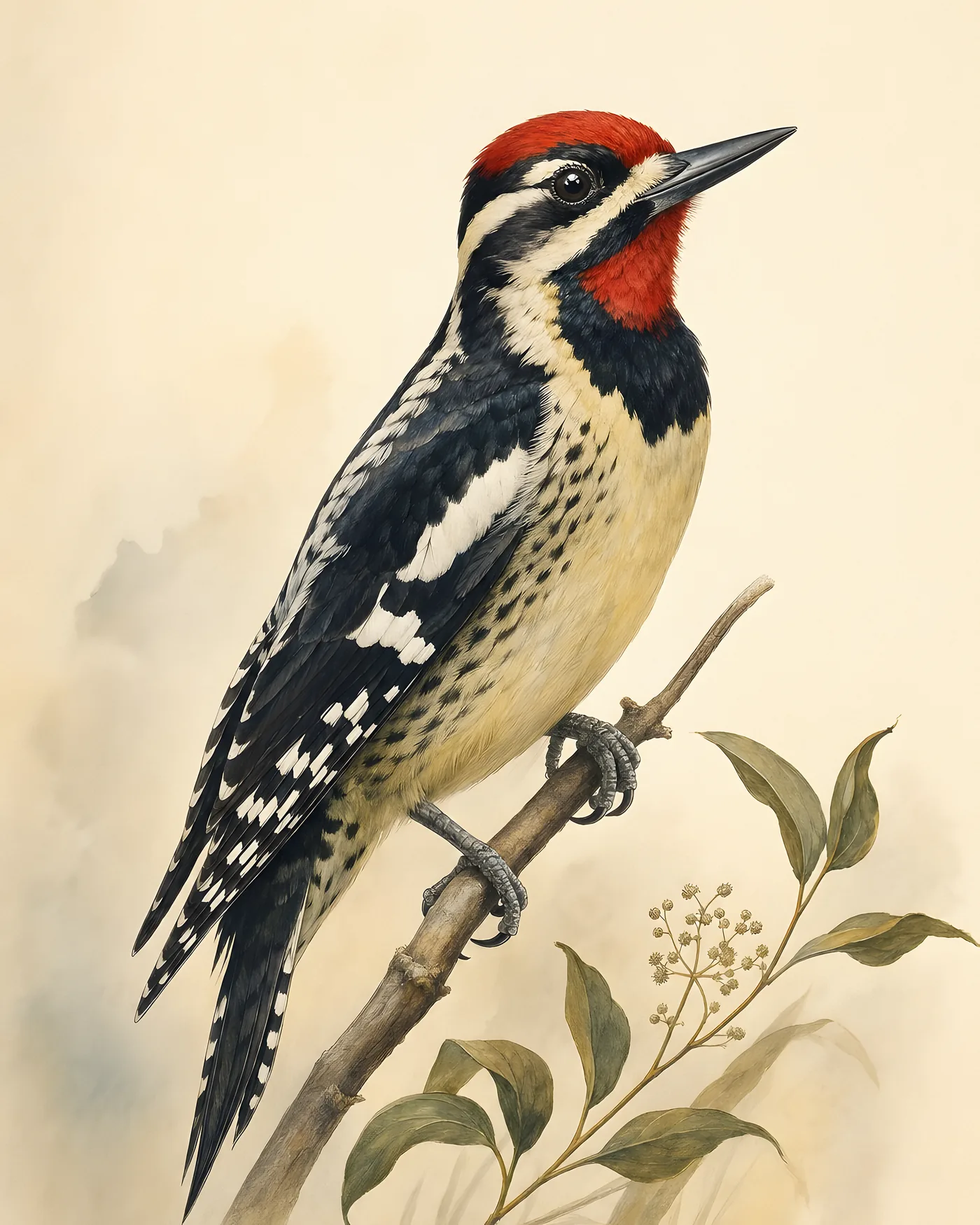
The Yellow-bellied Sapsucker (Sphyrapicus varius) drills horizontal rows of small holes in tree bark and returns to harvest the sap that wells up and the insects drawn to it. At least 250 plant species are documented hosts. The sap wells also provision Ruby-throated Hummingbirds in early spring, before wildflowers open - the sapsucker’s arrival in the north tracks with the sap flow, and the hummingbird’s arrival tracks with the sapsucker. The two species occupy the same ecological moment.
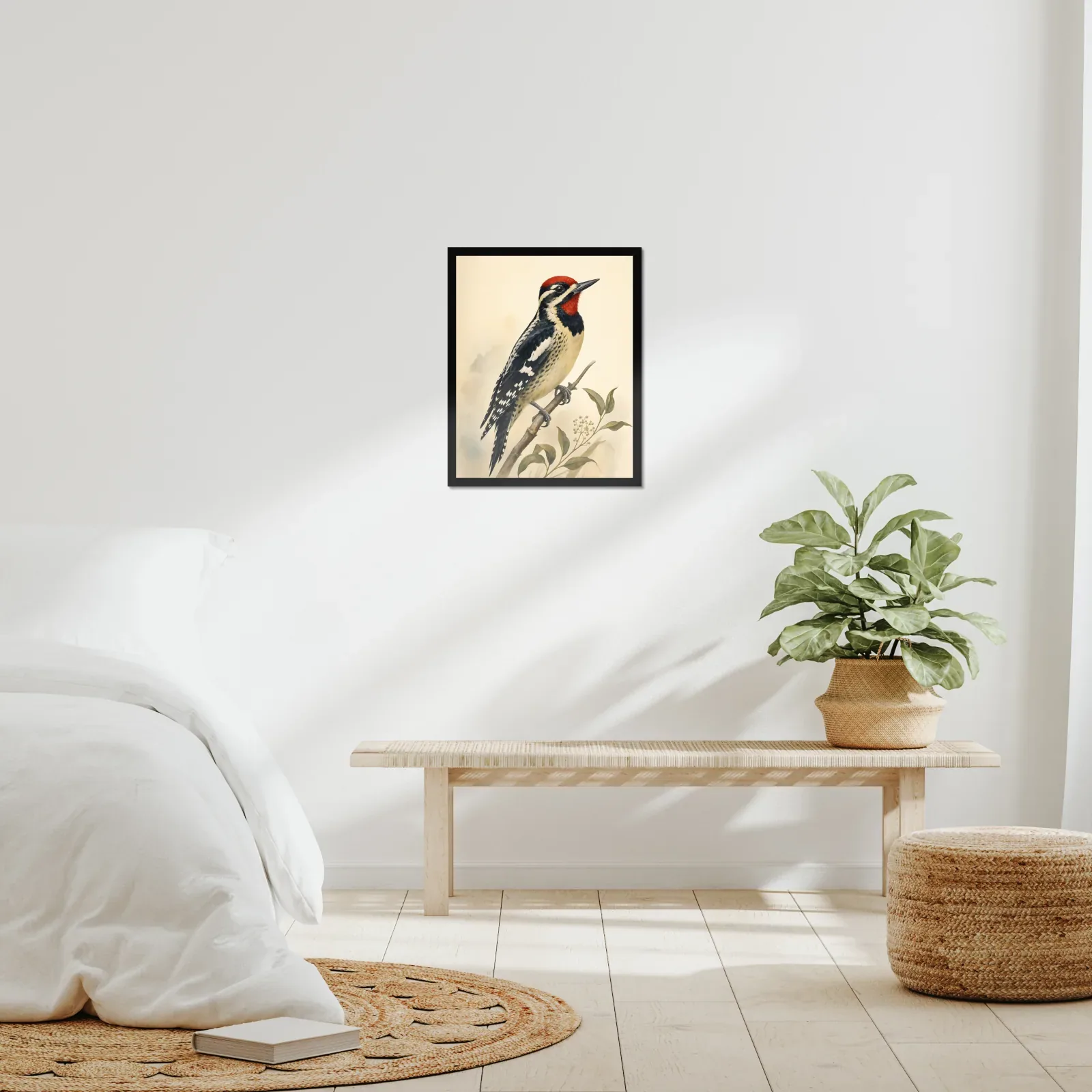
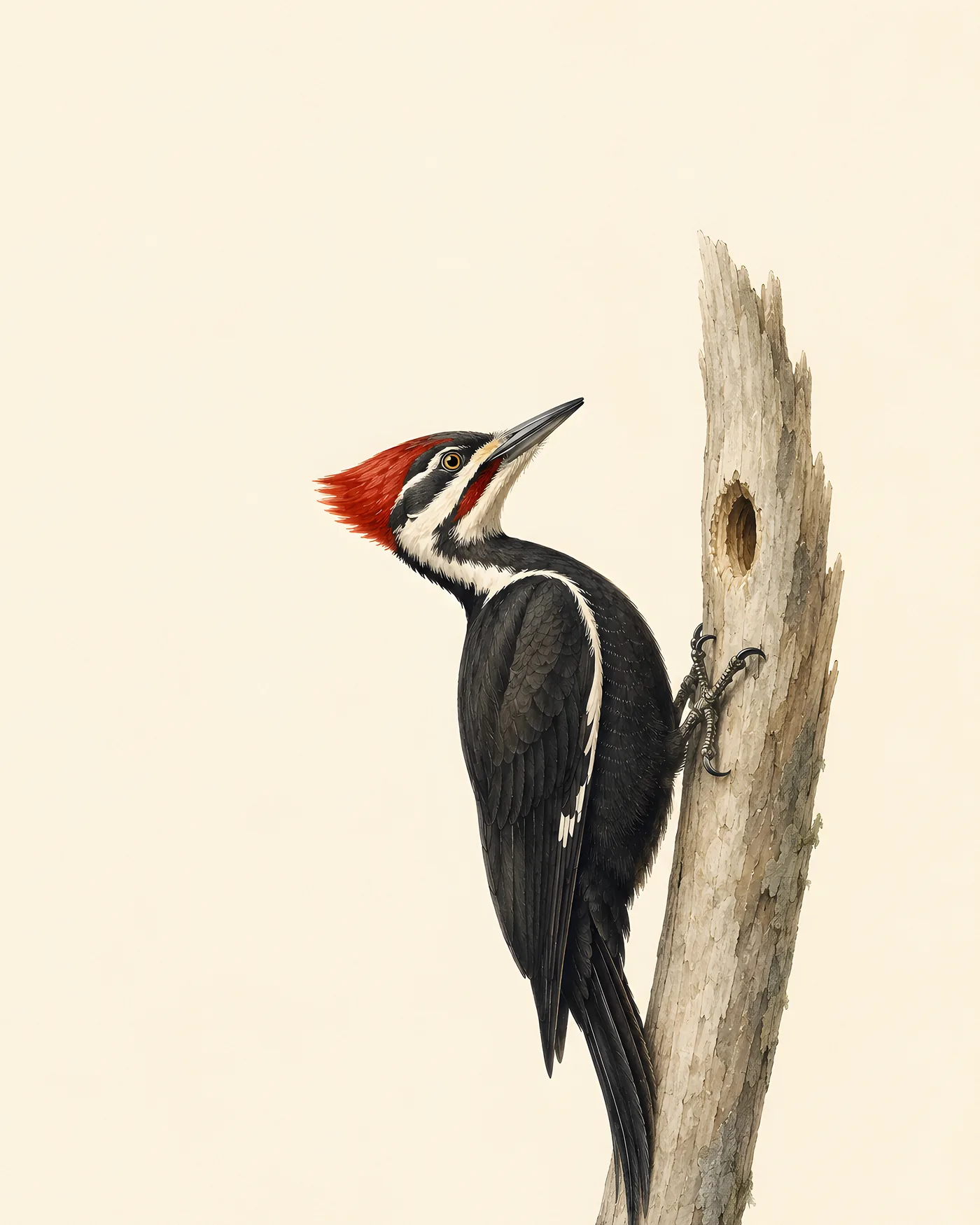
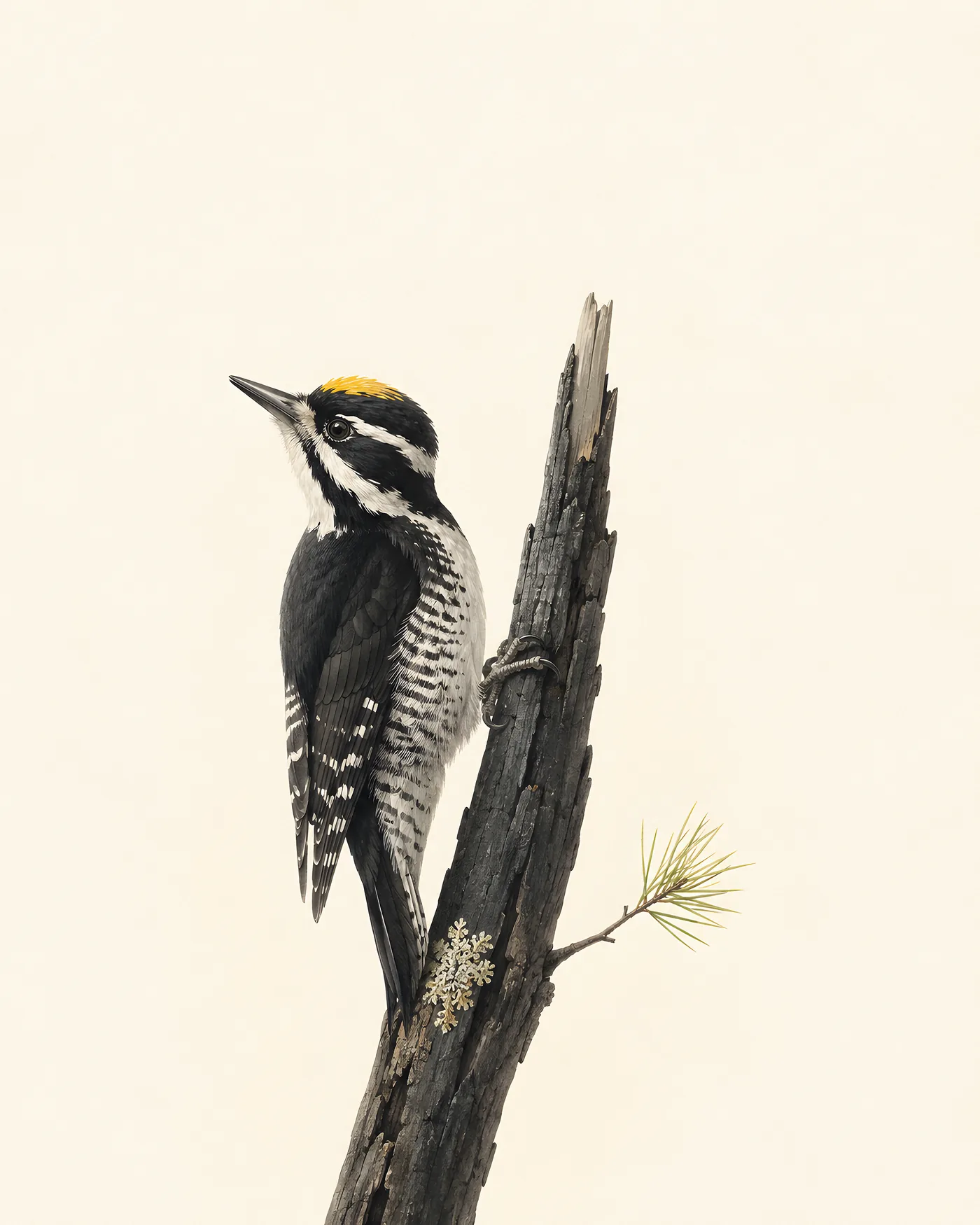
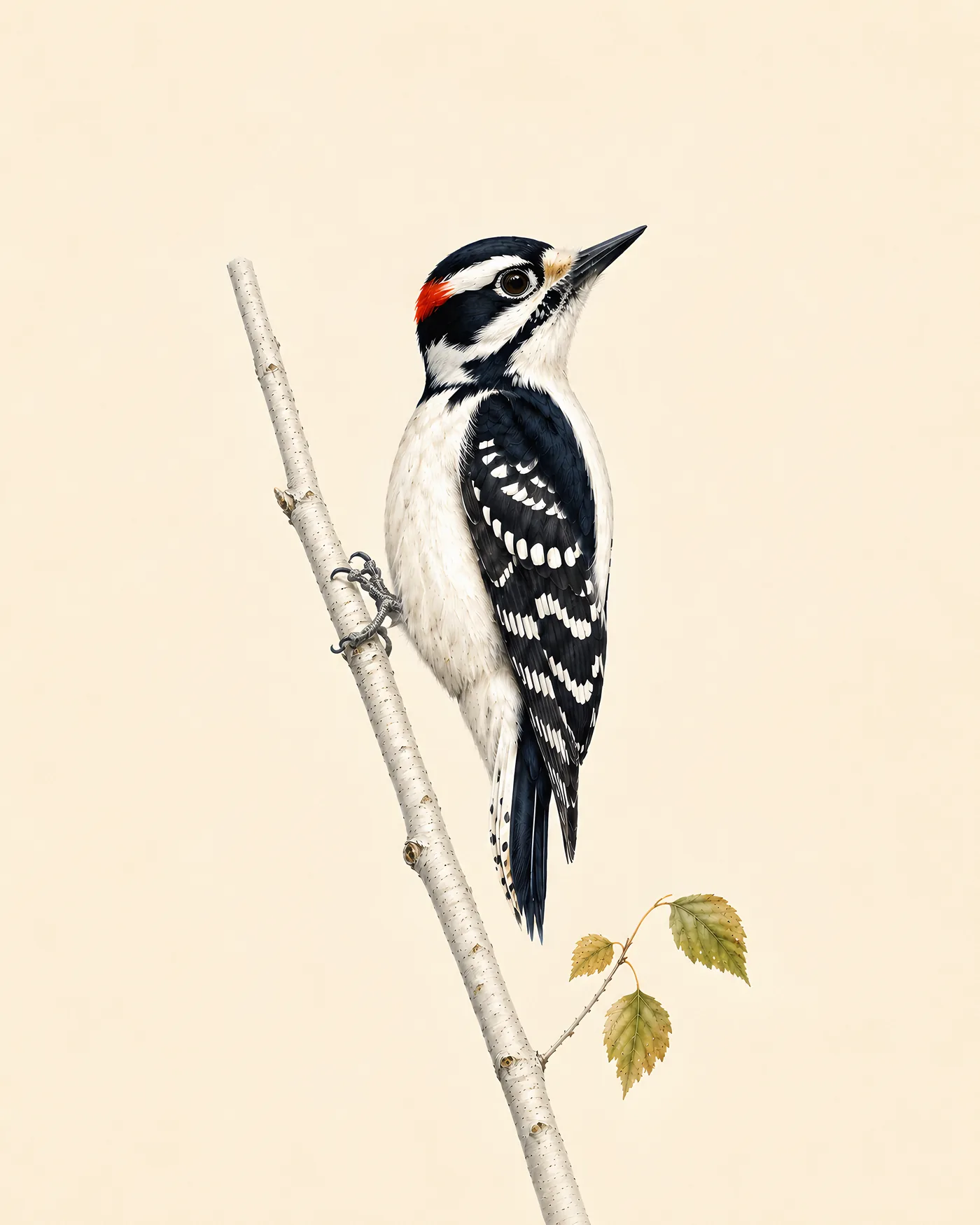
The bird itself is boldly patterned: a red cap and throat on the male (the female’s throat is white), a black-and-white face, a yellow wash on the breast, heavily streaked flanks. It is a migrant, wintering in the southeastern United States and Central America, breeding across Canada and into the northern tier of states. The mewing call is the first indication of its presence in spring.
The Audubon plate shows the bird on a white birch trunk alongside a characteristic horizontal row of sap wells - the work that defines the species. The red cap and throat, the black bib, and the white wing stripe are the field marks shown in the profile view that makes all of them visible at once.
Paper and finish
Unframed prints come on Hahnemuhle Photo Rag 308gsm, a heavyweight fine-art paper with a soft matte surface. The surface holds fine lines and subtle colour gradients without glare, which matters for Audubon-tradition work where the cream ground needs to read as paper, not as a white field. The framed option is set in a classic moulding, glazed and ready to hang, in black, white or natural.
Sizes
Three sizes: 8x10, 16x20 and 24x30 inches, or a high-resolution digital download at $9. Prints from $39. Framed from $99.