


The story of the bird
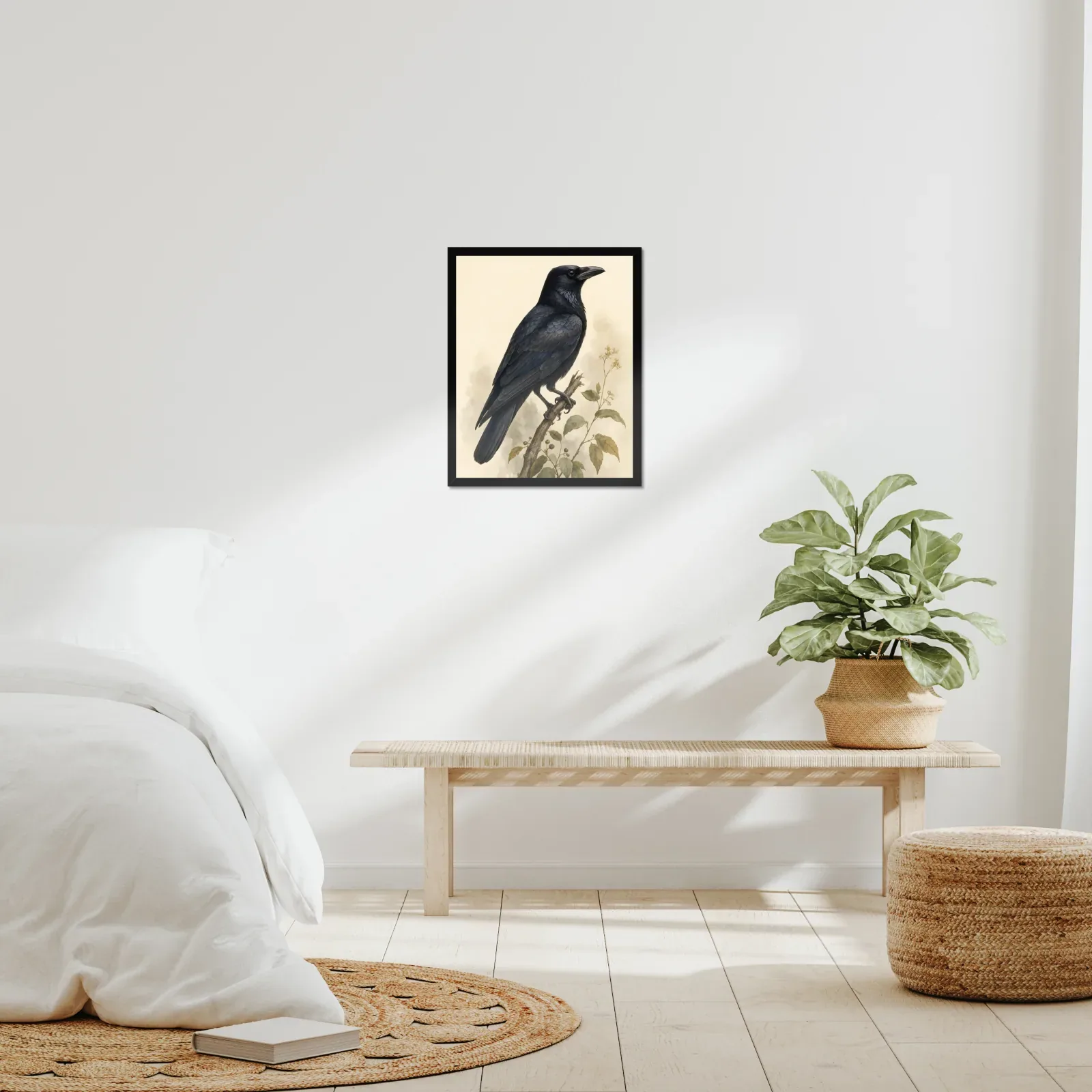
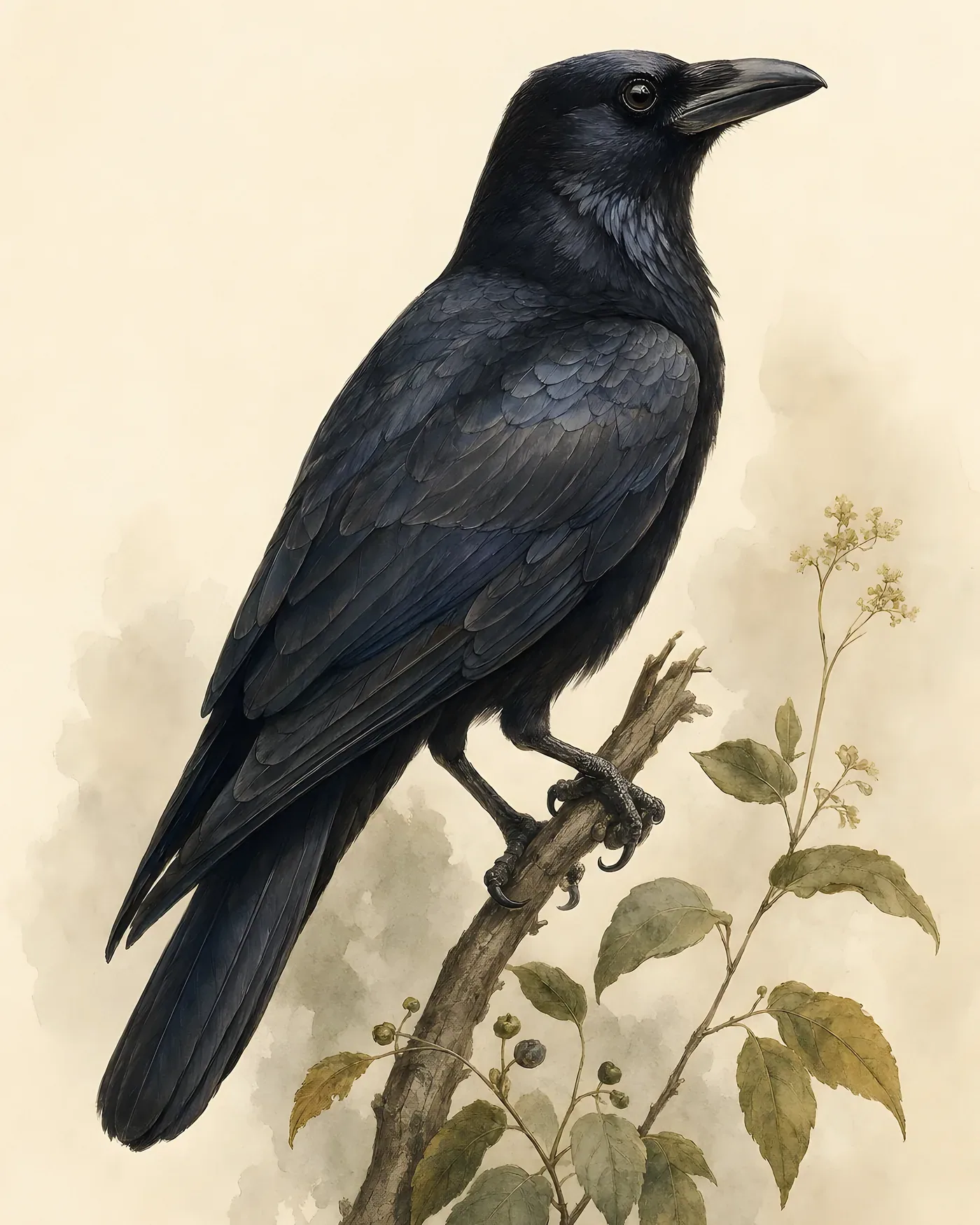
Plain black at a distance, the American Crow reveals what that black conceals up close: blue at the wing, violet at the shoulder, the gloss of a bird that carries all the colour the sun offers and returns none of it. It is the everyday corvid, the one on the fence and the lawn, and it carries a quiet gravitas that suits any calm room.
Corvus brachyrhynchos is the most widespread black bird on the continent and, in the view of most field ornithologists, among the most intelligent. The standard crow caw is not one call but a vocabulary, its rapid alarm broadcast read and acted on by squirrels, songbirds and anyone who has learned to listen. When a crow finds a roosting owl in daylight, it recruits: one calls, a dozen arrive, and the mobbing continues until the predator gives up the roost.
The social structure is equally unusual. Young from previous seasons routinely stay with the family and help raise their younger siblings. Studies in New York found helpers at more than 80 per cent of observed nests, some birds remaining as auxiliaries for six years before breeding on their own. A crow wears plain dress and carries a complicated life behind it.
As wall art, the American Crow is the understated corvid, glossy black with a hidden shimmer, a considered gift for anyone drawn to the intelligence and character of these birds. Rendered in a contemporary Audubon-inspired natural-history style with a soft paper-grain finish, on a warm cream ground.