


The story of the bird
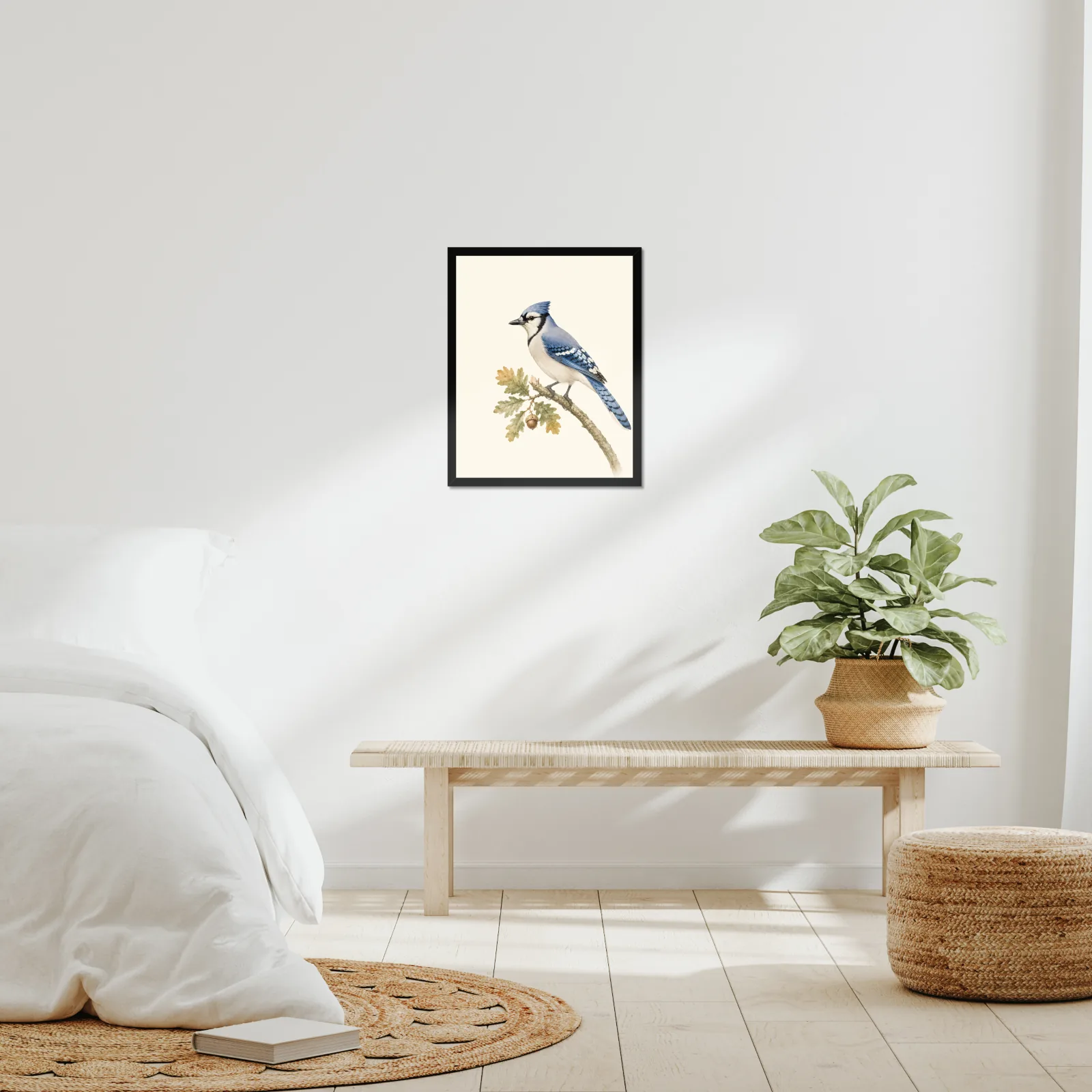
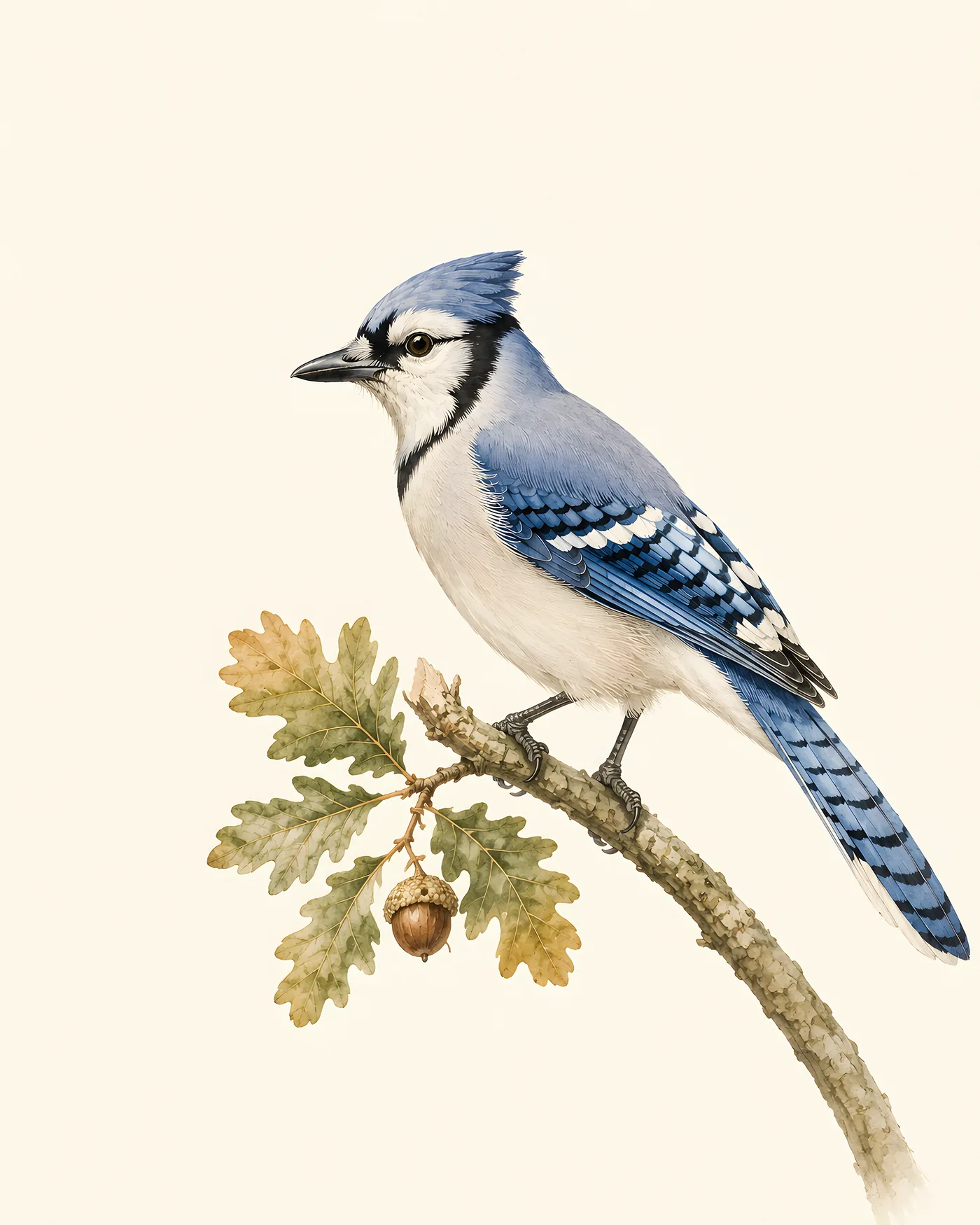
The crest is raised. The bird grips an oak branch beside leaves and acorns, its blue wing and tail markings set against a pale cream ground.
In October, Cyanocitta cristata is working. A single jay caches between three and five thousand acorns each autumn, carrying two or three at once in an expandable throat pouch and a fourth in the bill, flying up to five kilometres from the source tree to bury them in soft soil at the edge of clearings. He marks each cache by spatial memory. He returns through winter to dig them up. He forgets enough of them, every year, to plant trees. Ecologists credit the Blue Jay with the post-glacial northward spread of eastern oak forest, a process that moved faster than gravity or wind or squirrels could account for. The leading candidate in the 1989 Johnson and Webb paper in the Journal of Biogeography is the bird shown beside oak leaves and acorns in this plate.
The blue itself is structural, not pigment. Backlit, the feather goes brown. In forward October light it is cobalt, pure and architectural.
He pairs for life. He incubates eggs alongside the female. He lives, in some cases, to twenty-six years.
Drawn in the close, unhurried manner of the Audubon tradition, with the bird held in the one pose that contains the whole season.