

The story of the bird
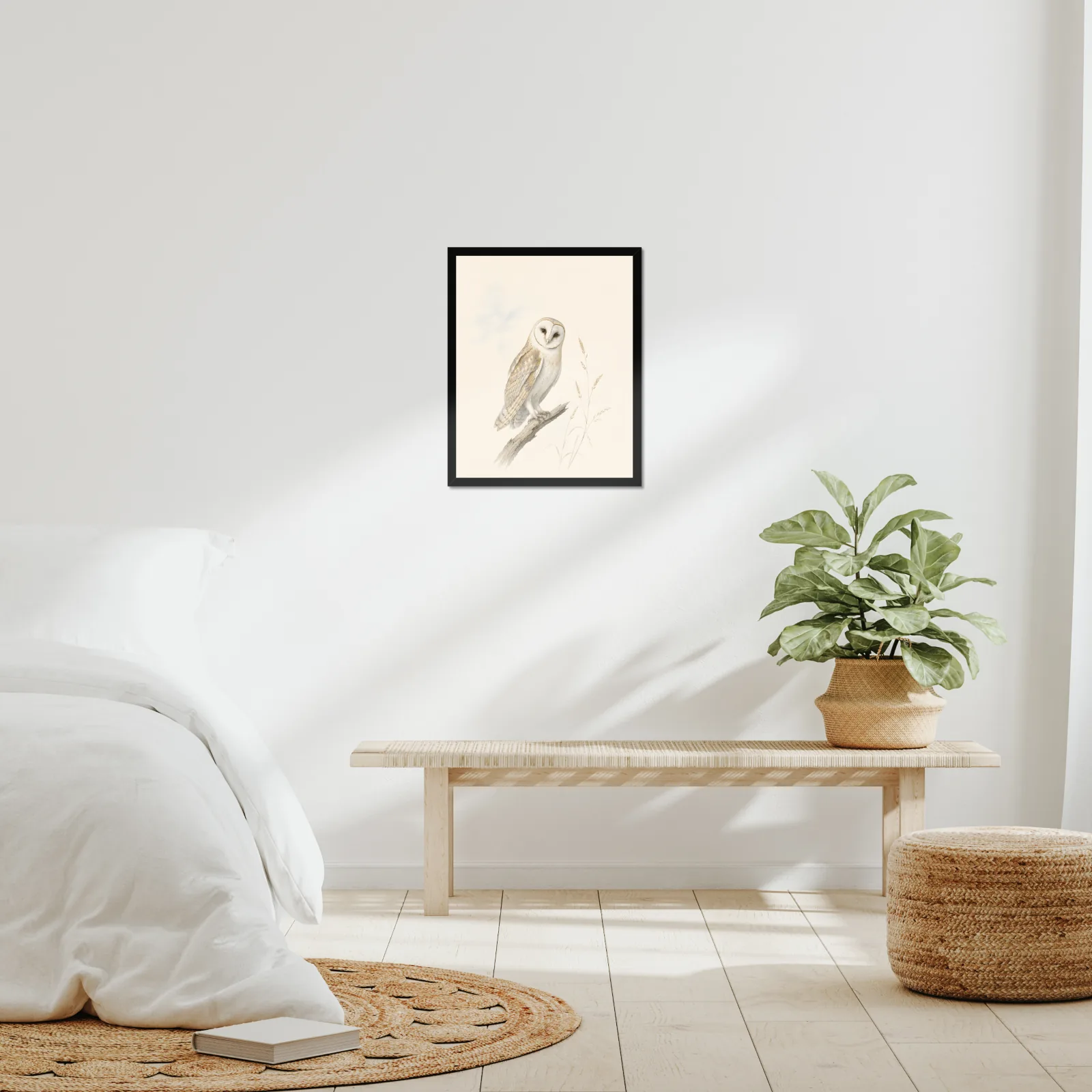
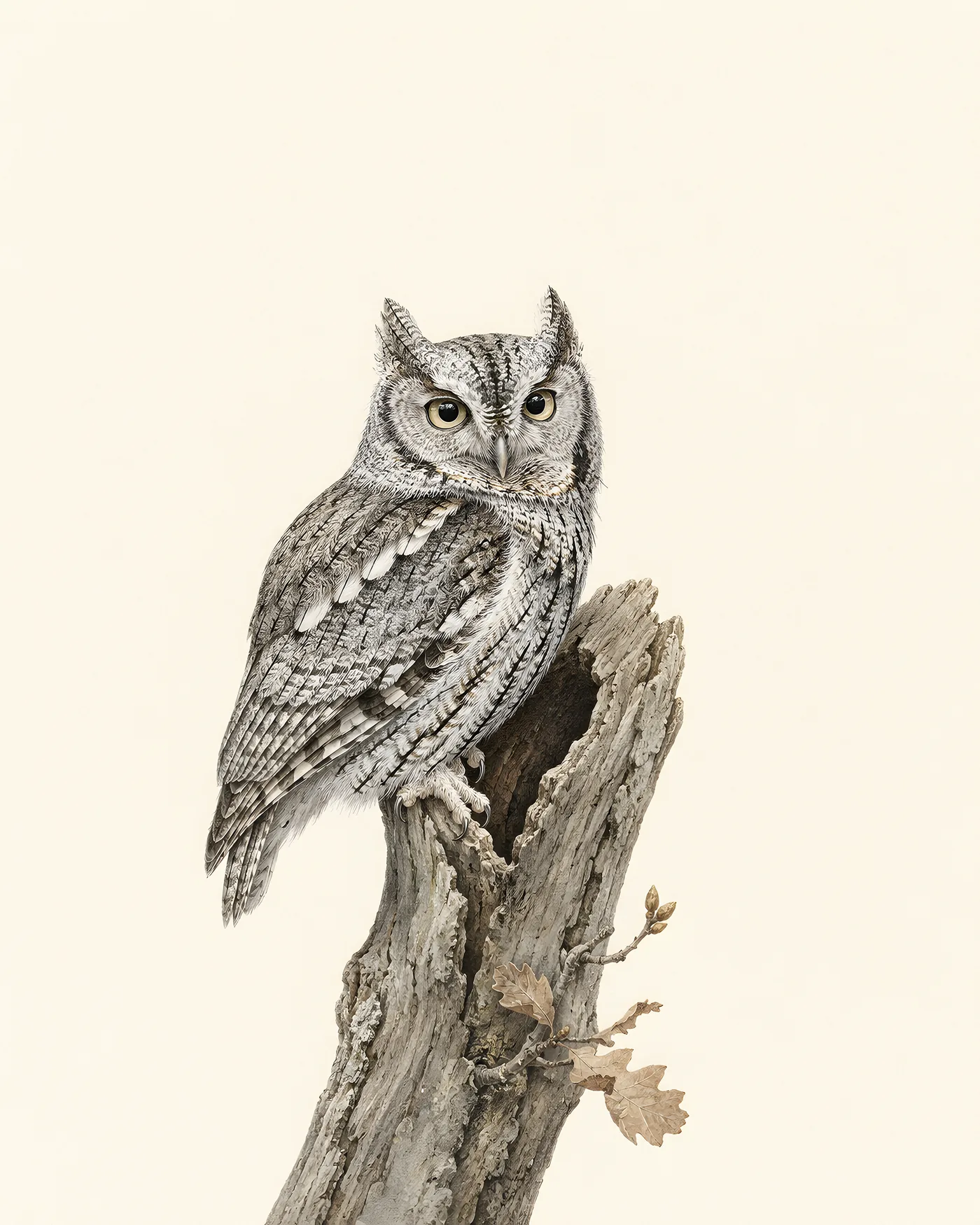
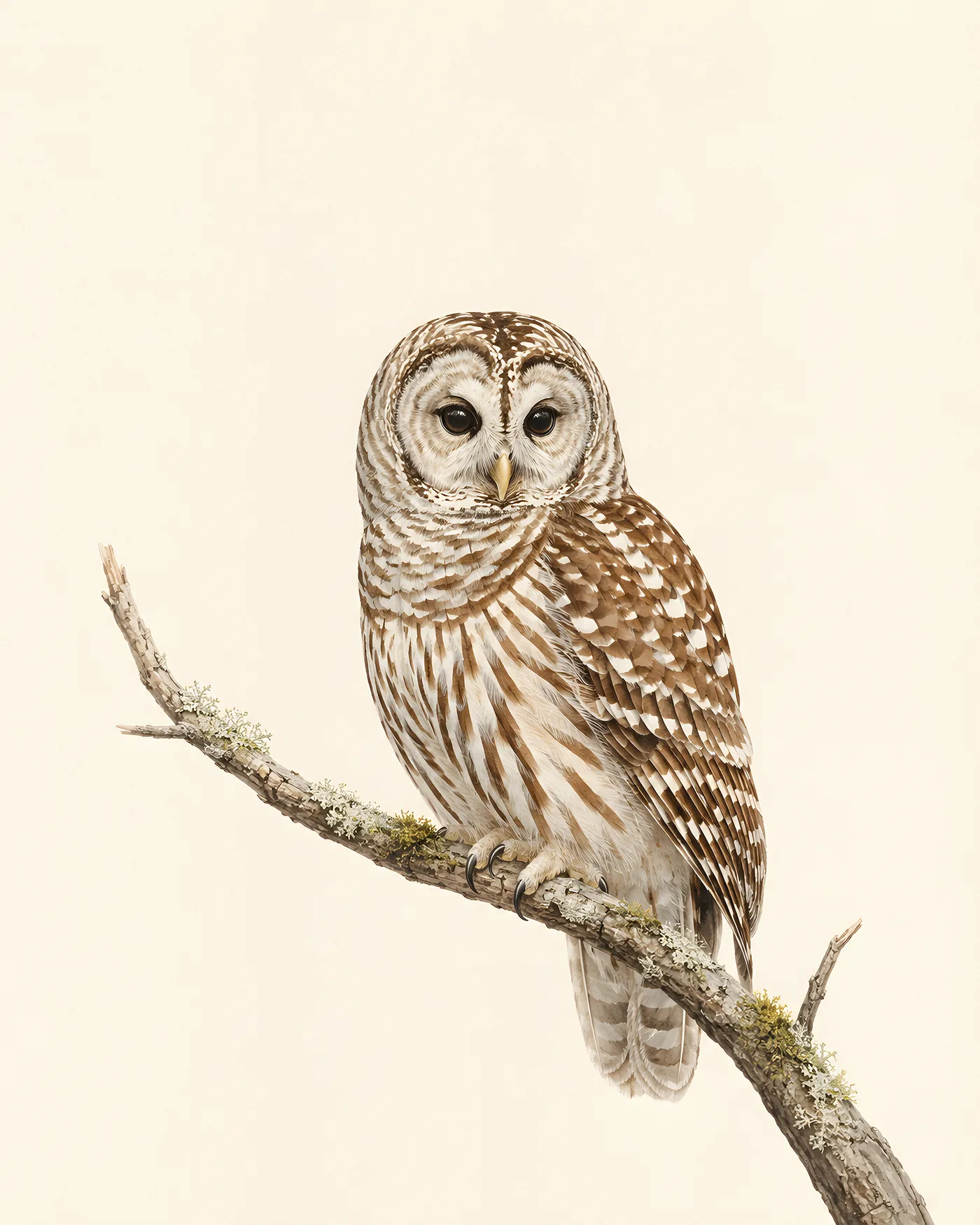
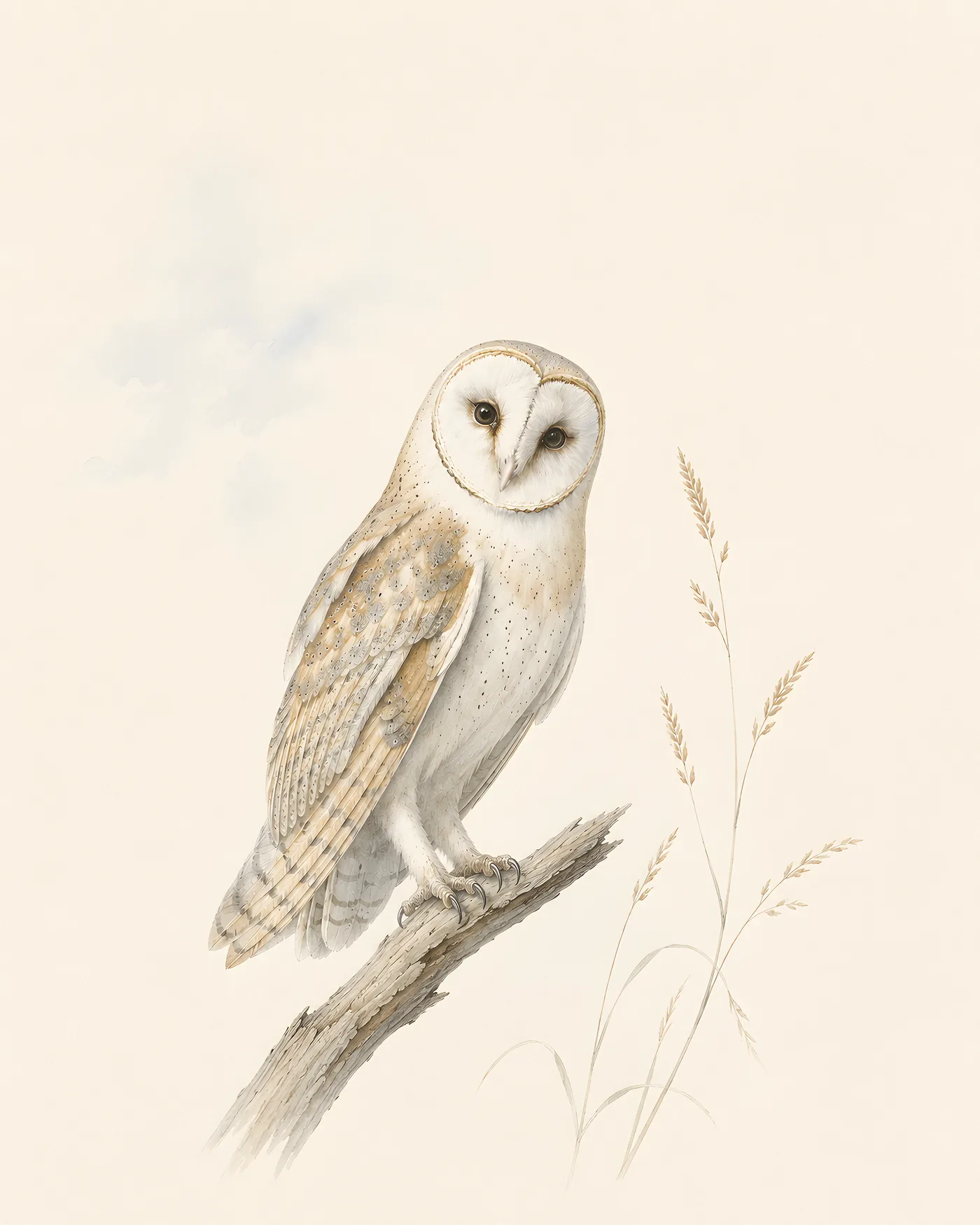
Wings folded. The heart-shaped face turned toward you. That is the whole composition here - Tyto furcata perched on a broken branch in pale moonlight, rendered in the Audubon-style palette of warm buff and old ivory, the white disc a quiet anchor in the centre of the frame. A few dry grass stems, a wash of night sky, and the bird at rest.
The flight is genuinely silent. The leading edges of the flight feathers are fringed with a comb of soft barbs that break up turbulence before it can register as sound. A Barn Owl closing on prey makes no noise that prey can detect. It also needs none. The left ear on its skull sits measurably higher than the right, a structural difference that lets the bird triangulate elevation from sound alone. Combined with the forward-facing disc, which resolves and amplifies the target, the owl can drop onto a vole under a foot of snow in a field with no moon. It has located the animal by hearing alone, in three dimensions, and it will not miss.
The wingspan is the thing to picture: 100 to 130 centimetres on a bird that weighs under a kilogram. Folded here at rest, that same pale plumage is the image most people carry away from a Barn Owl encounter. This plate holds the bird in the still moment, the moonlight catching the soft feather before it drops into the dark again.
Made in the tradition of Audubon, for the wall.
The print
fine-art print on Hahnemühle Photo Rag 308gsm, or an instant digital download. Three sizes, 8x10 to 24x30, framed or unframed. Prints from $39. The pale, silent barn owl suits a calm bedroom, a hallway or a stairwell, and makes a quietly striking gift.
Full field guide: /species/barn-owl/