

The story of the bird
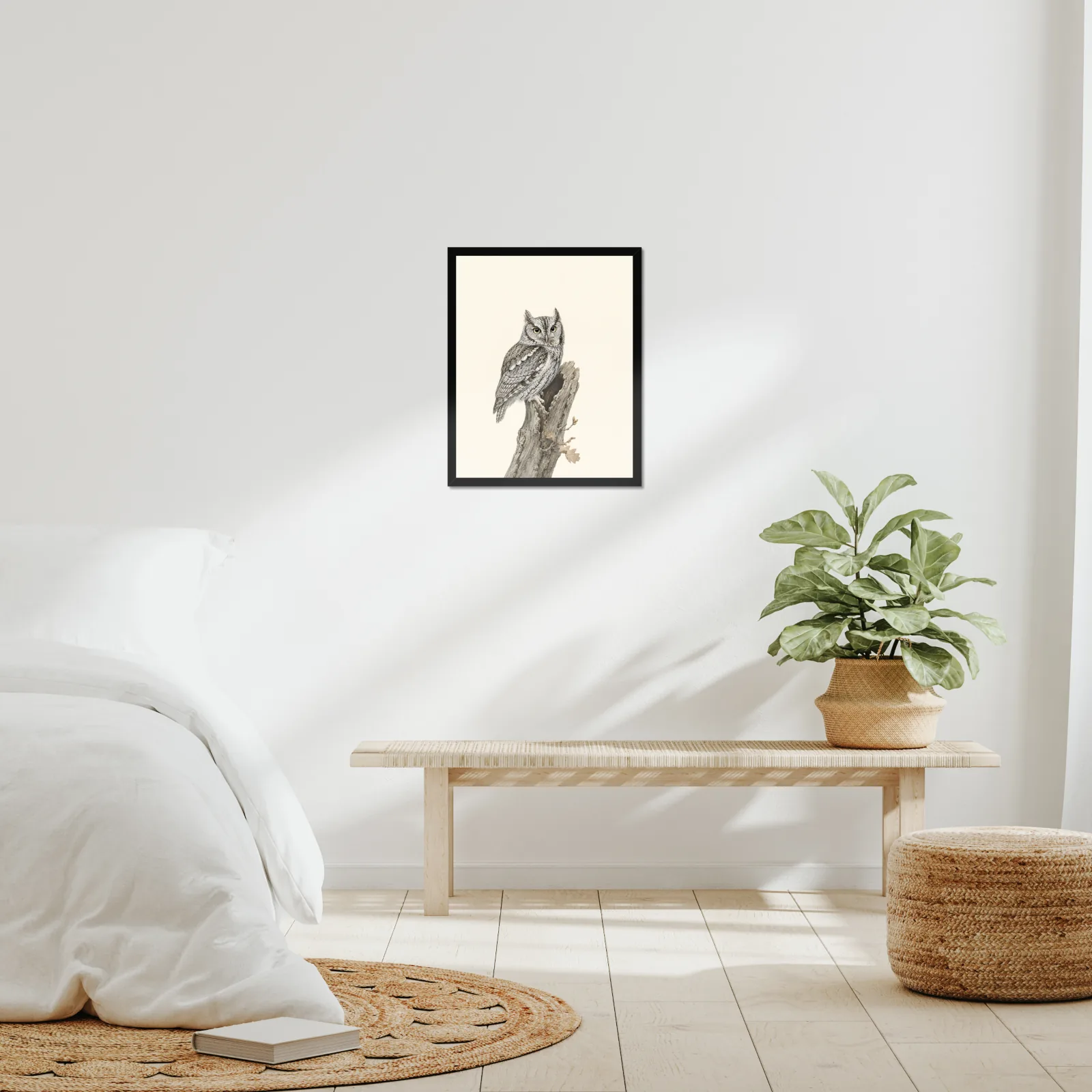
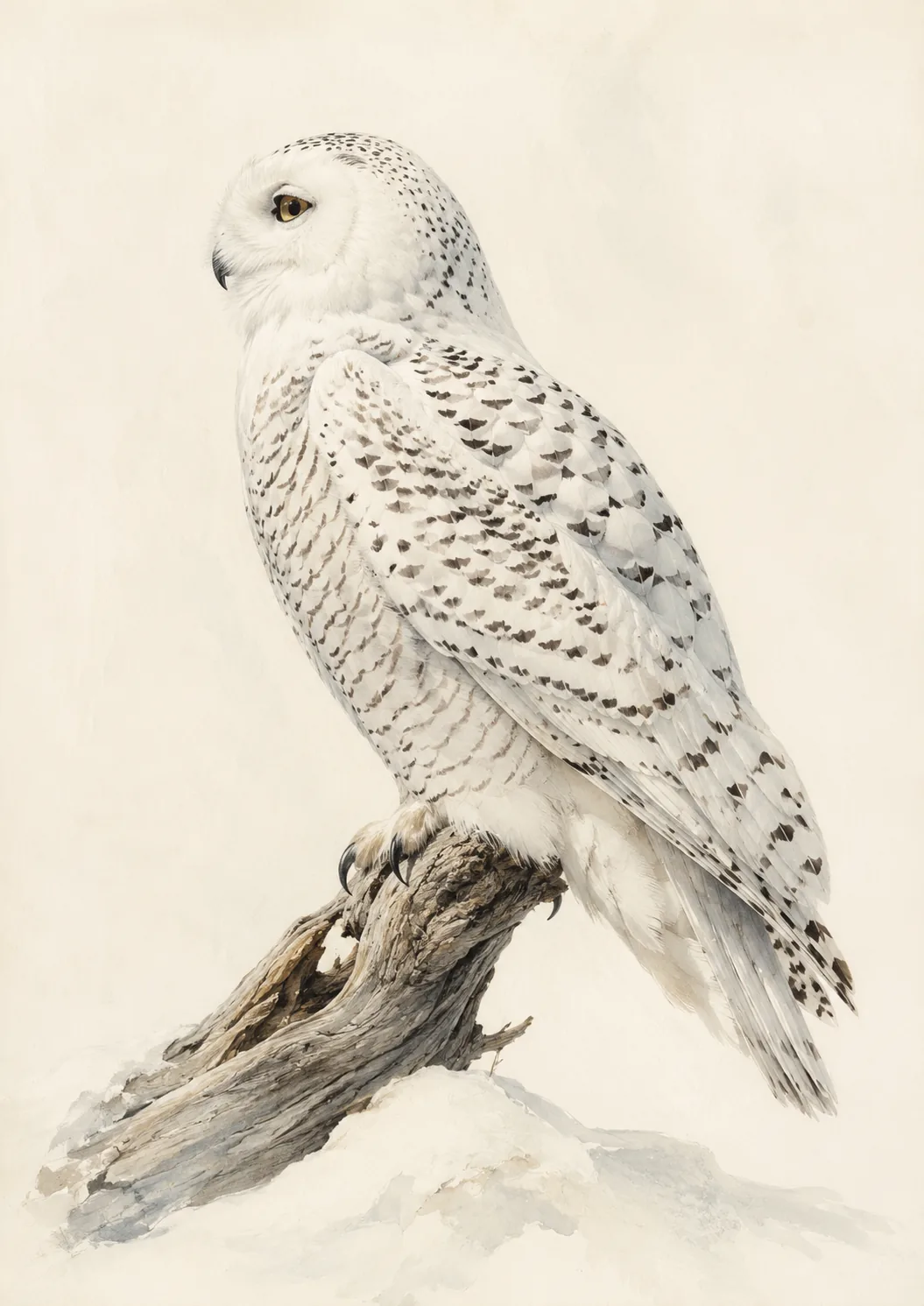
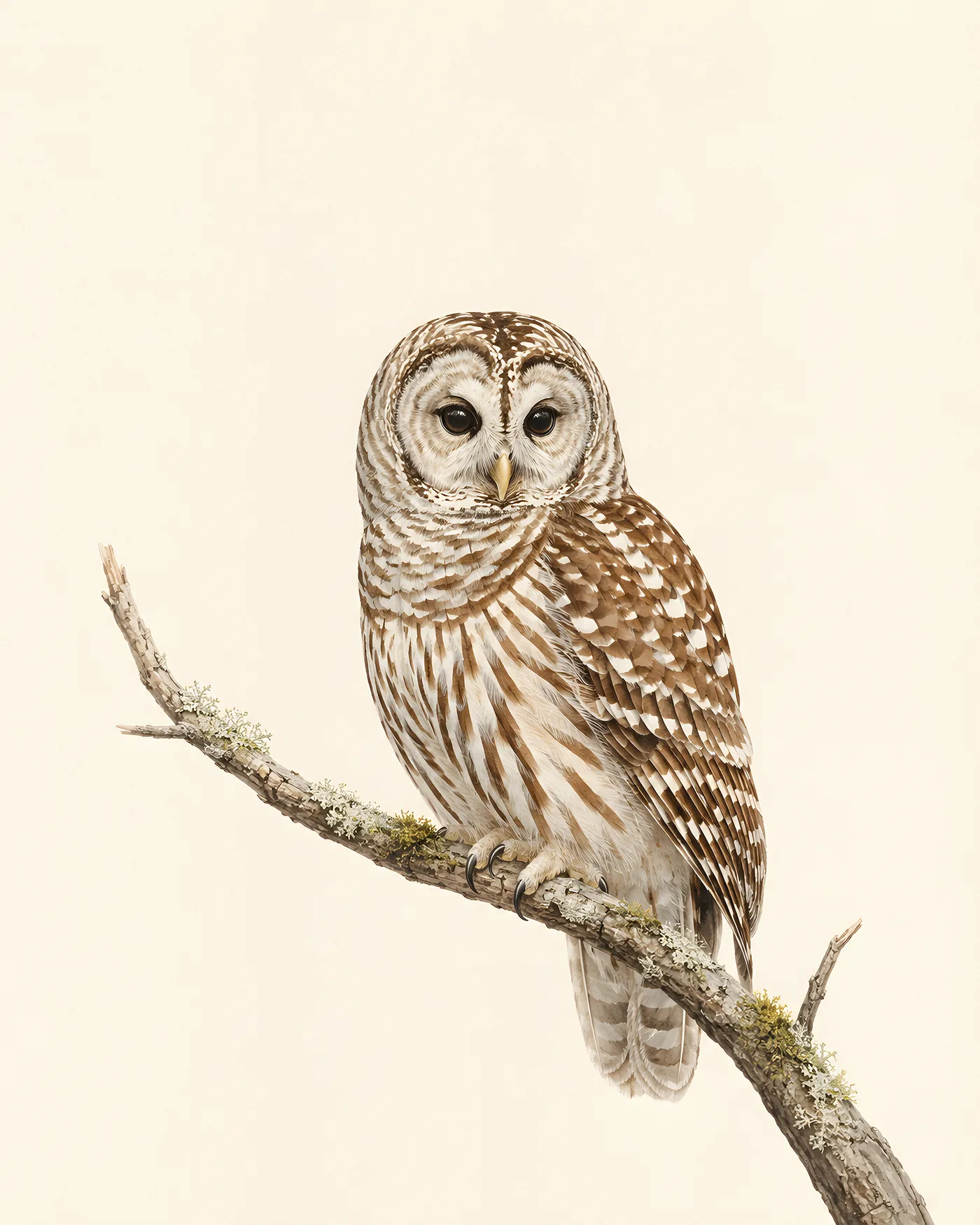
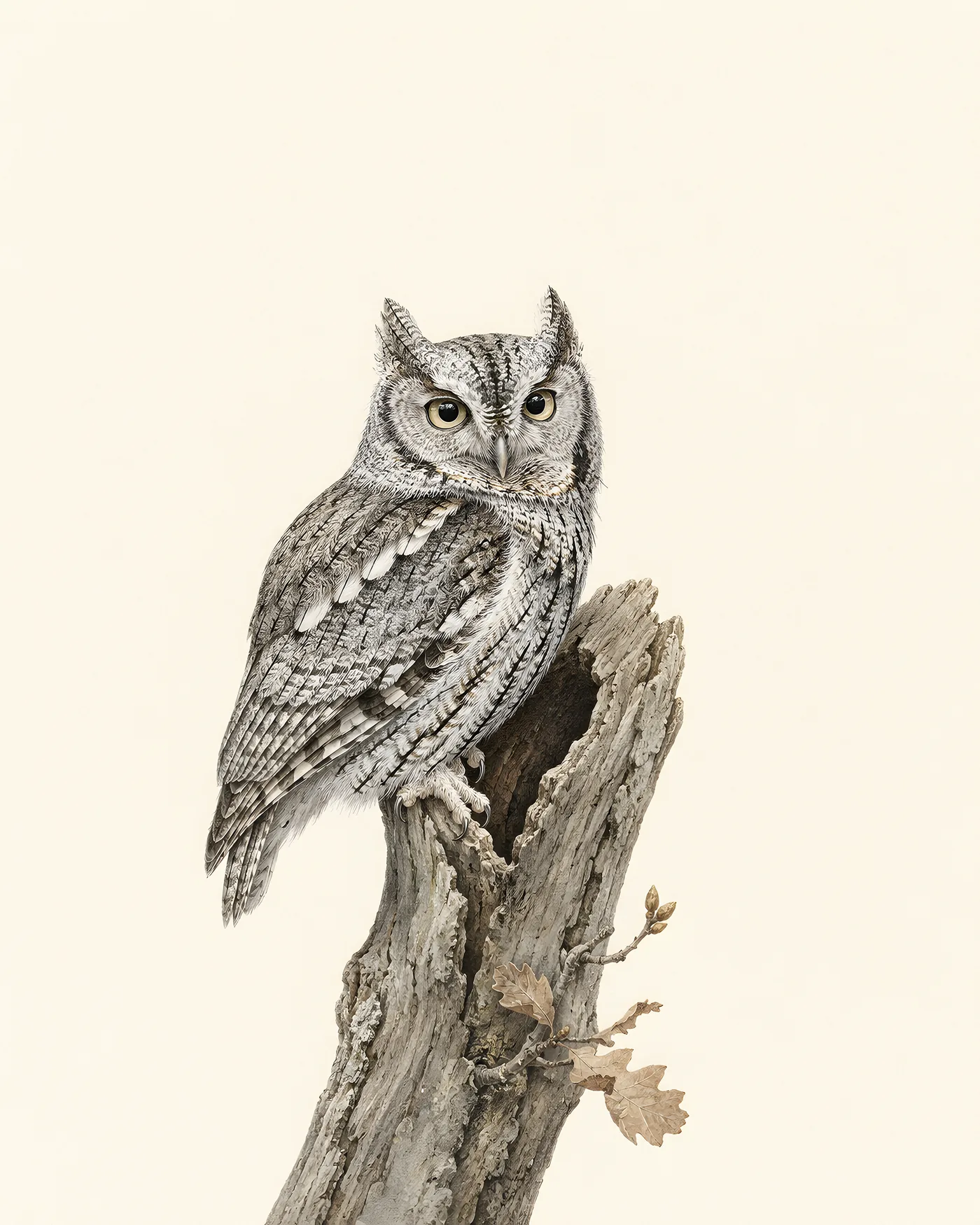
Eyes bright, feathers drawn up tight, the owl perched on a weathered snag is almost bark. This is the screech-owl in its gray morph, and the Audubon-style palette treats it exactly right: brown, rust-grey, branch-warm, the cream of the plate ground behind it. The bird and the tree share their colours. That is the point of both the bird and this image.
Megascops asio is 16 to 25 centimetres tall, lighter than a can of soup at the low end of its weight range. It is a permanent resident across eastern North America, from the southern edge of the Canadian boreal south through the entire eastern United States, and it does not migrate. The same tree hollow in the same suburban yard, used through breeding season and through winter, the pair sometimes roosting there together in cold weather.
The owl in this plate holds the posture it keeps by day: drawn up against the broken wood, alert but still, relying on camouflage that is extremely good. A roosting screech-owl against bark can be overlooked at arm’s length. The streaked and barred pattern of the grey morph is not simply grey. It is a precise imitation of textured bark, fine dark lines over a lighter ground, designed to dissolve the outline of the bird.
Despite the name, it does not screech. Its territorial call is a long, trembling descending whinny. Its contact call between mates is a low trill. Both carry across a small suburban territory at dusk and go unidentified by most of the people who hear them.
A nocturnal hunter held still in the daylight tradition of the old Audubon-style naturalist plates.
The print
fine-art print on Hahnemühle Photo Rag 308gsm, or an instant digital download. Three sizes, 8x10 to 24x30, framed or unframed. Prints from $39. Small and bark-perfect, it suits a study, a child’s room or a naturalist’s wall.
Full field guide: /species/eastern-screech-owl/