

The story of the bird
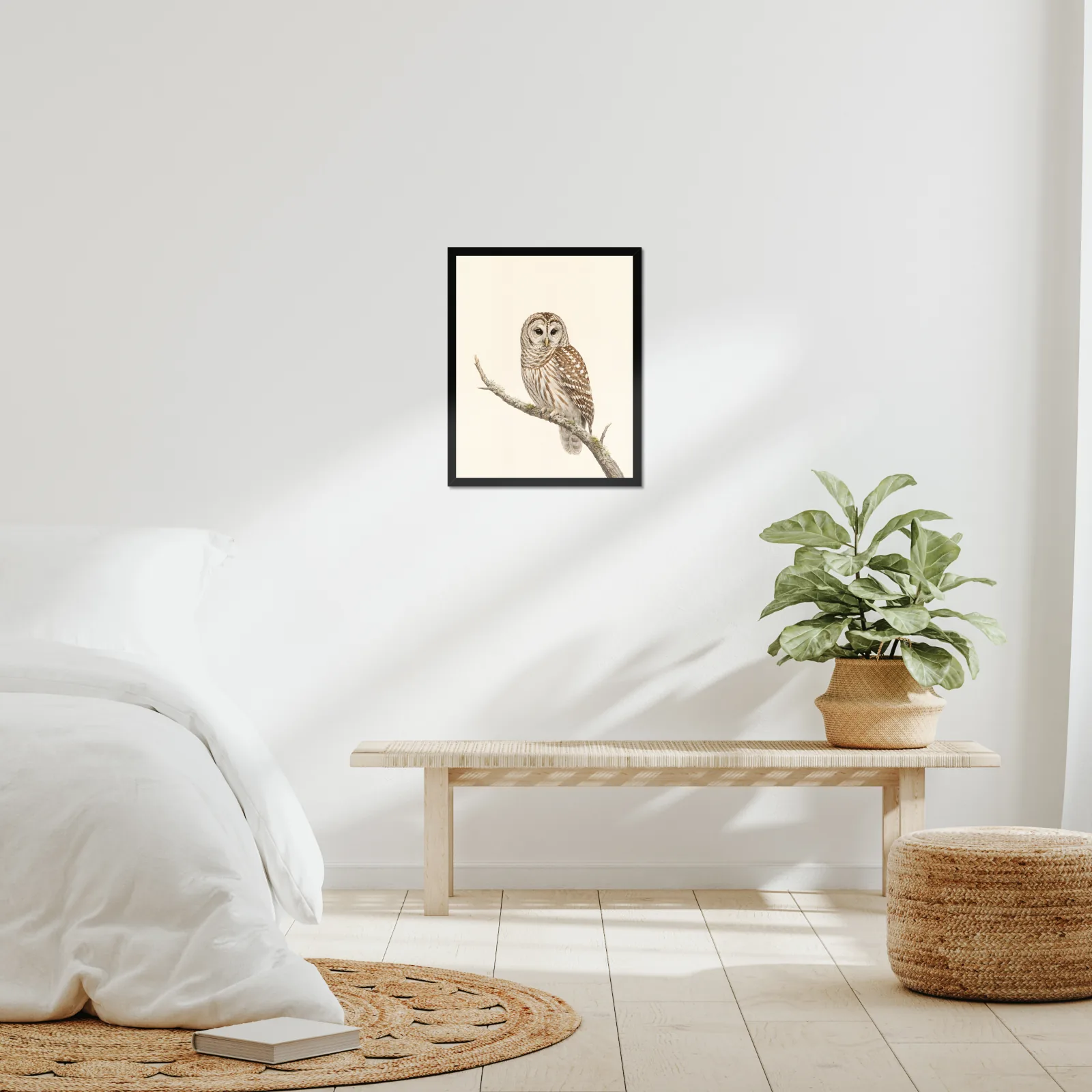
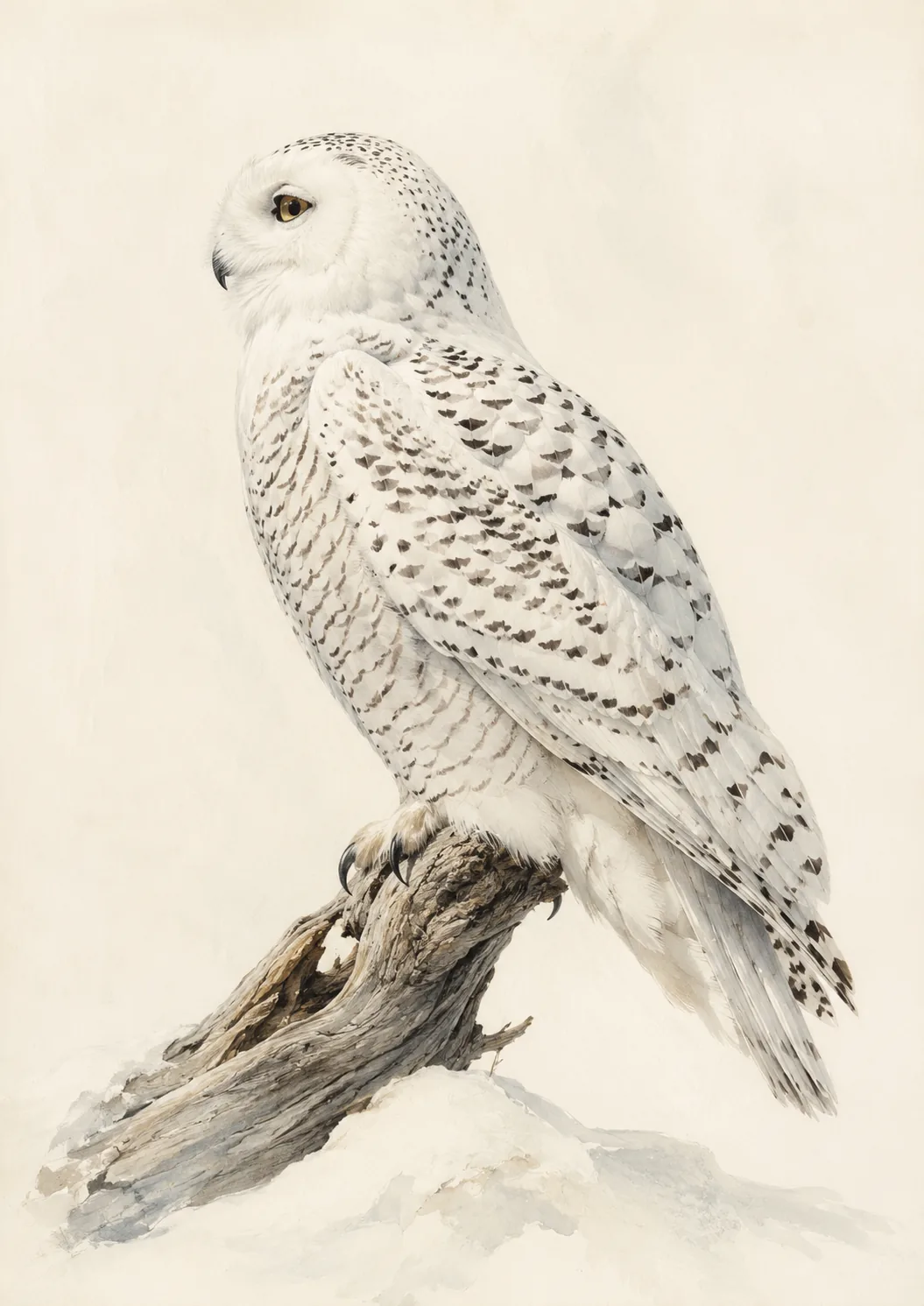
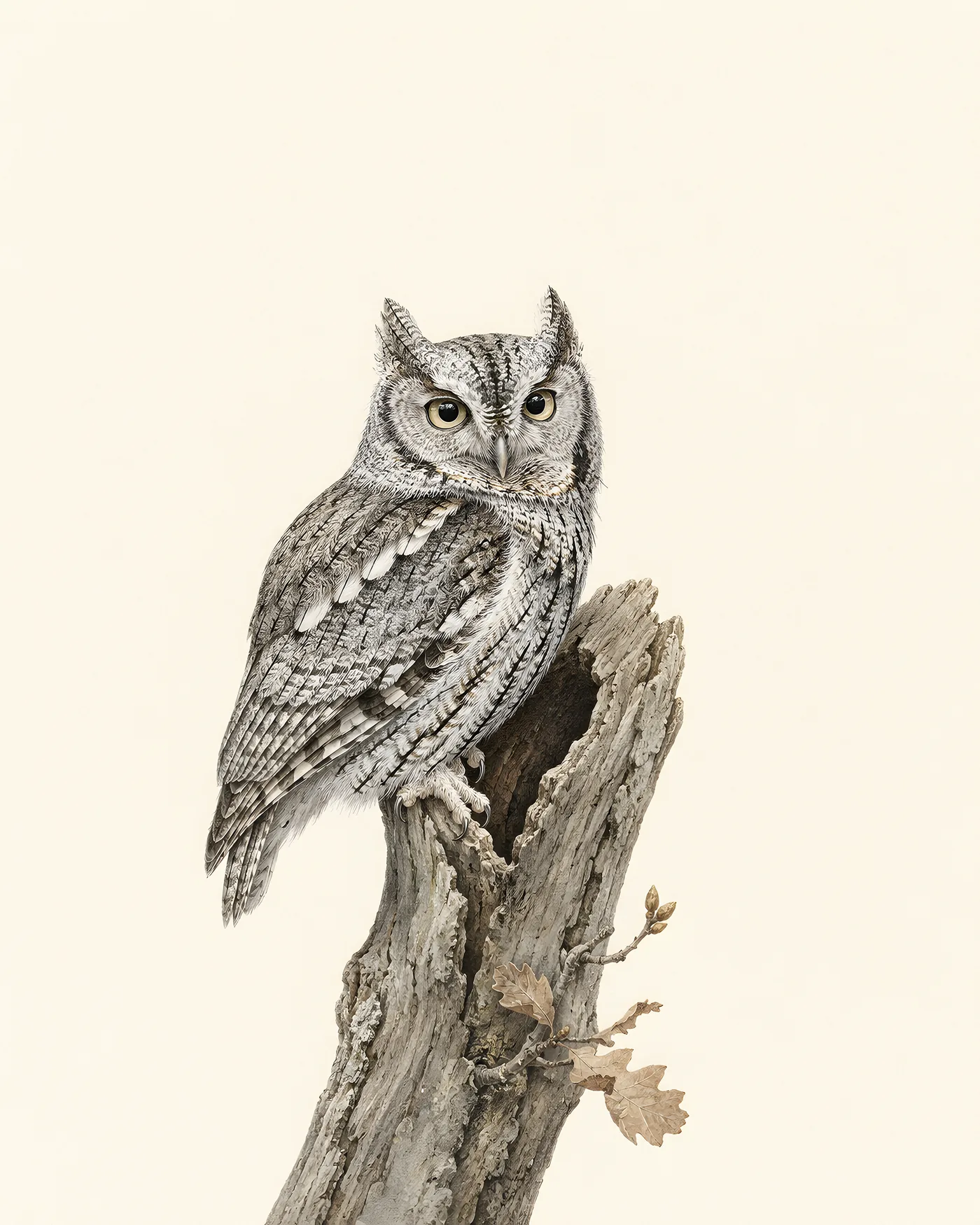
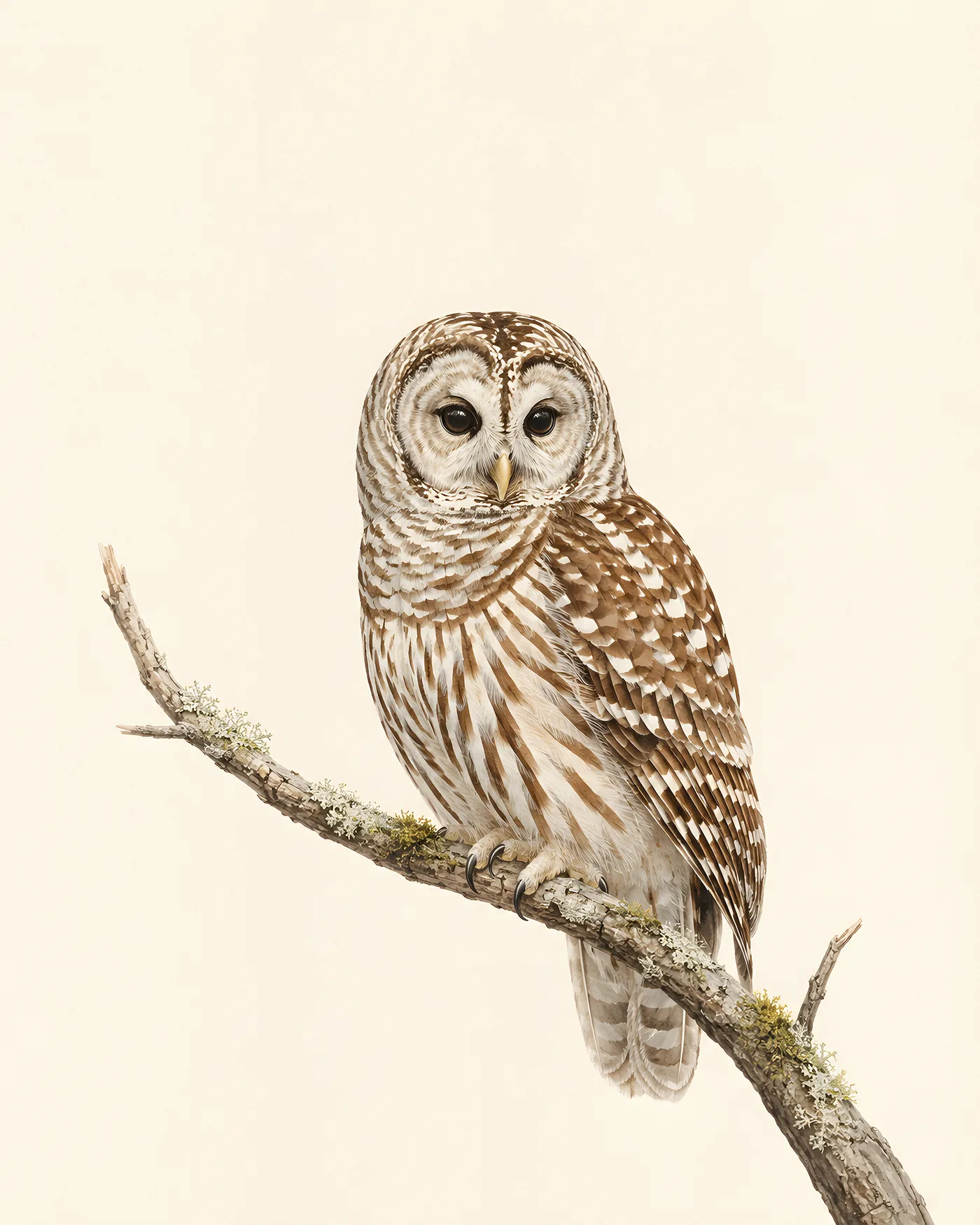
The owl sits low on a moss-covered oak branch, head turned, watching. The Audubon-style palette is perfectly suited to this bird: warm umber and bark brown, the green of the moss the one cool note, a ground of cream and hush behind. Strix varia is a creature of wet woodland and slow rivers, and here the oak carries that habitat in its texture - heavy, damp, old.
Look at the eyes. That is the field mark that defines this species among the big eastern owls. They are deep brown, almost black, soft and wet-looking. Every other large owl in the eastern woods watches the world through hard yellow. The Barred Owl watches through these dark ones. It does not glare. It regards.
Cornell Lab gives the body length at roughly 43 to 50 centimetres, wingspan around a metre, weights from 470 grams to over a kilogram. The plumage divides in two registers: horizontal barring on the throat and upper breast, then bold vertical streaking below. No ear tufts. Round-headed, heavy, broad across the shoulder. The posture on this branch - settled, deliberate, turned - is the natural attitude of a bird that announces itself by voice rather than by flight.
The voice is worth knowing. Eight or nine hoots, rhythmic, falling away at the end into a question no one answers. This is the owl most people hear before they ever see one, and the one most likely to answer an imitation. Cornell Lab catalogues it as one of the most vocal owls on the continent.
A study in the Audubon tradition, made for a wall and meant to be returned to.
The print
fine-art print on Hahnemühle Photo Rag 308gsm, or an instant digital download. Three sizes, 8x10 to 24x30, framed or unframed. Prints from $39. The owl most people hear before they see, it suits a study, a reading corner or a room that looks onto trees.
Full field guide: /species/barred-owl/