


The story of the bird
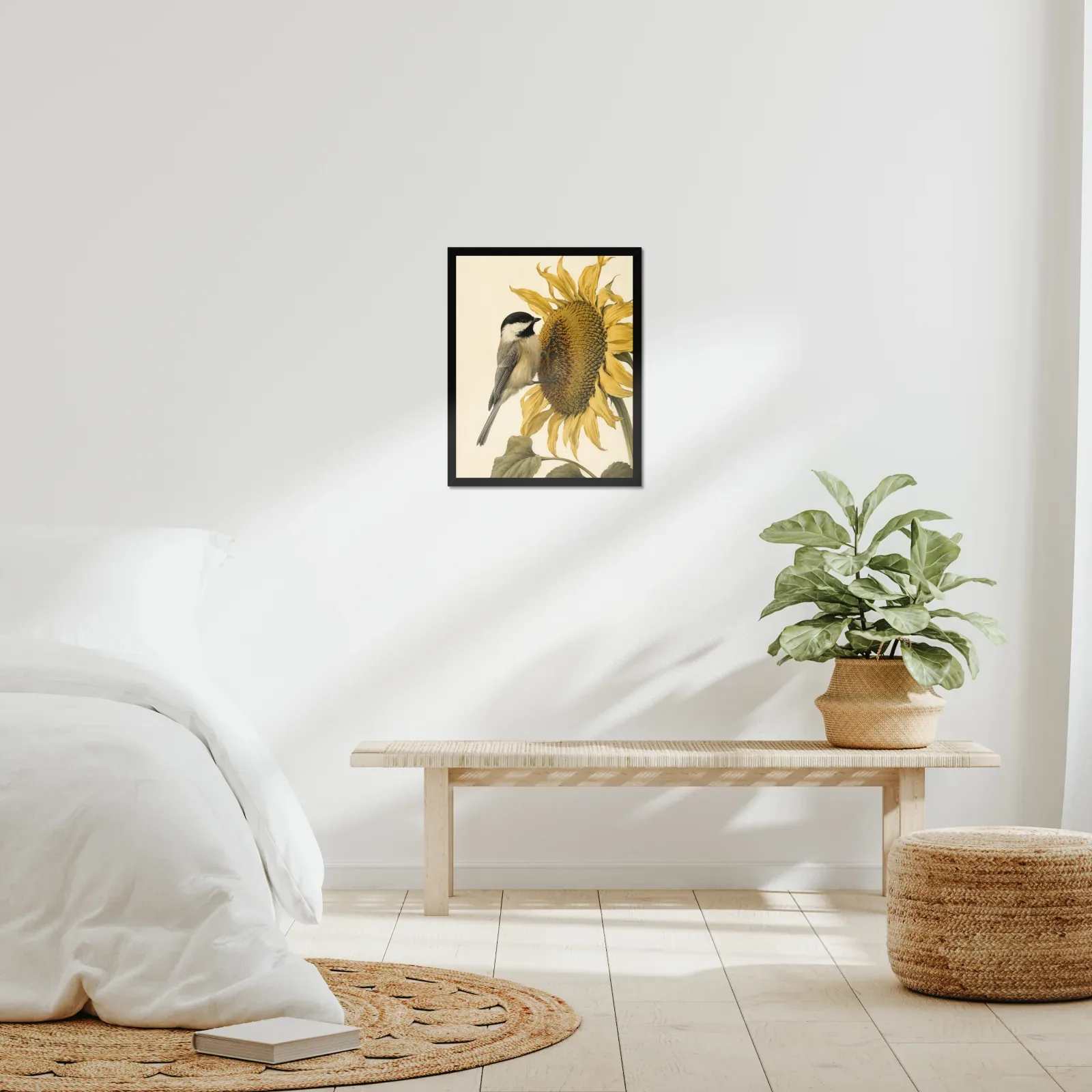
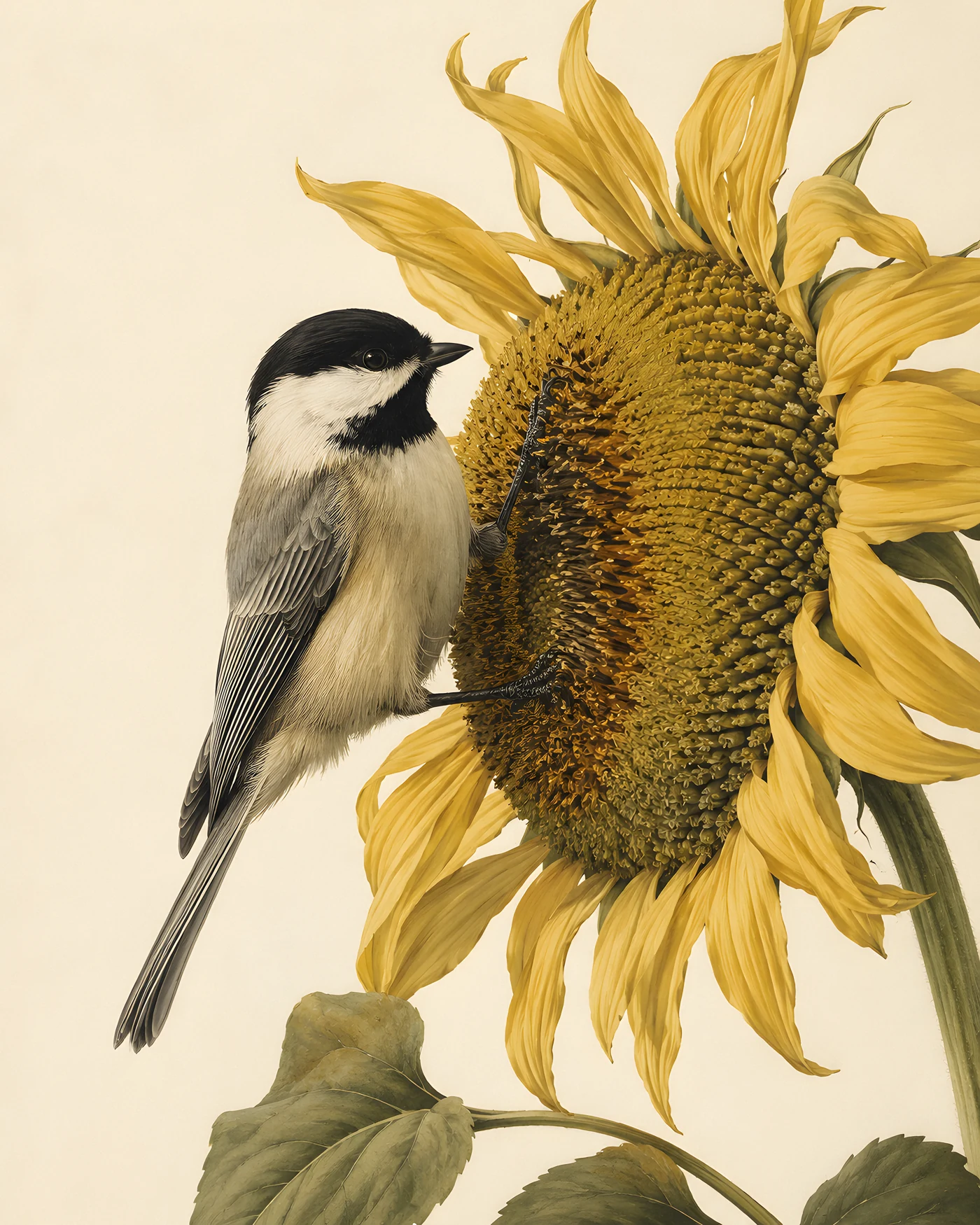
A small grey bird against a great gold face. The chickadee clings to the rim of a spent sunflower, black cap sharp against the amber seed head, bill angled toward the work. The Audubon-style palette here is warm and patient - cream ground, soft sage leaf, the sunflower rendered in umber and amber, the bird’s white cheeks clean against both.
Poecile carolinensis weighs eight to twelve grams. That is the weight of a few coins. It is one of the smallest birds to visit a feeder and one of the most reliably present: this is a species that does not migrate, so the bird you see in January at a sunflower head is the same bird who was there in June.
The chickadee hangs upside down to work a seed head. The posture in this plate shows it reaching over the sunflower’s face rather than beneath it, but the principle is the same: an acrobatic, lightweight bird using angles that a larger species cannot. It also caches food for lean weeks, tucking seeds into bark crevices in autumn and relocating them by memory. The call that names the family - a buzzy “chick-a-dee-dee-dee” - adds extra notes when the bird is alarmed. More notes, more worry.
Its four-note whistled song carries clearly through winter, one of the cleanest sounds in a southeastern American garden.
A plate of one quiet bird doing what it does best, drawn in the close tradition of Audubon-style natural history illustration.