



The story of the bird
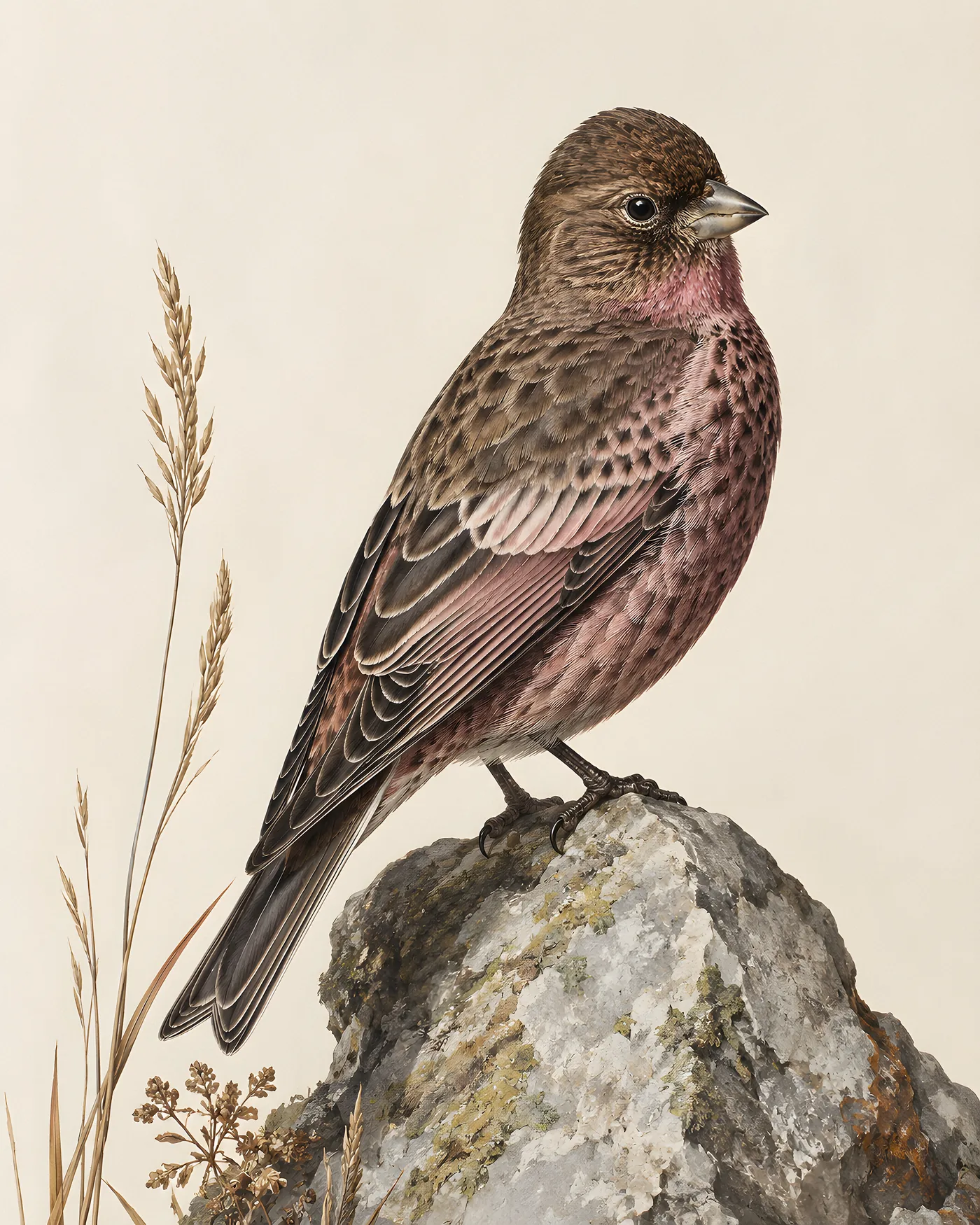
Three rosy finches share the western mountains - the House Finch, the Purple Finch, and Cassin’s - and birders who spend time in the Rockies or Cascades learn to separate them. Cassin’s is the bird of the high coniferous forest, the species most likely to be found above 7,000 feet in summer, nesting in lodgepole and fir while the other two manage lower elevations. In winter, flocks descend and mix, and the separation becomes the puzzle.
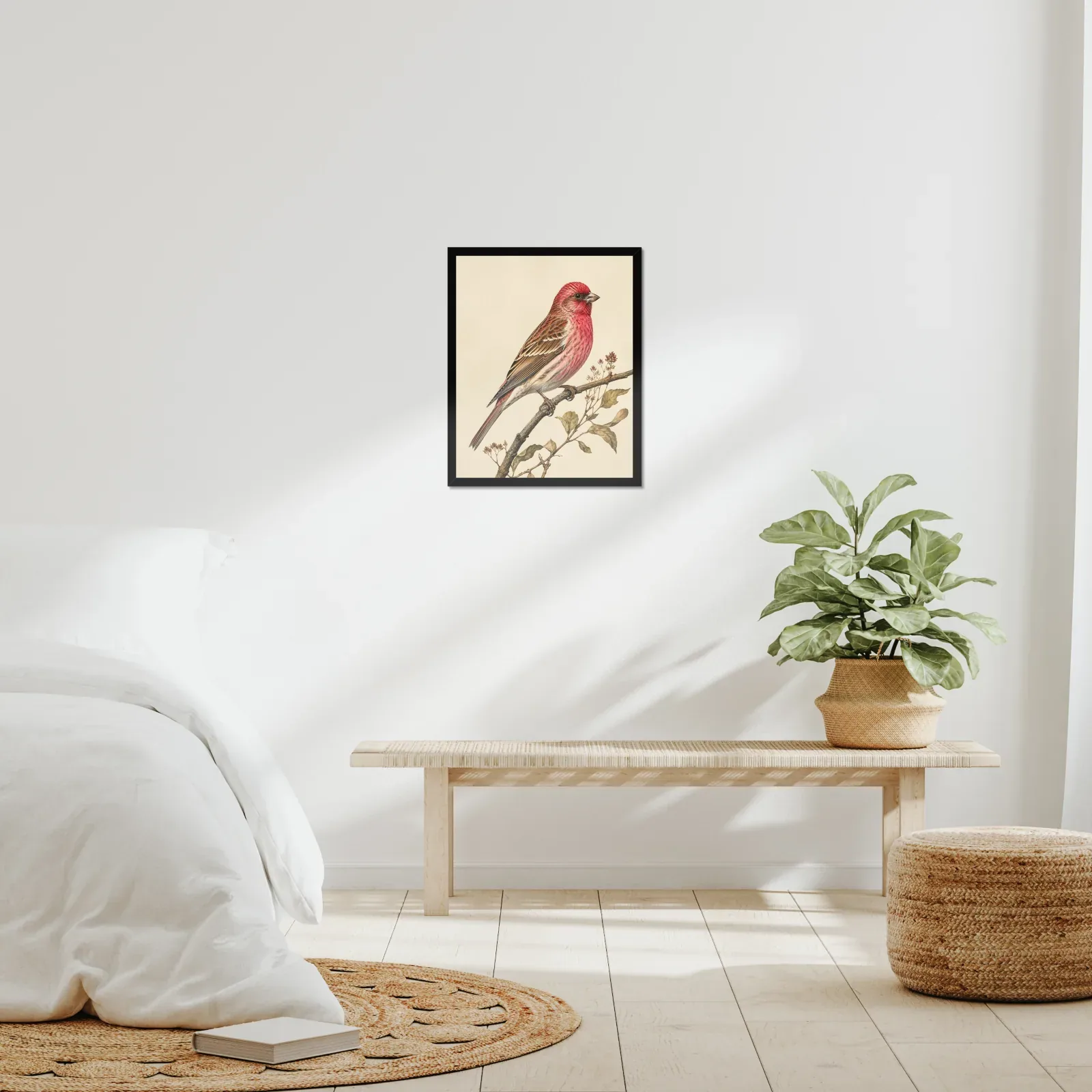
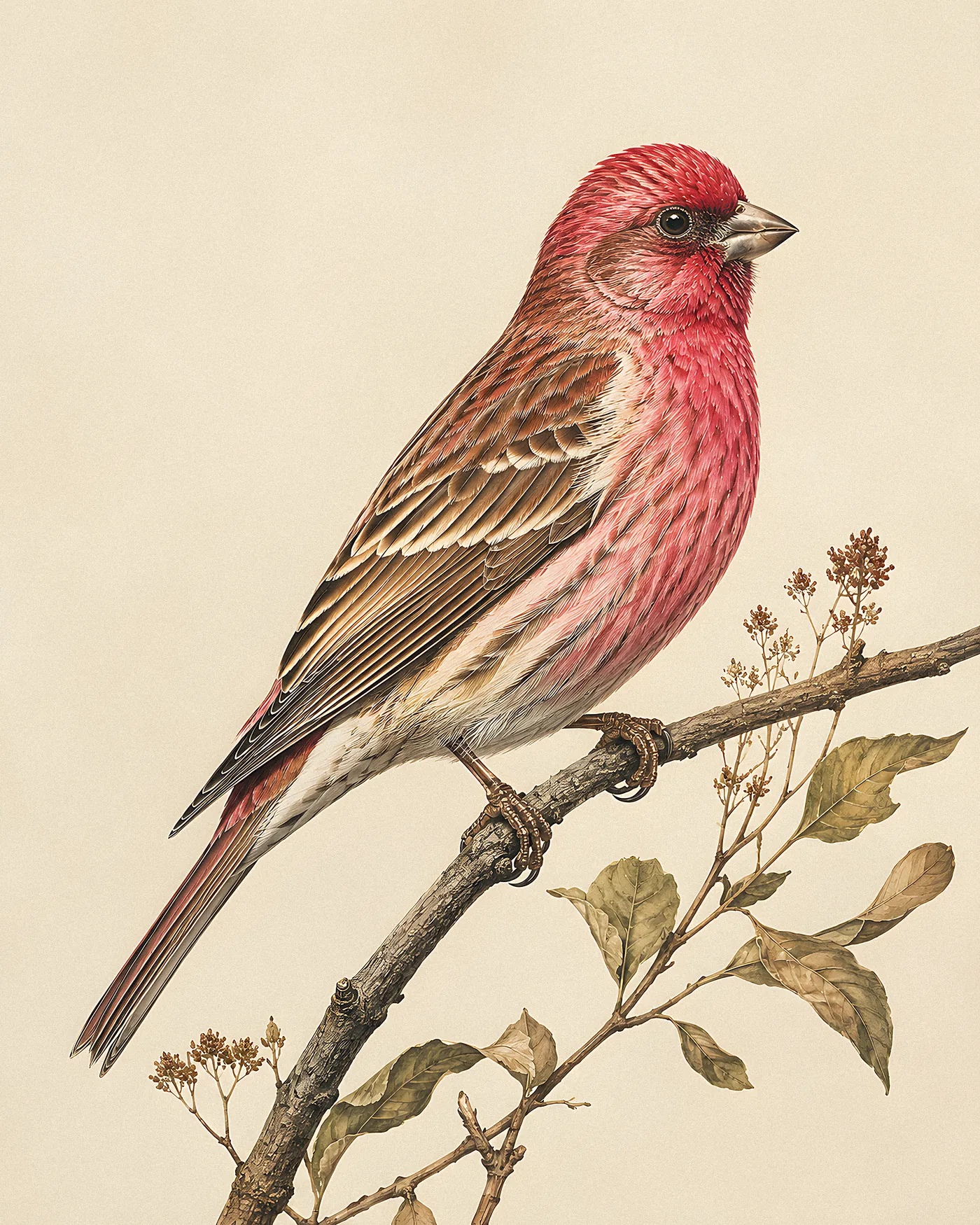
Haemorhous cassinii is slightly larger than the House Finch and slightly smaller than the Purple. The adult male carries a raspberry-red crown that stands distinctly peaked - not rounded, not flat, but peaked, a structural difference visible at distance. The colour washes down onto the breast and back, a rosy-pink that in good light deepens to almost wine-red at the crown. The streaking is there, present on the back and breast, but less heavy than the House Finch’s brown-on-white pattern. The overall effect is brighter, cleaner, more saturated.
The song is the best separator in the field: long, rich, and melodious, one of the more musical songs of any North American finch, delivered from a conifer top with the bird’s head back and throat pulsing. It sings in a way that makes the bird seem larger than it is.
Named for John Cassin, the nineteenth-century ornithologist who catalogued much of the American West’s avifauna, this finch carries his name into every lodgepole stand in the Sierra and Rockies.
Paper and finish
Available in three sizes on Hahnemühle Photo Rag 308gsm - matte fine-art paper. Printed by Prodigi using pigment inks rated 100+ years under display conditions.
| Size | Unframed | Framed |
|---|---|---|
| 8 × 10 in | $39 | $99 |
| 16 × 20 in | $69 | $149 |
| 24 × 30 in | $99 | $199 |
Framed prints are glazed, no mat. Frame colours: black, white or natural.