


The story of the bird
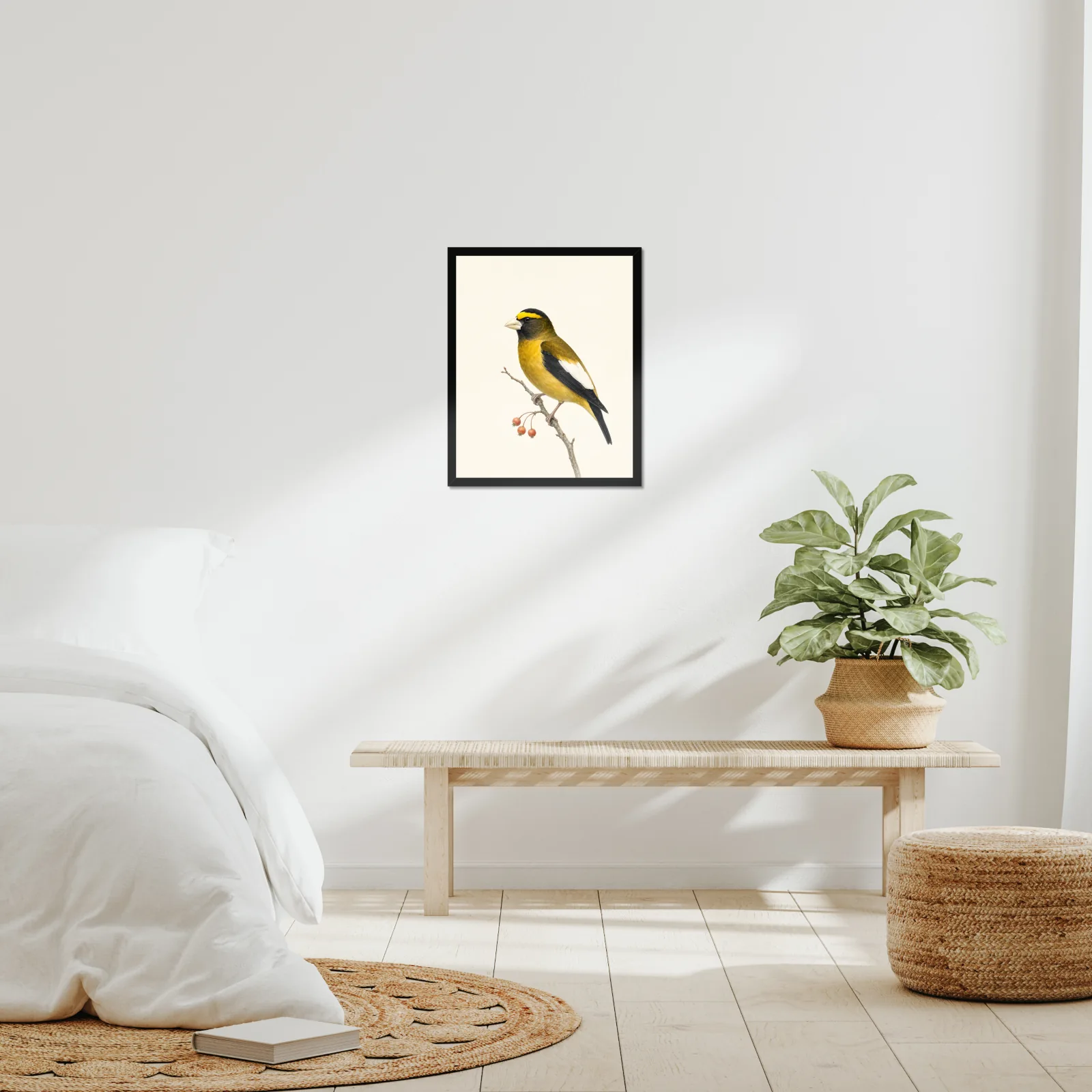
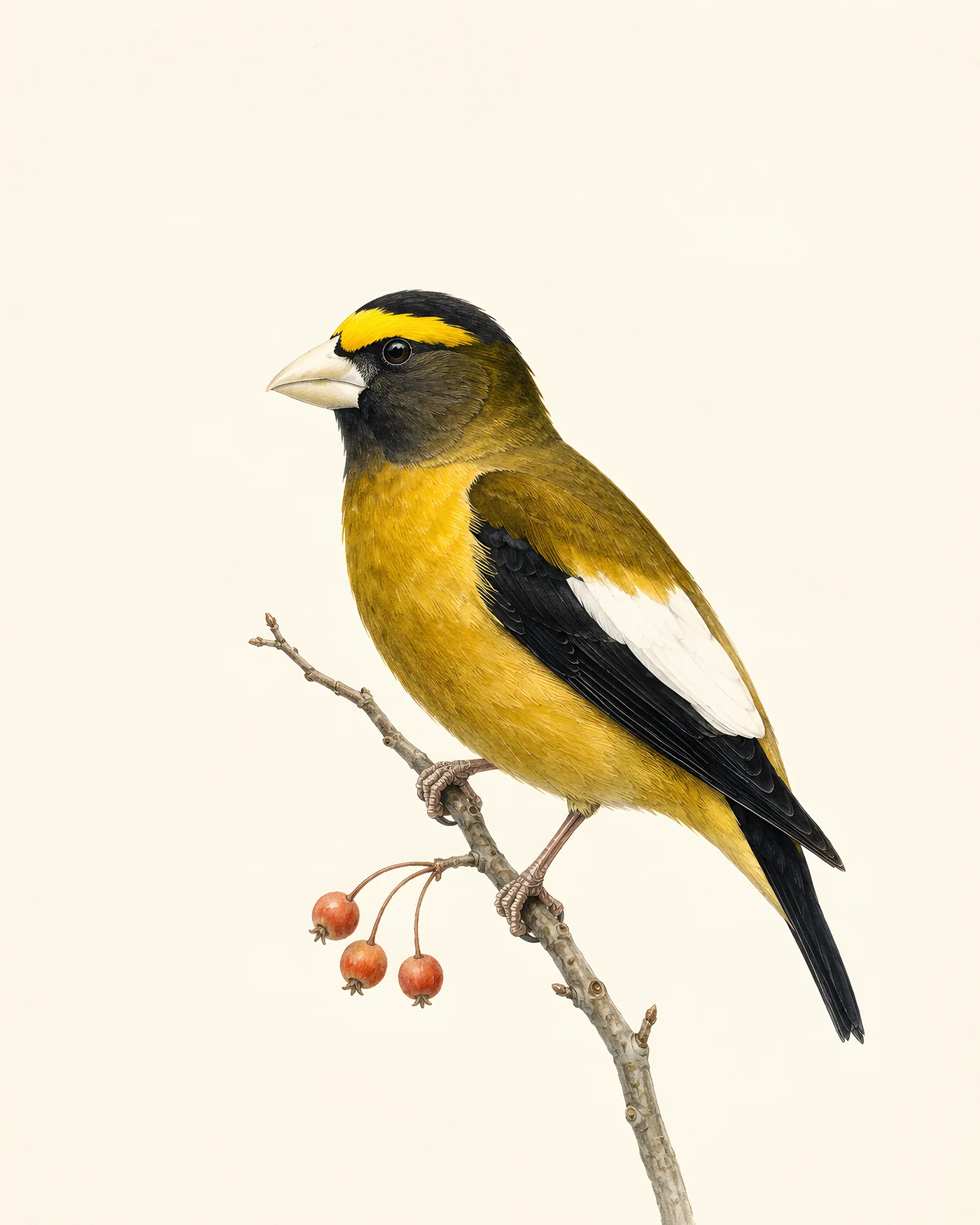
A male Coccothraustes vespertinus on a pine branch in berries, in the Audubon-style plate palette: cream ground, dark green needles, the bird’s deep golden-brown body brightening to yellow at the forehead and belly. Black tail. Black wings split by the large white patch that flashes in flight. The bill at the centre of the composition is huge and bone-pale, the tool that makes this bird what it is.
The Evening Grosbeak is a finch built heavy, 17 to 21 centimetres long and up to 80 grams in weight, with a short, deep, conical bill pale enough to read almost white in winter light. It is designed for cracking hard seeds. Maple keys, box elder, cherry pits. At a feeder it goes straight for sunflower, cracking the shell in one motion.
The male in this plate is in the plumage the old plate-makers prized: the gold at full intensity, the white wing patch clean against the black, the yellow brow stripe vivid. The female is quieter, grey-brown with yellow at the neck and the same wing pattern restrained, and she does not appear here. This is the winter-flock bird at his most legible.
The species is now listed as Vulnerable. Once a familiar irruption visitor across much of the continent, arriving in flocks that filled feeders and moved on, it has declined steeply over the past generation. The causes are not fully settled. A flock in the yard is something to pay attention to, and to mark.
A plate for a bird that is rarer than it was, rendered in the tradition that understood scarcity as a reason to look more carefully.
Full field guide: /species/evening-grosbeak/