


The story of the bird
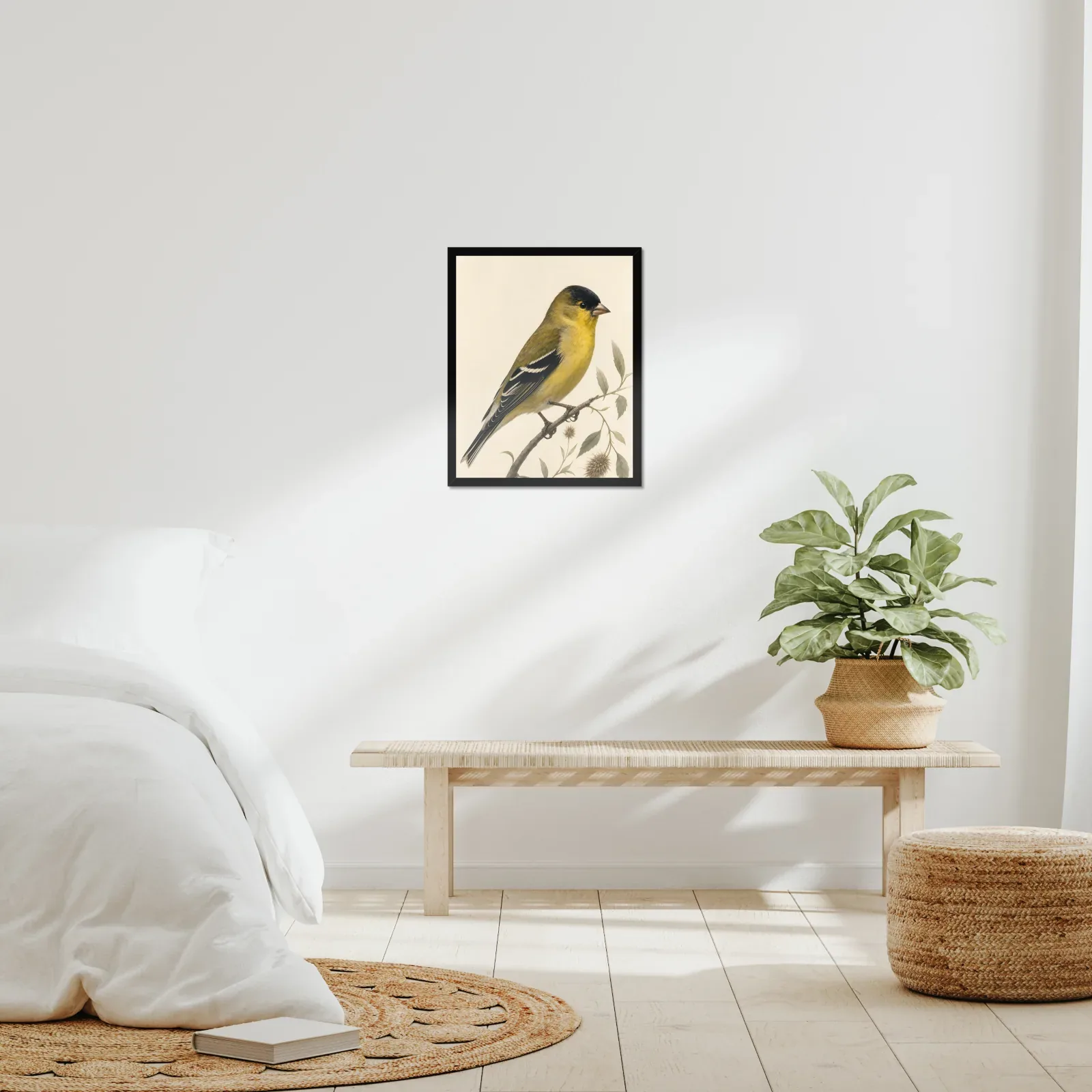
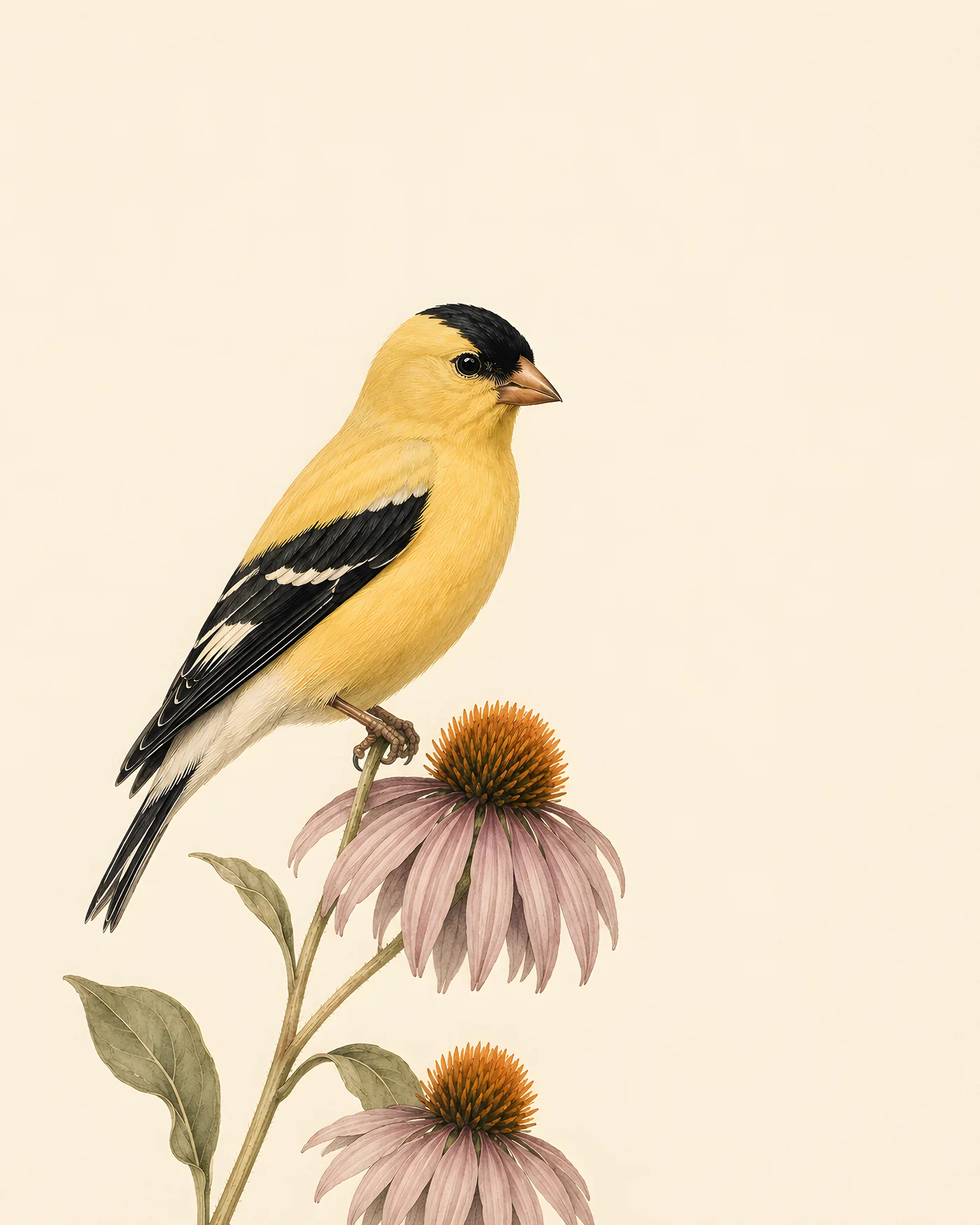
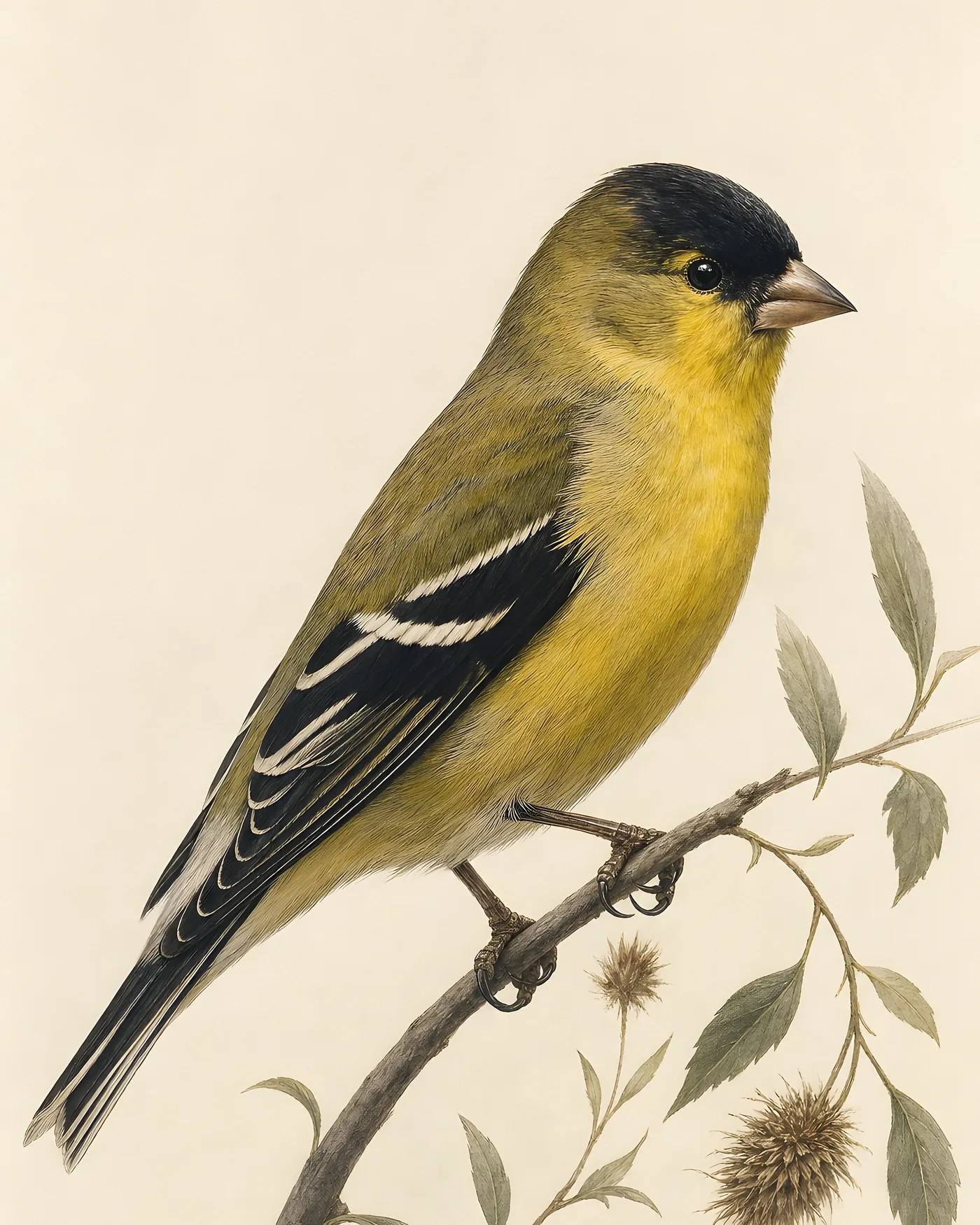
A male Spinus psaltria on a thistle stem. The plate shows him as the field guides describe him: bright yellow underparts, a neat black cap on the forehead, and that dark back - olive-green in California birds, trending to near-black further east and south. A bold white wing flash sits against the grey-black primary feathers. Faded seed-heads fill the foreground. Cream ground, quiet light. This is the Audubon-style palette at its most restrained.
The Lesser Goldfinch is the West’s counterpart to the American Goldfinch - smaller, darker on the back, and at home in places the famous yellow bird rarely reaches: oak scrub, desert-edge gardens, brushy arroyos. The two species barely overlap in range, but this plate holds the detail that tells them apart in a single glance. That variable back is the field mark. The white wing flash is the giveaway.
Spinus psaltria feeds by hanging. Thistle heads, sunflower hearts, the seed cones of weeds: it works them upside down with the agility of a much larger finch. At 8 to 11 grams, it is one of the smallest finches in North America.
The range runs from the western United States south through Mexico, Central America, and the northern edge of South America - one of the longest ranges of any North American goldfinch.
Drawn in the tradition of Audubon, where a single bird on a stem is enough.