



The story of the bird
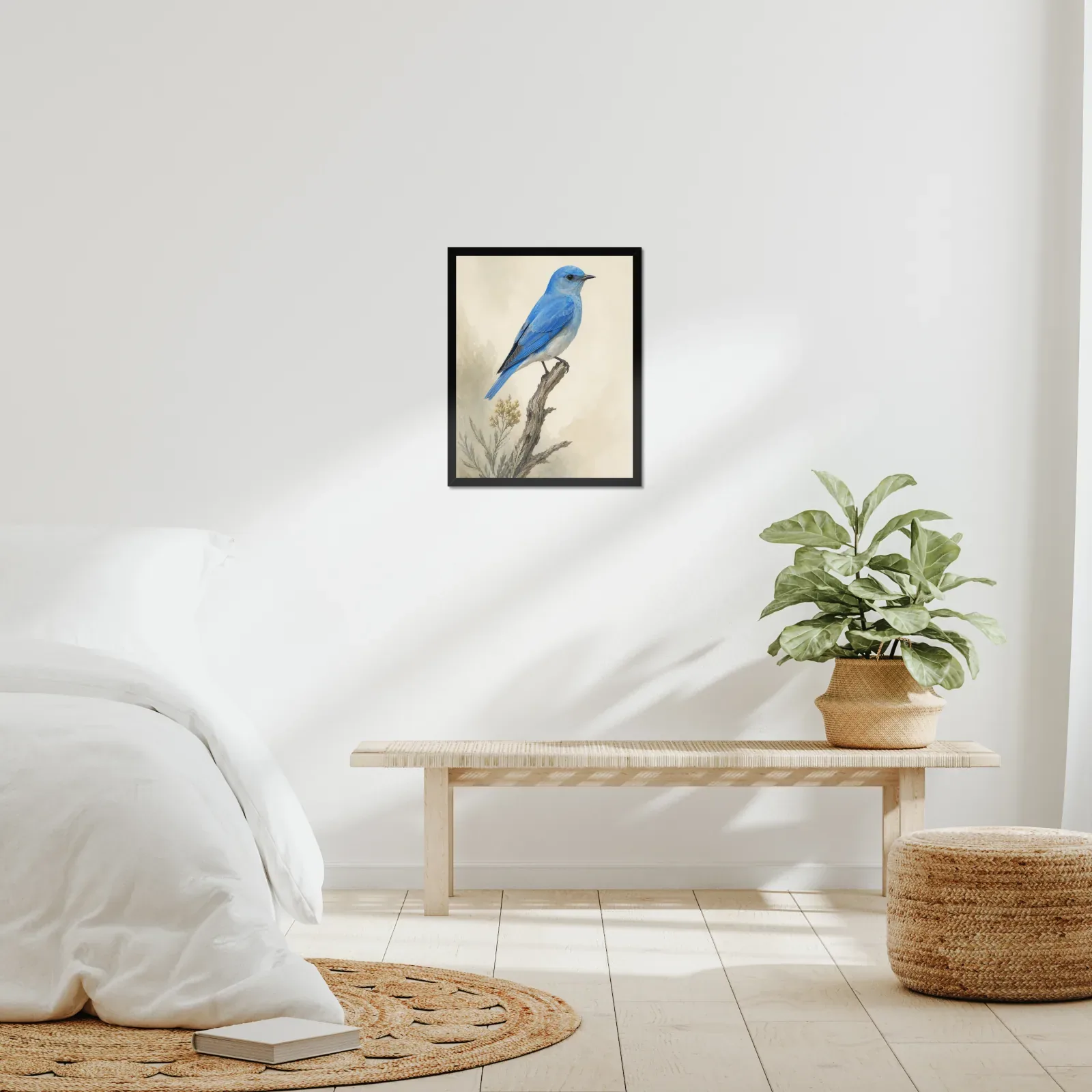
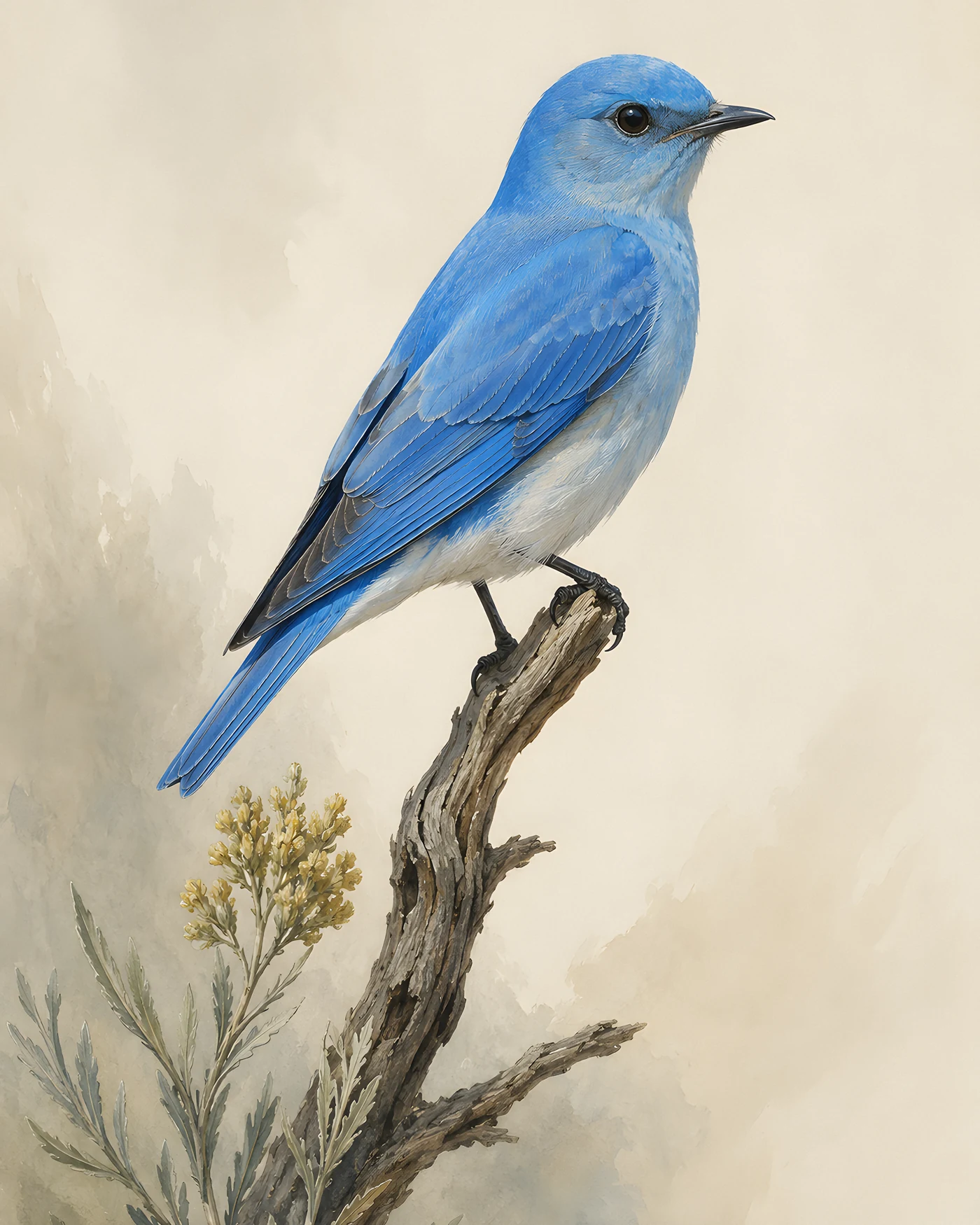
A male Mountain Bluebird on sagebrush, in the Audubon tradition. A gift for a high-country birder or a Rocky Mountain cabin, or a calm sky-blue accent for a bedroom or reading room.
The male Sialia currucoides perched on sagebrush. No rust anywhere. No chestnut at the breast, no warm shoulder patch - this is the one North American bluebird that is sky-blue from crown to tail, deepest across the back and wings, fading to a paler blue-white on the belly. The plate holds him on a sprig of silver-green sage, the warm cream of the paper pushing the blue forward. Open composition. One bird. The air around him matters as much as the bird.
The Mountain Bluebird breeds across open high country from Alaska through the Rockies, nesting in old woodpecker holes and nest boxes at elevations the other two bluebirds rarely reach - recorded up to 12,500 feet. He hunts by hovering, holding a trembling stall above the grass while he watches for movement below, then dropping. It is the only bluebird that hunts this way, and it is the behaviour that explains the long wings and the upright posture visible in this plate.
The blue is structural, not pigment - the same trick of nanoscale feather architecture that makes the sky blue. A shed feather held to the light looks grey-brown. On the bird, against sage or snow, it is the brightest thing in the country.
Partners in Flight estimates the North American population at around 5.6 million.
Drawn in the tradition of Audubon, where a bird of the high country earns its place against clean paper.