




The story of the bird
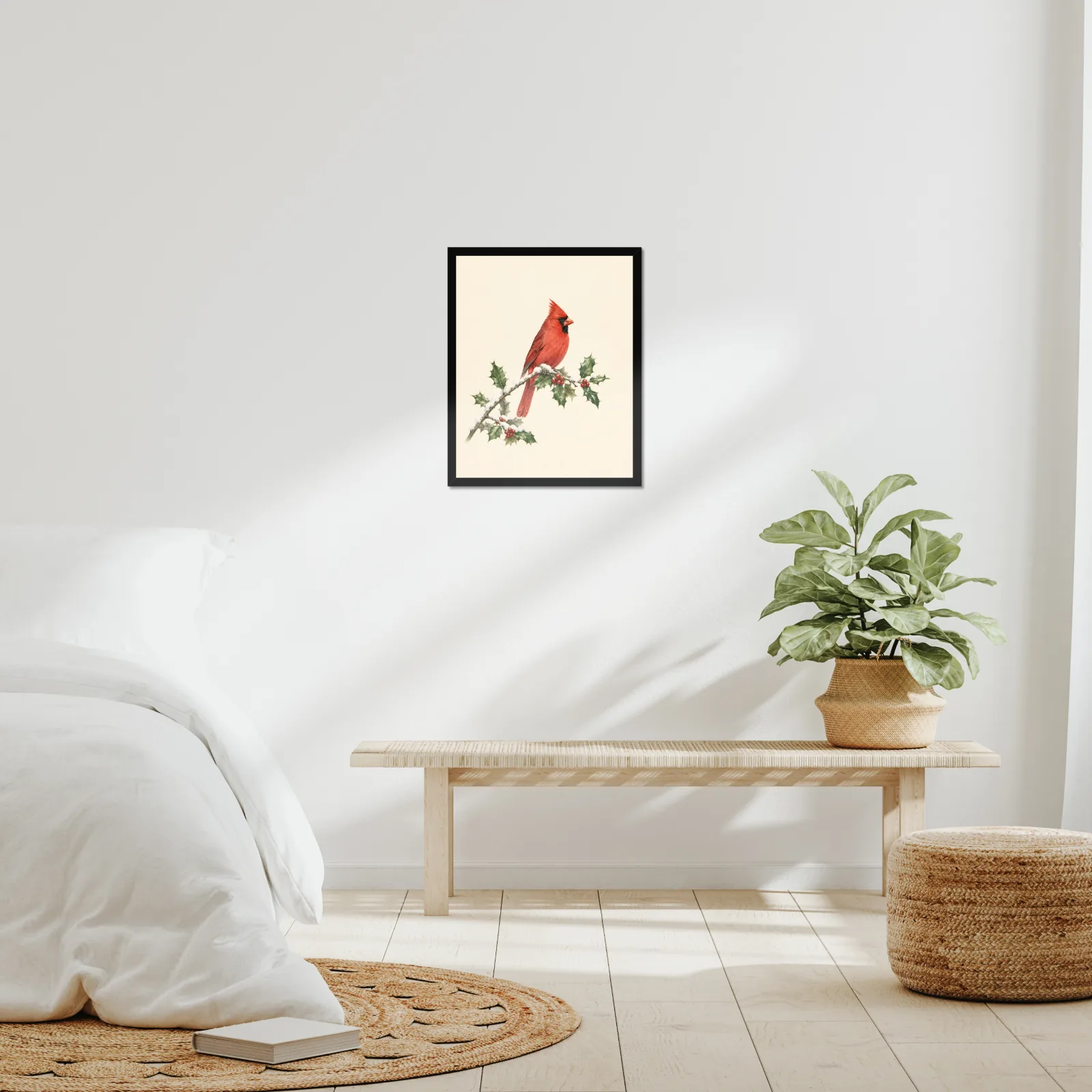
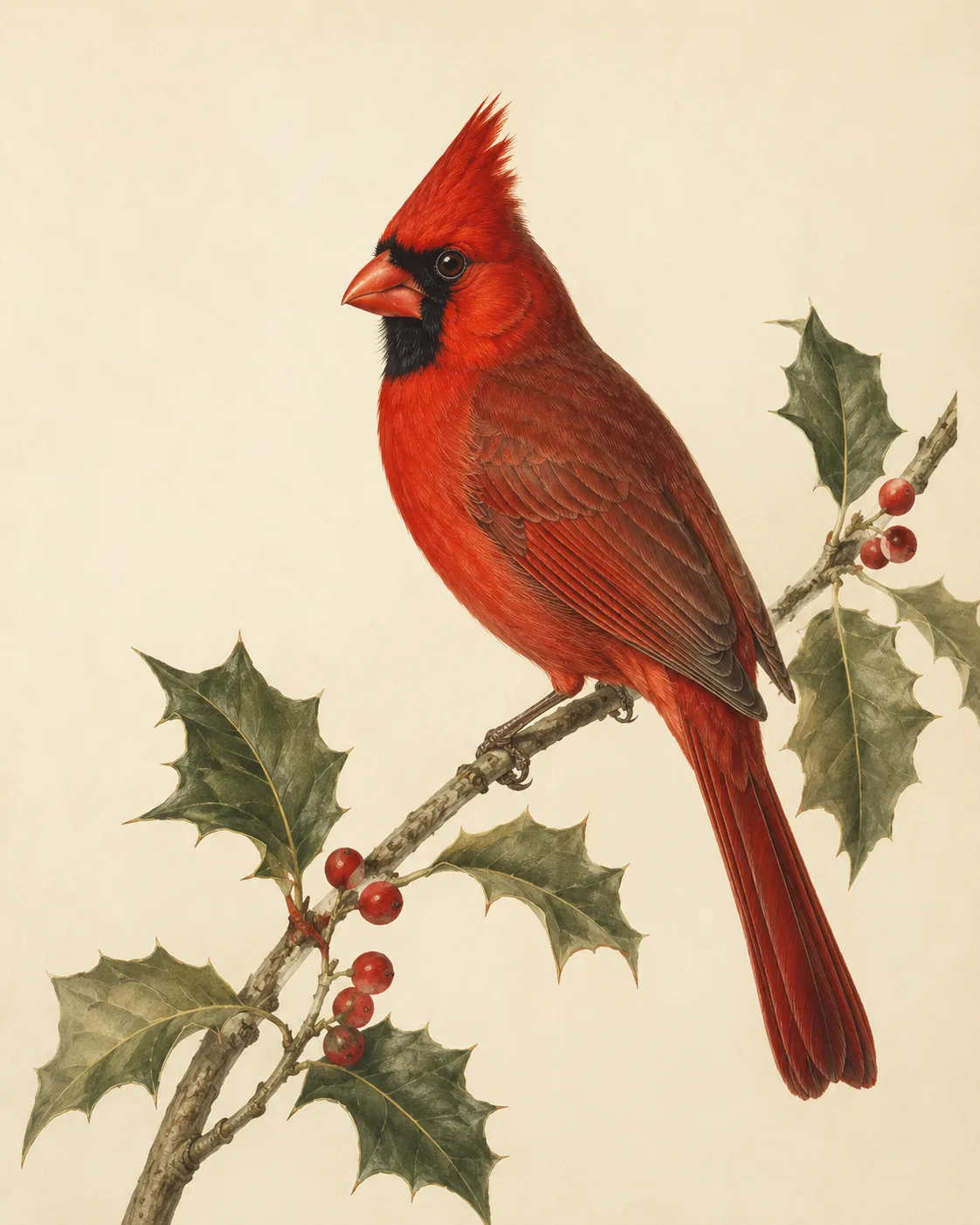
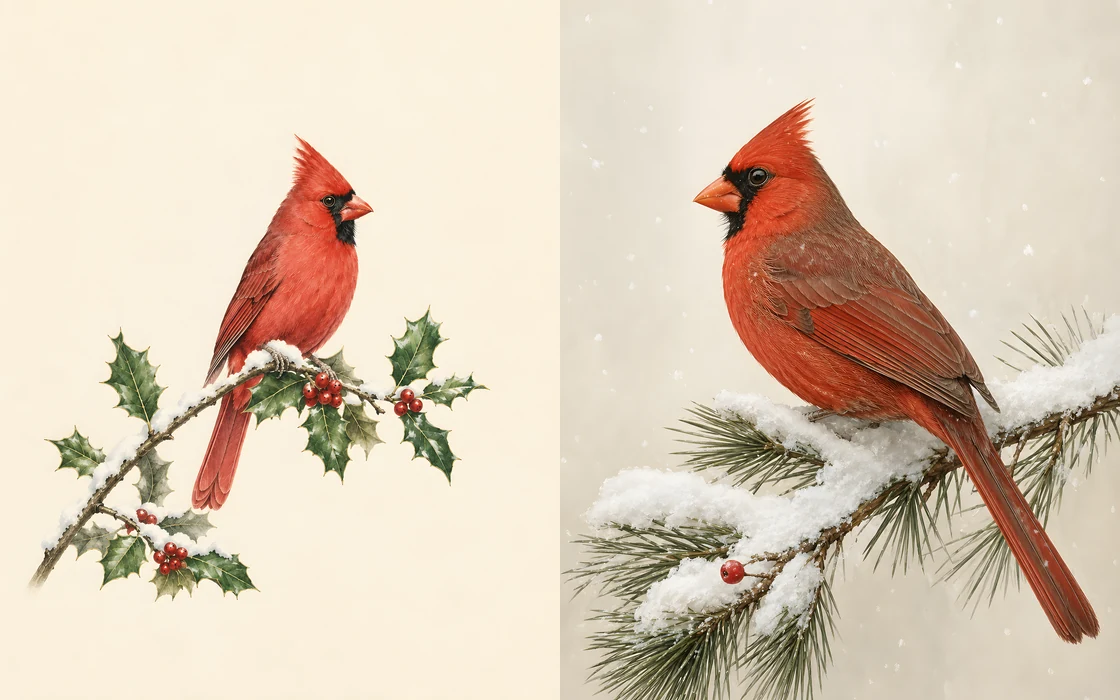
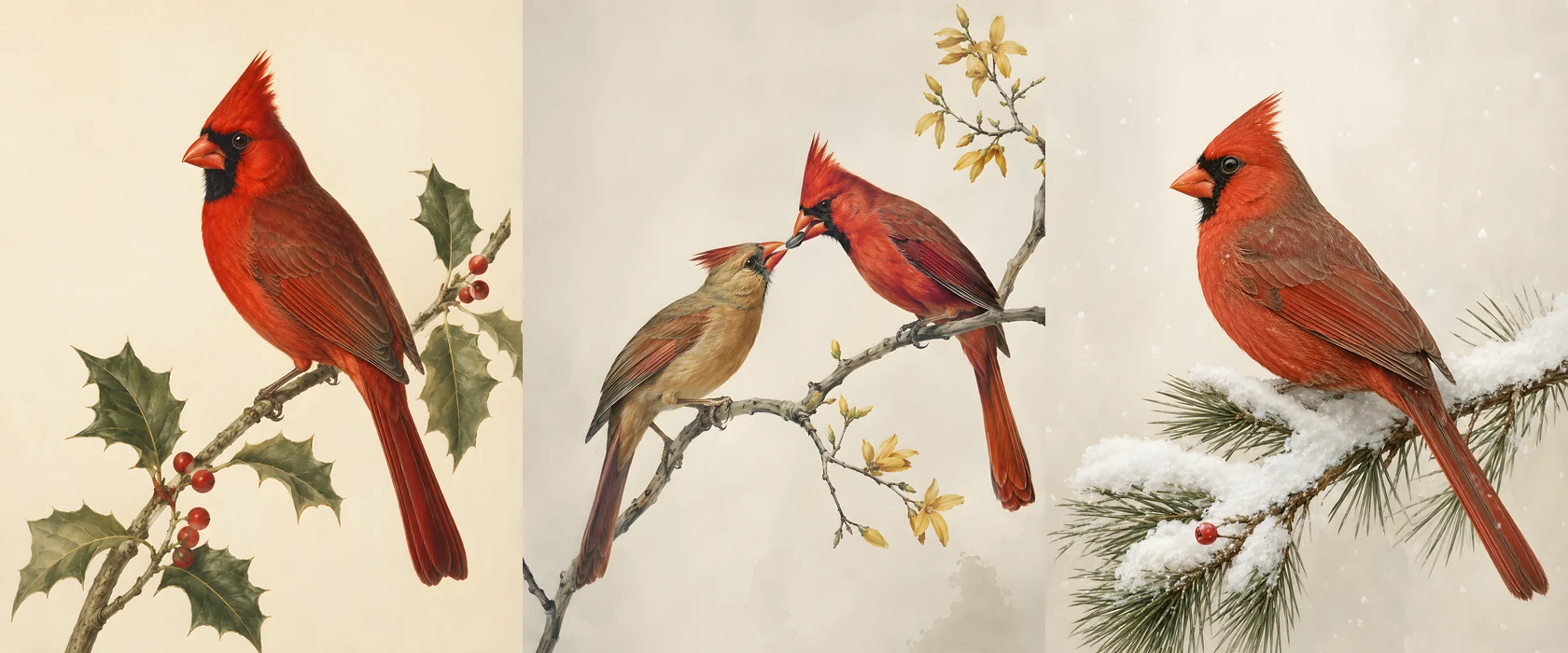
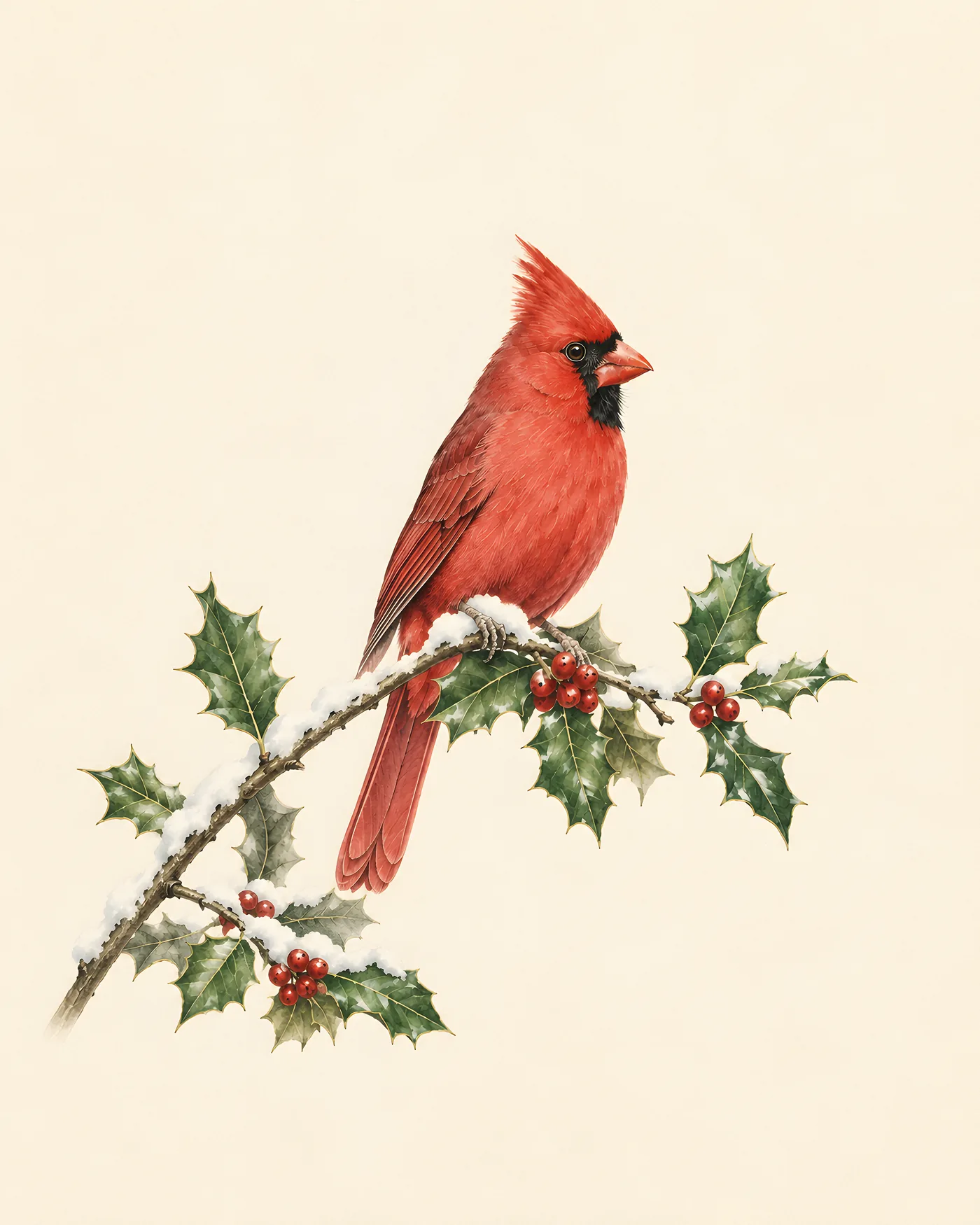
Crest crisp, body upright, the male Cardinalis cardinalis is perched on a snowy holly sprig. Red berries. Dark glossy leaves under a dusting of snow. The plate places every warm colour the season knows into one composition: vermilion, deep crimson, branch brown against a pale Audubon-style ground.
Cardinals sing year-round, and both sexes sing. That is unusual. The female’s song, documented in a 1983 study by Ritchison and colleagues, is slightly longer and more complex than the male’s, often used from the nest to coordinate with her mate. But it is the male’s clear whistled phrase, heard through a closed window in December, that catches most people off guard. The song carries roughly 200 metres on still air.
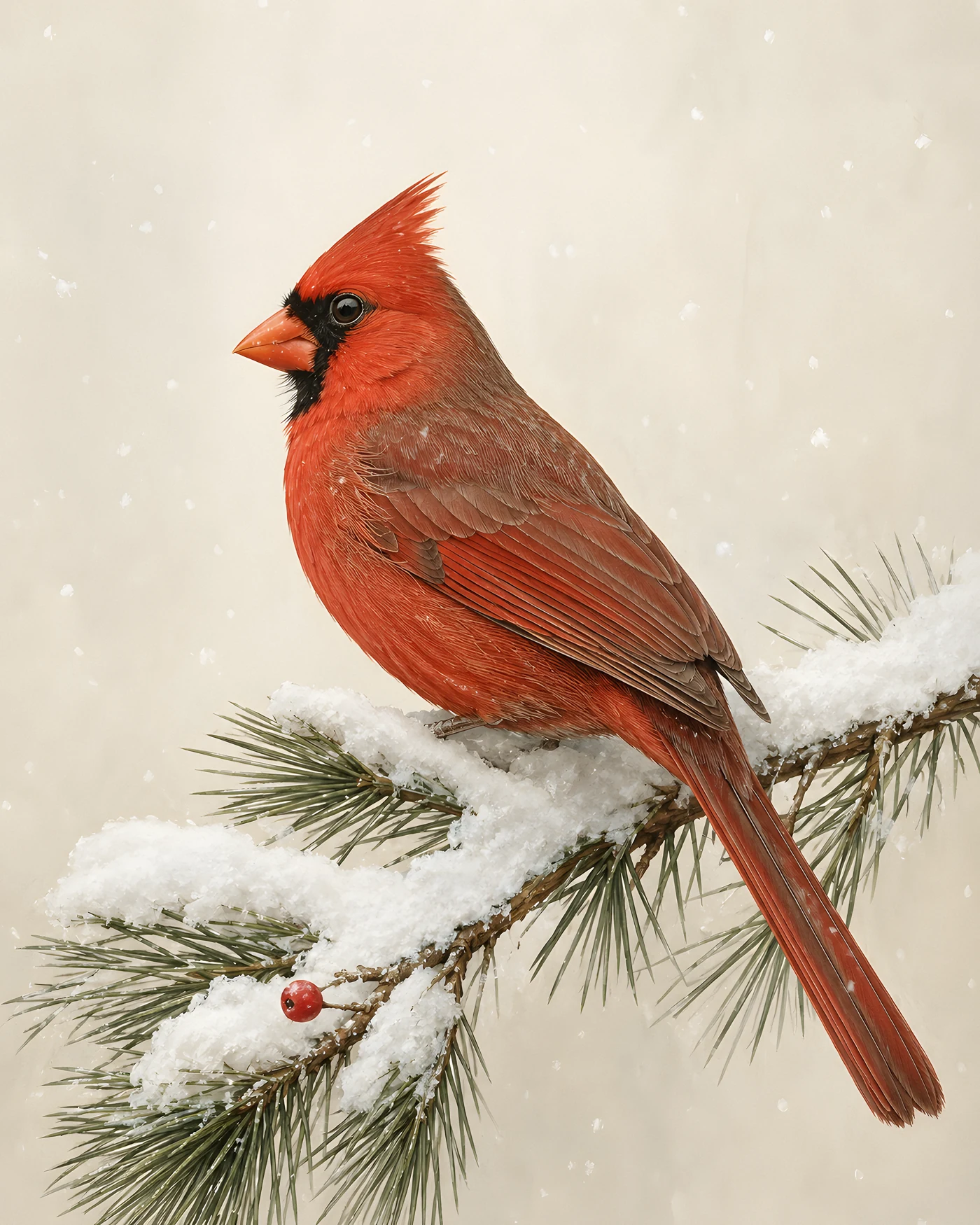
The bird in this plate is still and watchful, the way a cardinal holds a branch in cold weather: body upright, crest raised, the red of him absolute against the snow.
Cardinals do not migrate. He is the one colour the garden keeps through the cold months, when everything else has emptied out. The holly branch is not decoration. It is the actual habitat, the fruit-bearing shrub that feeds the carotenoids that build the following spring’s plumage.
Drawn in the quiet, plate-style manner of the Audubon tradition, this is a print for the year’s darkest season.