



The story of the bird
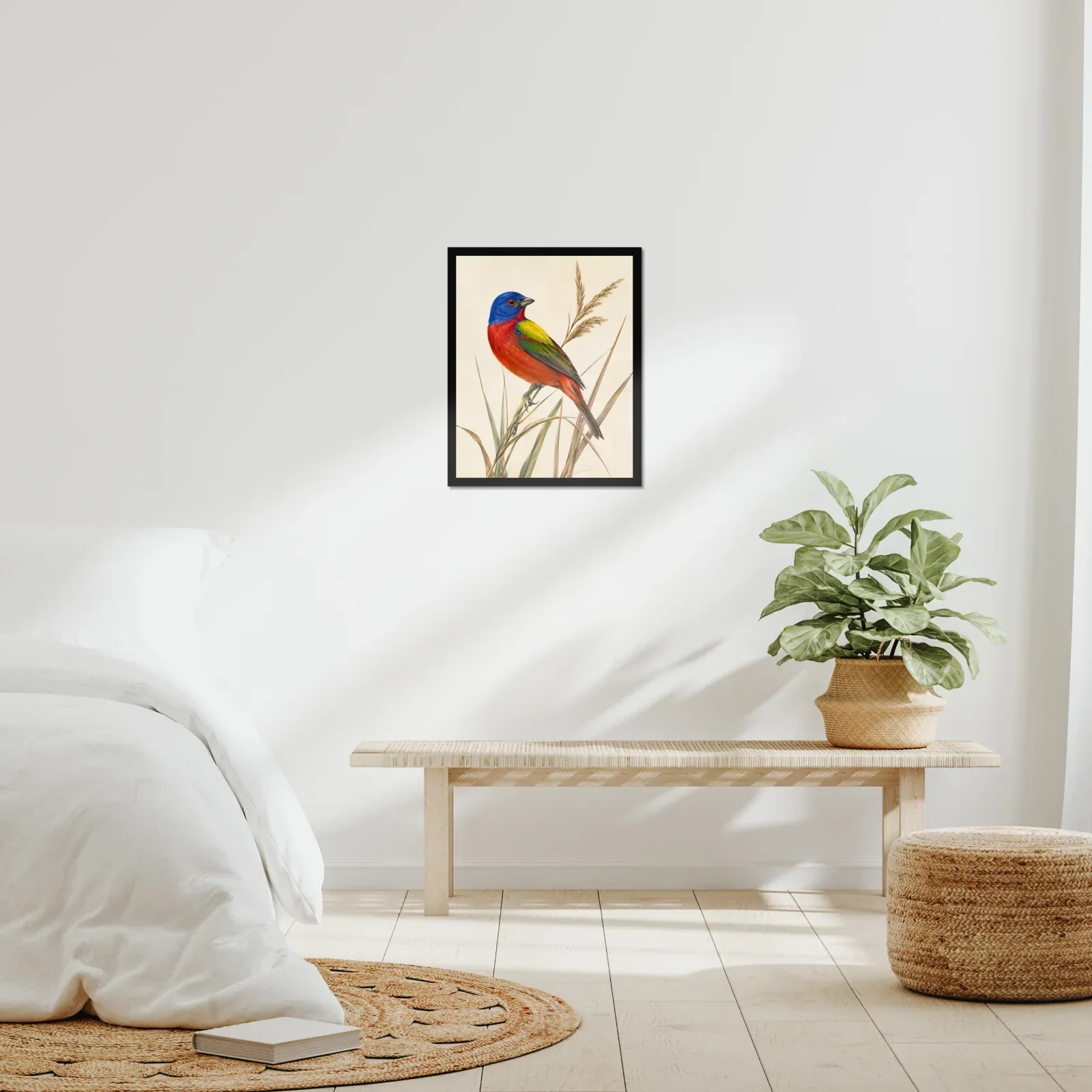
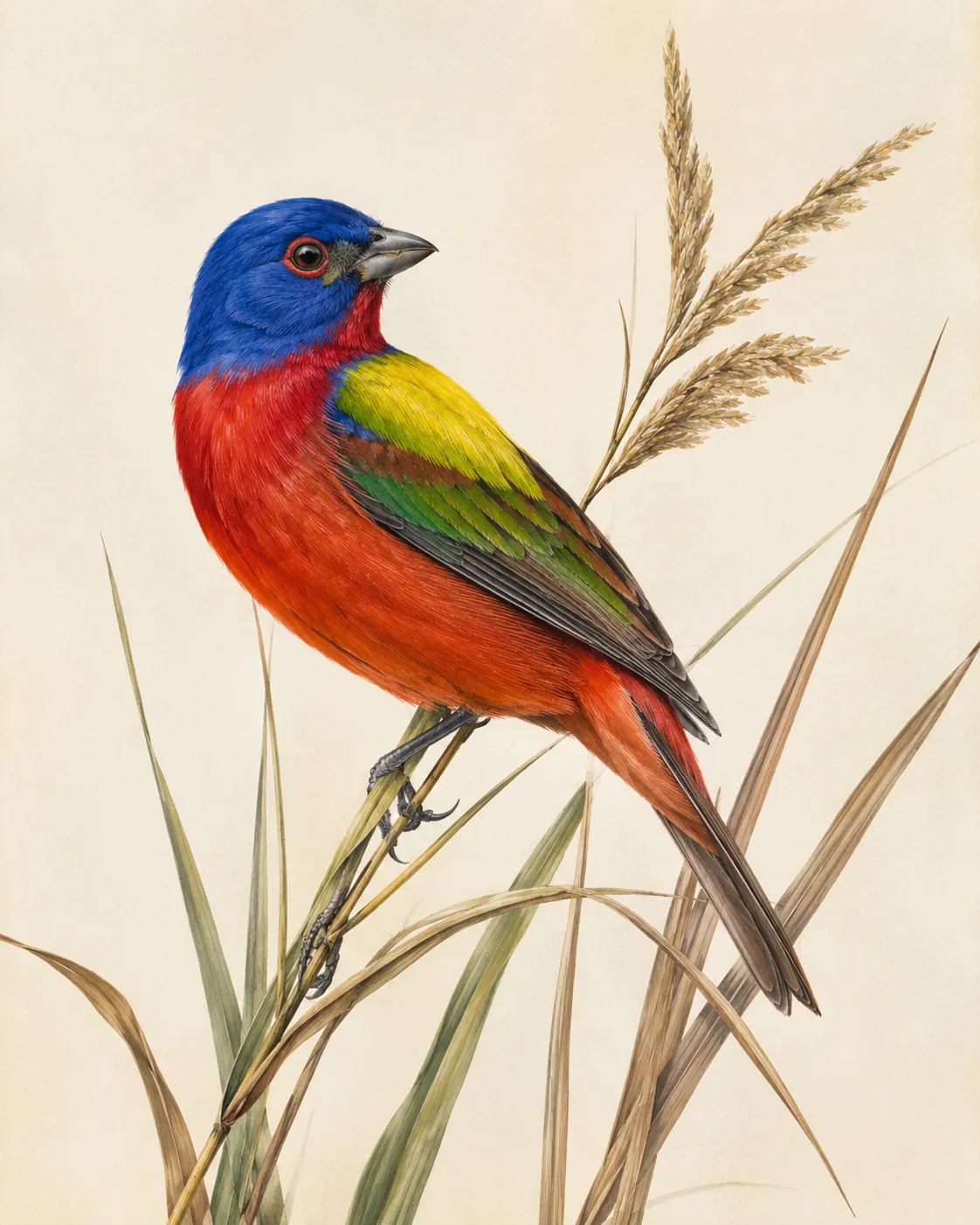
A blue head. A red breast. A green back that holds the light like something lacquered. The male Passerina ciris clings to a stem of dry grass, all three colours present at once against soft sage seedheads and a warm cream ground.
The French called him nonpareil. Without equal. No other North American songbird carries this palette. The four colour blocks, cobalt, scarlet, lime, buff, meet without blending, which is what makes the bird read, at distance, like a misprint.
He is not easy to reach this plumage. Young males take two full years to develop the adult colours, spending their first breeding season in the female’s yellow-green livery while already singing. The bird in this plate, in full cobalt and scarlet, is a mature male, at least two years old and already a veteran of the territory.
The grasses are not incidental. Grass seeds are the Painted Bunting’s staple. He forages low, hopping through stems and reaching up to strip seed heads, exactly the posture this plate captures. The plate’s setting is the bird’s actual habitat: the scrubby field edge, the dry stem, the open sky behind.
The Painted Bunting has been trapped for the cage-bird trade for centuries. A bird this colourful has never been left alone. The plate holds him still, and free, for the wall.
In the tradition of Audubon, on fine-art paper.