


The story of the bird
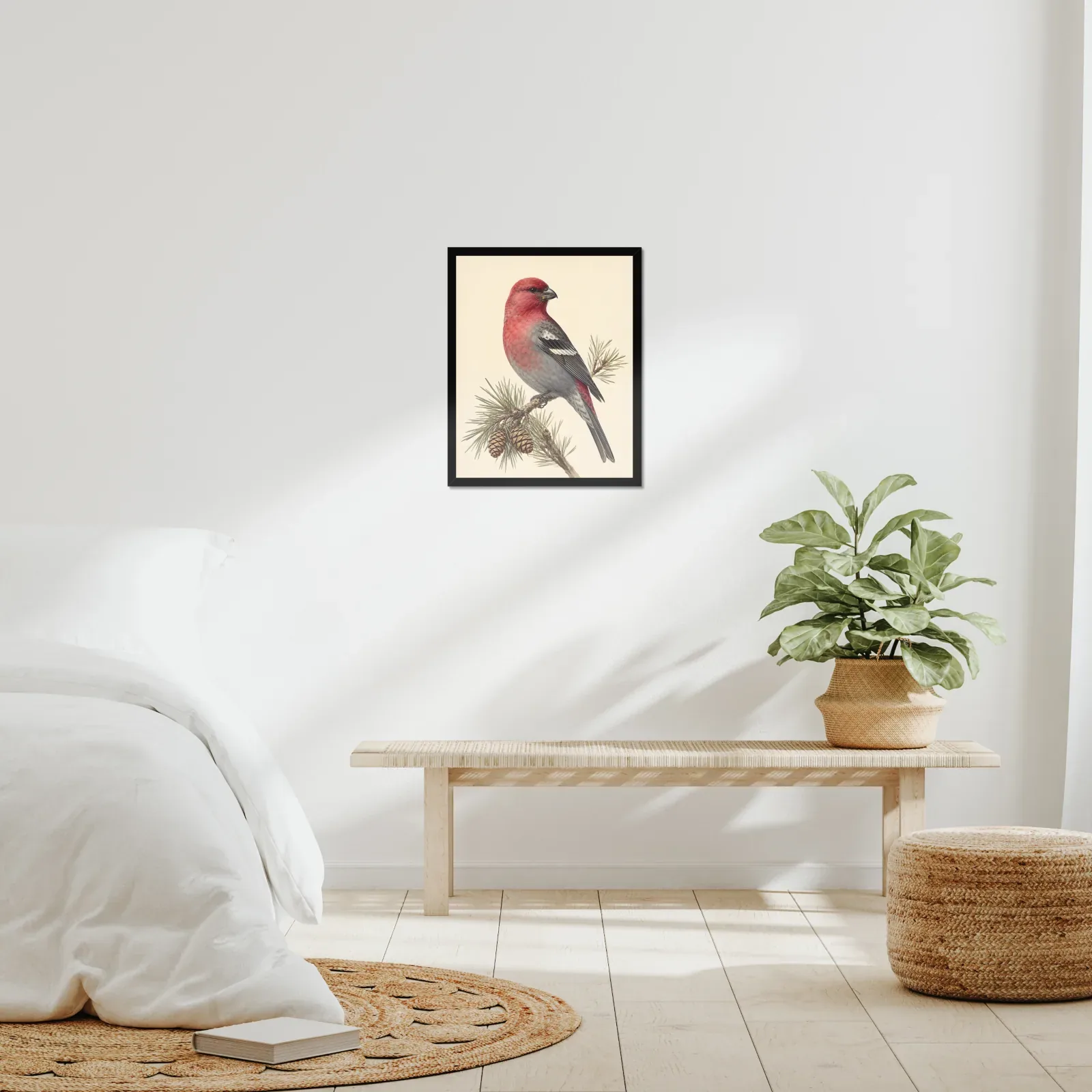
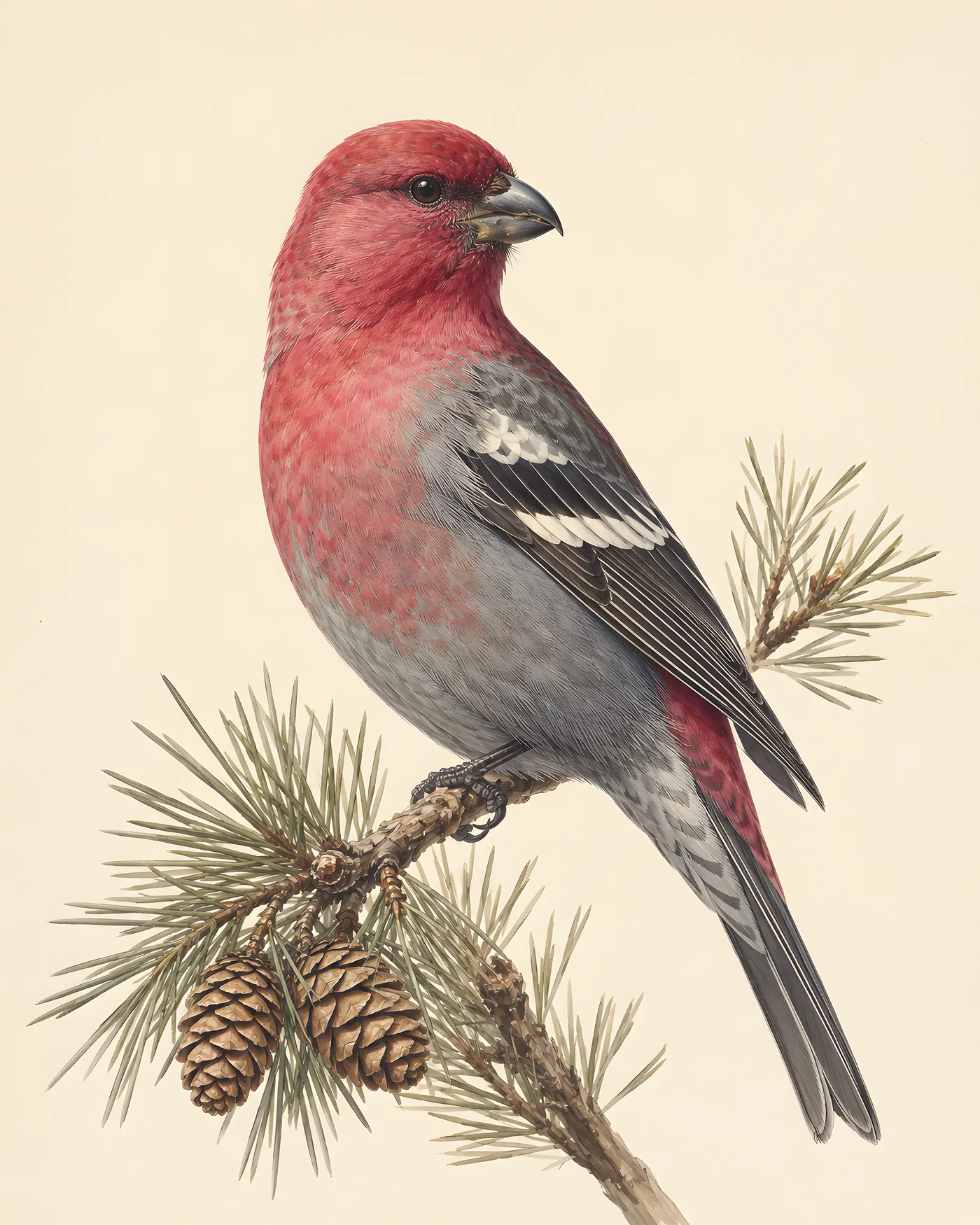
The Pine Grosbeak arrives as a gift. Pinicola enucleator is a bird of the far-northern boreal forest, and most years it stays there. In irruption years - when the spruce and mountain-ash crops fail in the north - flocks drift south into the upper tier of the United States, landing in ornamental rowans and crabapples with the calm confidence of a bird that has never been seriously hunted. They let you approach close enough to see the detail.
The detail rewards the approach. The adult male is a large finch - nearly as big as an American Robin - washed in a deep raspberry-pink that sits between red and rose without settling on either. The grey of the back and wings gives the colour room to breathe. Two white wing bars mark the folded wing. The bill is stout, curved, made for crushing the seeds and berries of cold-climate trees. The eye is dark and mild. This is a bird with no particular urgency.
On most years you travel to the boreal forest to find a Pine Grosbeak, and most birders never make that trip. On irruption years, the bird comes to you, landing in a suburban tree and eating berries while you watch from a few feet away. That accessibility, that unexpected nearness of something wild and northern, is part of what makes the Pine Grosbeak the most anticipated winter finch on the continent.
On the wall, the raspberry-pink reads warm and unusual - a colour that most bird art does not include. It belongs in a winter-lit room.
Paper and finish
Available in three sizes on Hahnemühle Photo Rag 308gsm - matte fine-art paper. Printed by Prodigi using pigment inks rated 100+ years under display conditions.
| Size | Unframed | Framed |
|---|---|---|
| 8 × 10 in | $39 | $99 |
| 16 × 20 in | $69 | $149 |
| 24 × 30 in | $99 | $199 |
Framed prints are glazed, no mat. Frame colours: black, white or natural.