

The story of the bird
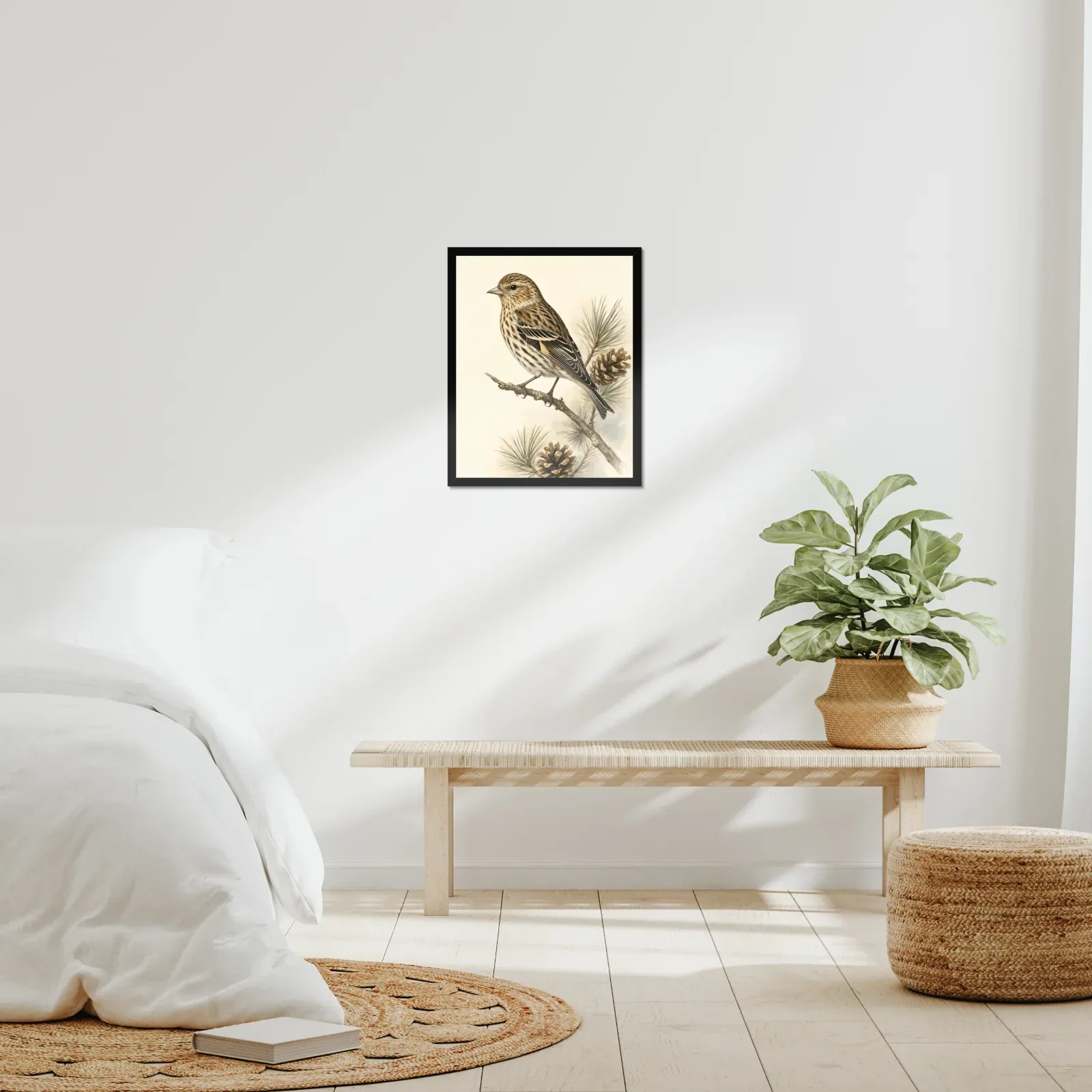
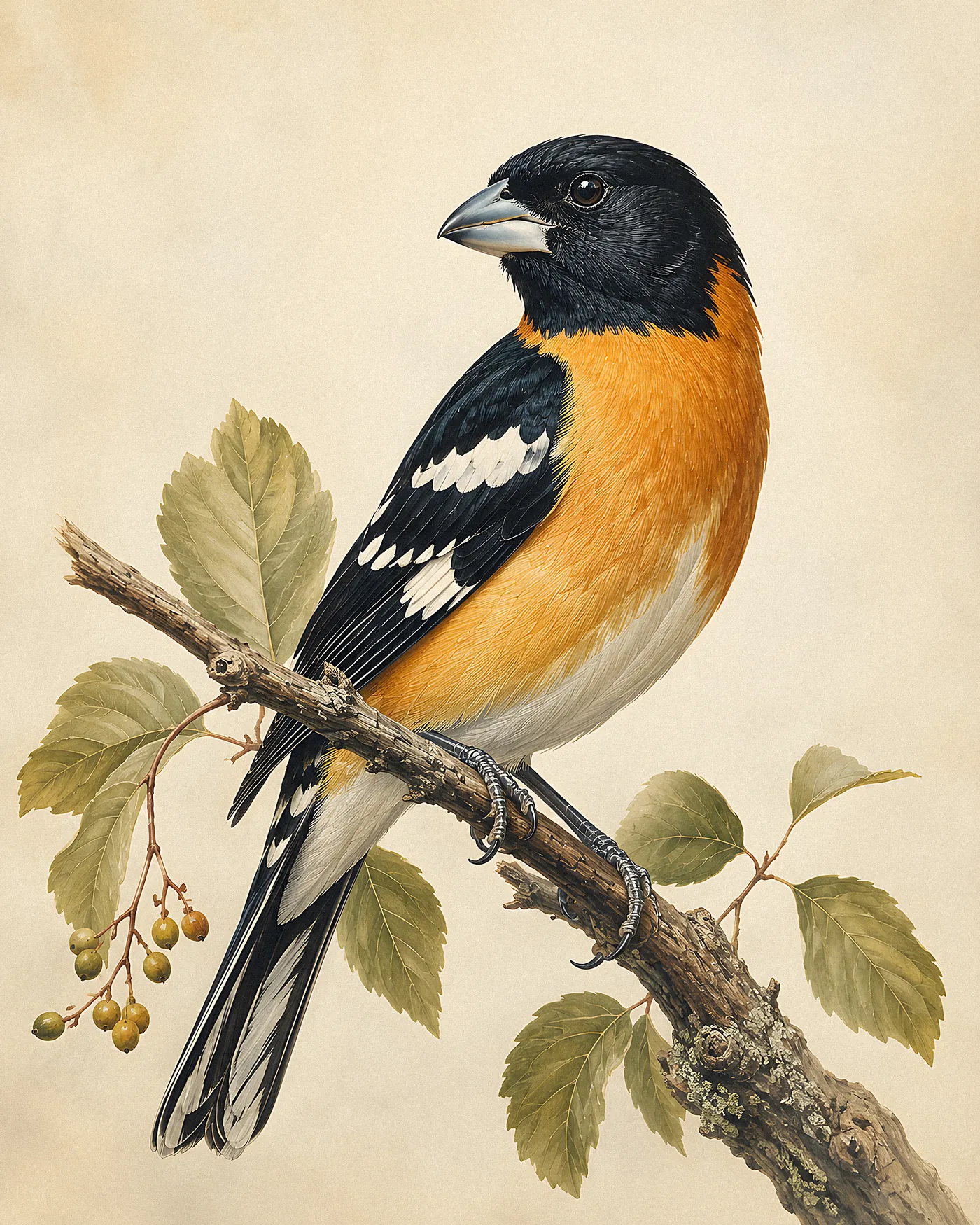
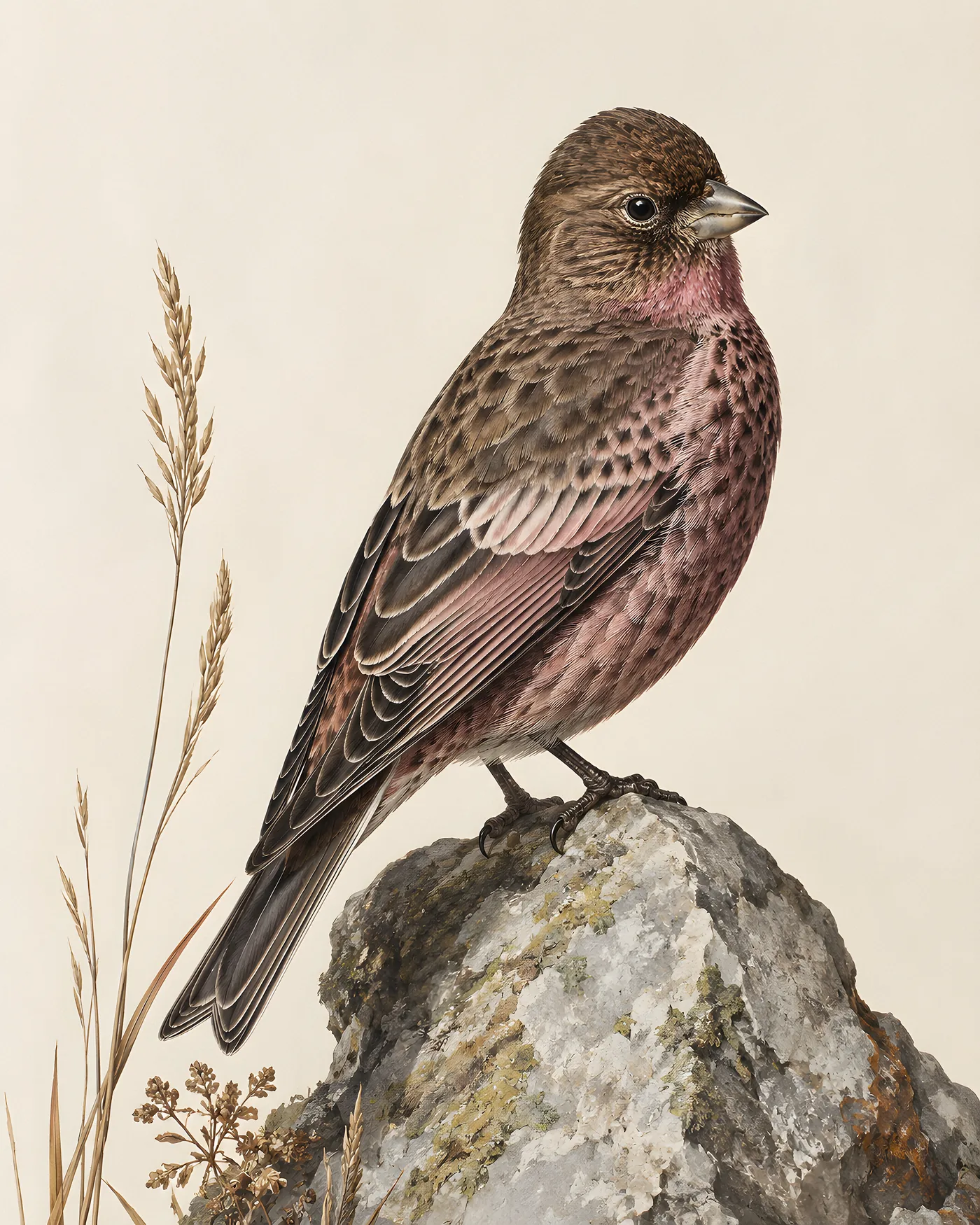
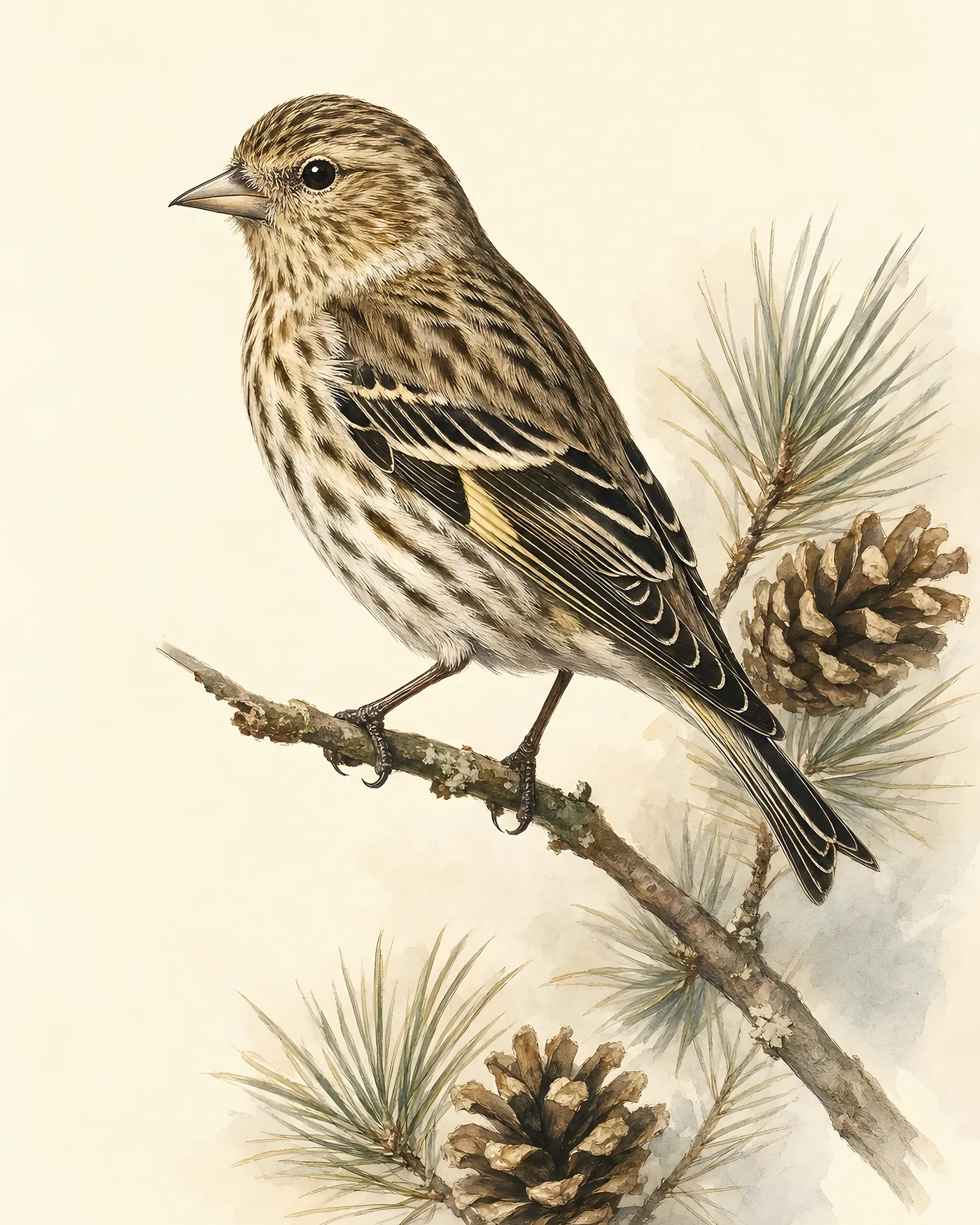
A Pine Siskin perched on a branch hung with cones. The Audubon-style plate gives it a cream ground, soft pine-needle green, and the bird’s own restless-brown body picked out with that hidden bar of yellow along the wing. The yellow is the whole surprise of this species, kept tucked away until the wing lifts.
Spinus pinus is a bird that fools people. It travels in loose flocks through winter, mixed among goldfinches, a small streaky brown finch that reads as background noise. Then it opens a wing, or takes flight, and the yellow flashes. The bill settles the identification: thin, sharp, pointed, more like a warbler’s than a finch’s, built for working seed heads and pine cones, not cracking sunflower shells.
It weighs between 12 and 18 grams. It can pack on body fat and ramp up its metabolism to survive nights far below freezing, wintering further north than most small finches dare. Some winters it barely moves south at all. Other winters, when the cone crop fails across Canada, vast numbers push south in what birders call an irruption. A winter with no siskins can be followed by a winter full of them. The bird does not announce its visits. It arrives.
The call is the other tell: a rising, buzzy zreeee, a wheezy note that climbs at the end. Once you learn it, you hear siskins passing overhead long before you spot the yellow.
A small bird, easily overlooked, rendered with the unhurried care of the old natural-history plates.