

The story of the bird
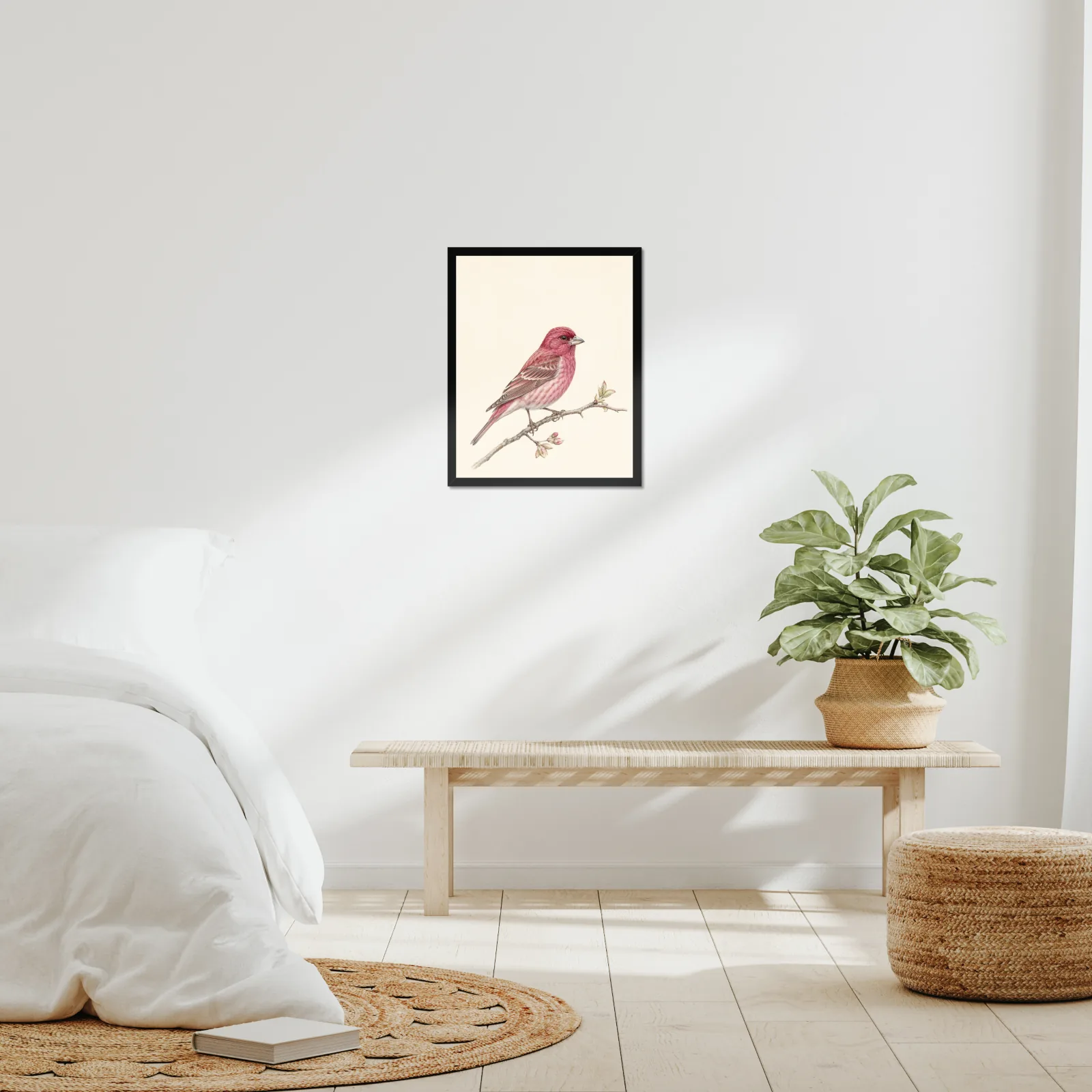
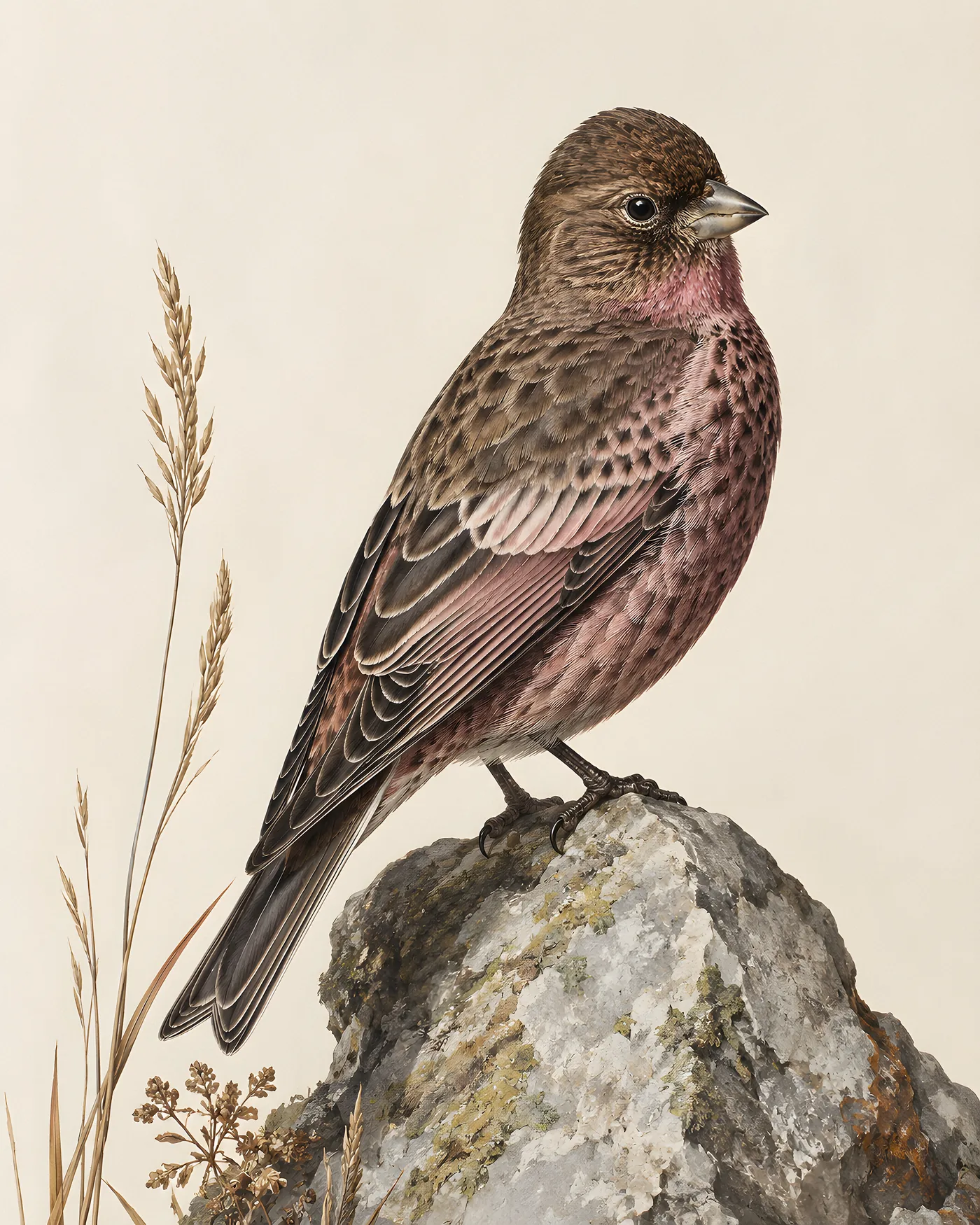
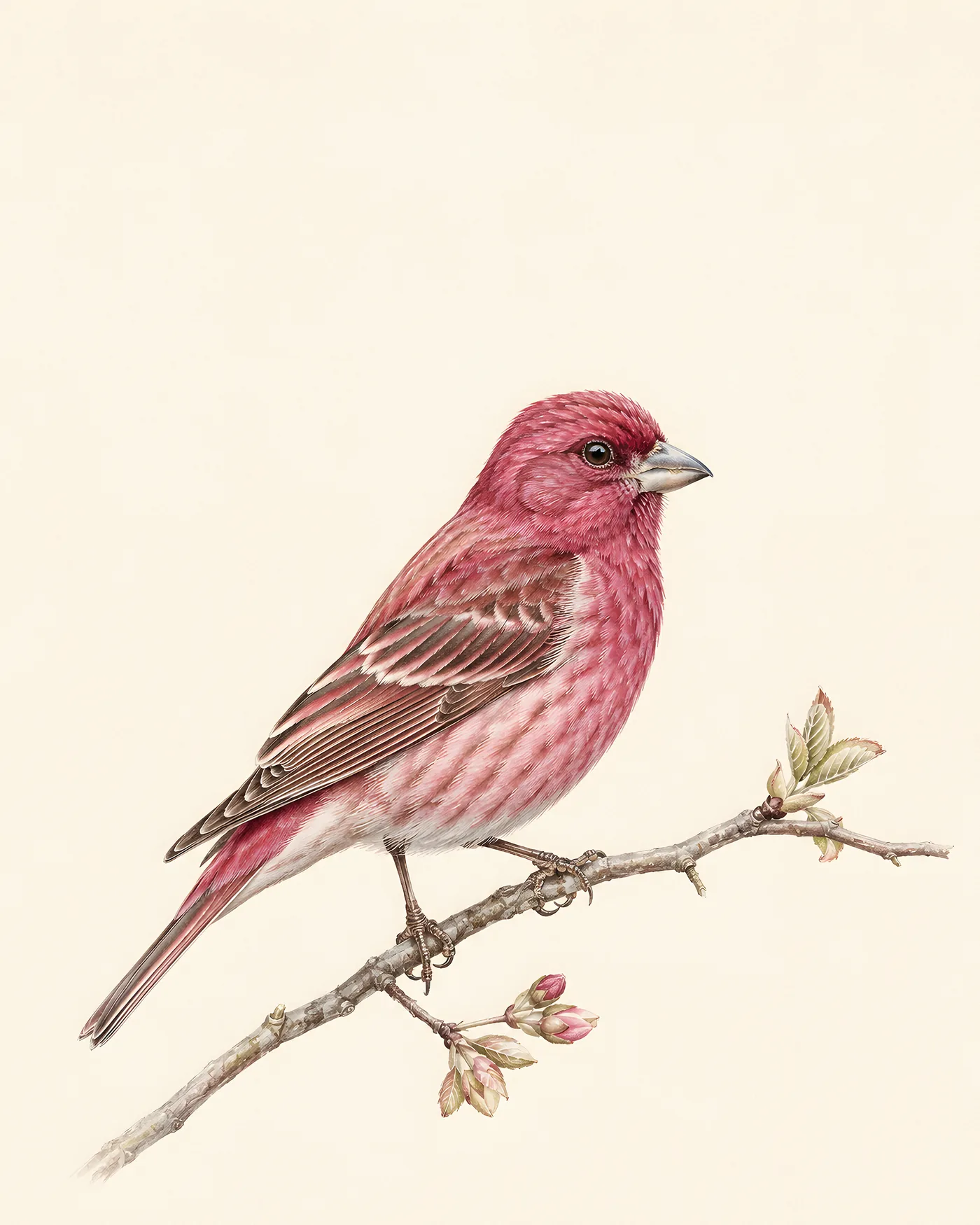
The Purple Finch (Haemorhous purpureus) is not purple. The male’s head and breast are a deep raspberry-red that Peterson described as having been dipped in juice. The name comes from purpureus in the Latin sense - the word covered crimson and blood-red as well as purple, and the bird’s colour falls in that range. The female is heavily streaked brown with a strong facial pattern, different enough from the male that paired birds at a feeder do not obviously belong to the same species.
The Purple Finch is the one the House Finch is confused with across the eastern United States. They overlap in range in winter. The Purple Finch is the larger, more heavily built bird, the red deeper and extending further across the back, the facial pattern more distinct on the female. It breeds in northern conifer forest and appears at feeders in cold months, often in waves that arrive and disappear over a week.
The Audubon plate shows the male in an upright perched posture, the raspberry-red at full depth on the head and breast, the streaked wing and back visible above the red.
Paper and finish
Unframed prints come on Hahnemuhle Photo Rag 308gsm, a heavyweight fine-art paper with a soft matte surface. The surface holds fine lines and subtle colour gradients without glare, which matters for Audubon-tradition work where the cream ground needs to read as paper, not as a white field. The framed option is set in a classic moulding, glazed and ready to hang, in black, white or natural.
Sizes
Three sizes: 8x10, 16x20 and 24x30 inches, framed or unframed. Prints from $39. Framed from $99.
A high-resolution digital download is also available if you would rather print it yourself.