


The story of the bird
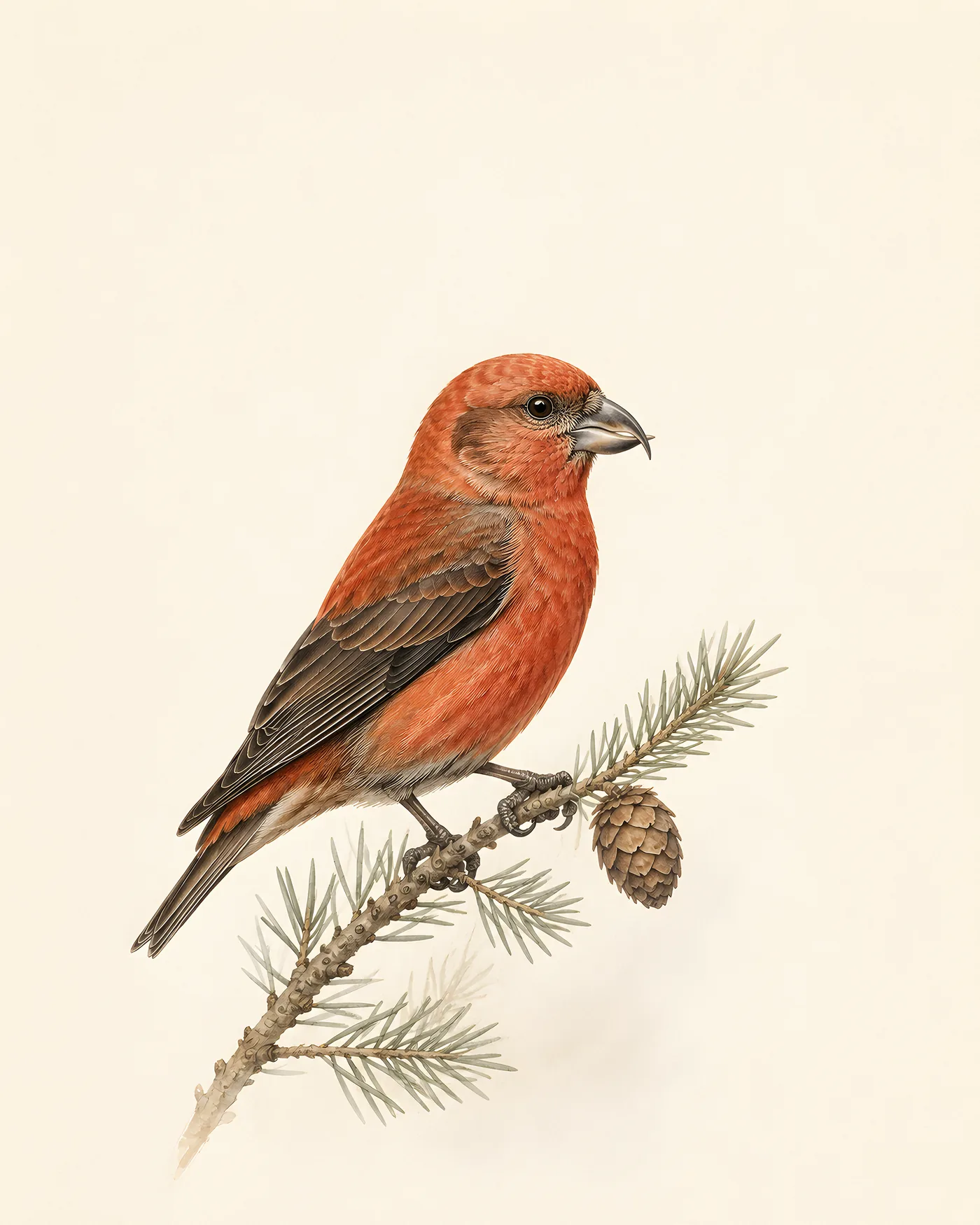
The Red Crossbill (Loxia curvirostra) has mandibles that cross at the tip - right over left, or occasionally the reverse depending on the individual. The purpose is the extraction of seeds from closed pine cones: the bill wedges between the scales and the crossed tips pry them apart. It is a tool built into the bird’s face, and it works well enough that crossbills can access seeds that most other birds cannot reach until the cones open naturally.
The bird is also a nomad. It follows the cone crop across the boreal forest with no fixed breeding season - it will nest in January if the cones are ripe, or July, or not at all in a year when the crop fails across a wide area. The male is brick-red. The female is olive-yellow. Both are compact, large-headed birds that move in flocks through conifers, hanging from cones in the manner of parrots.
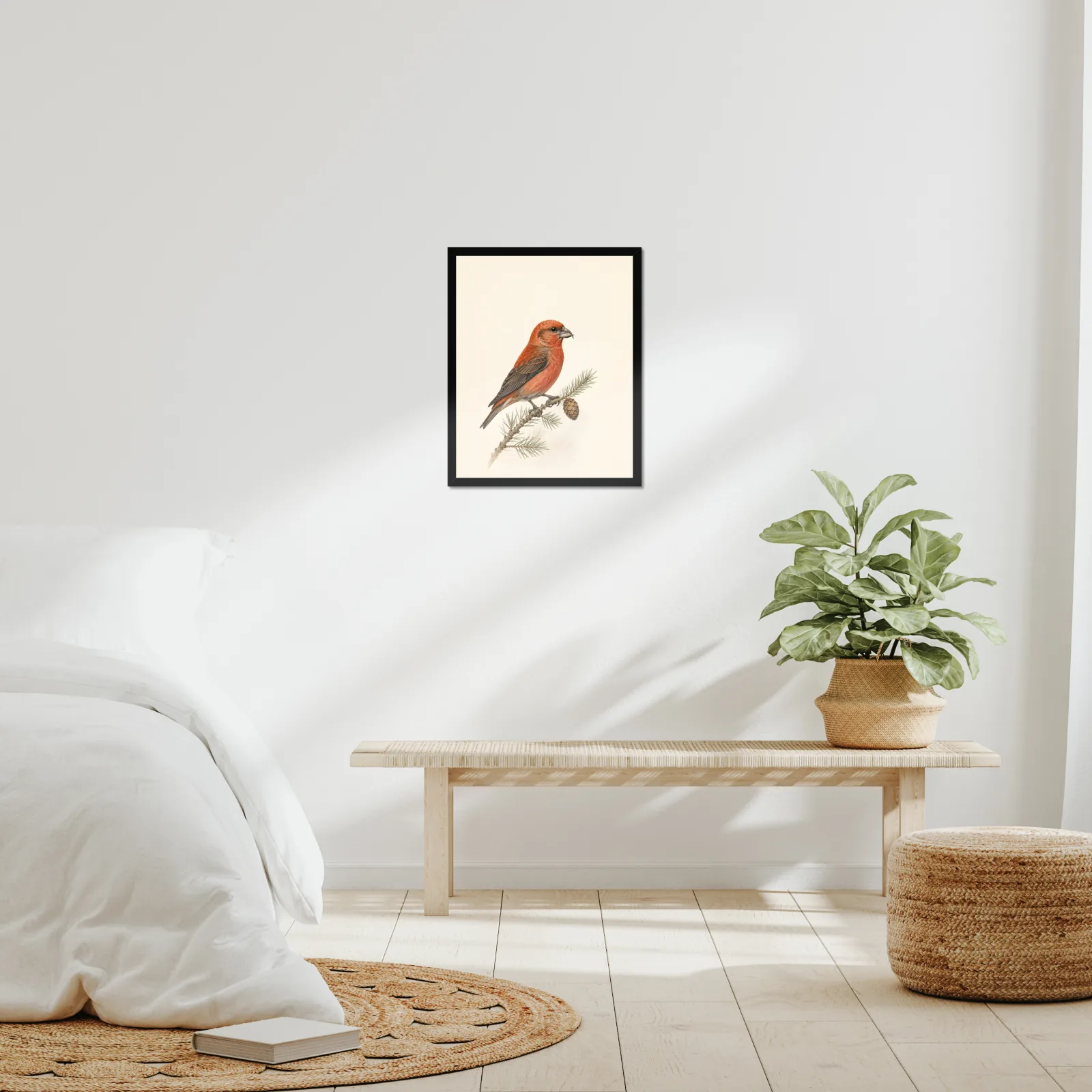
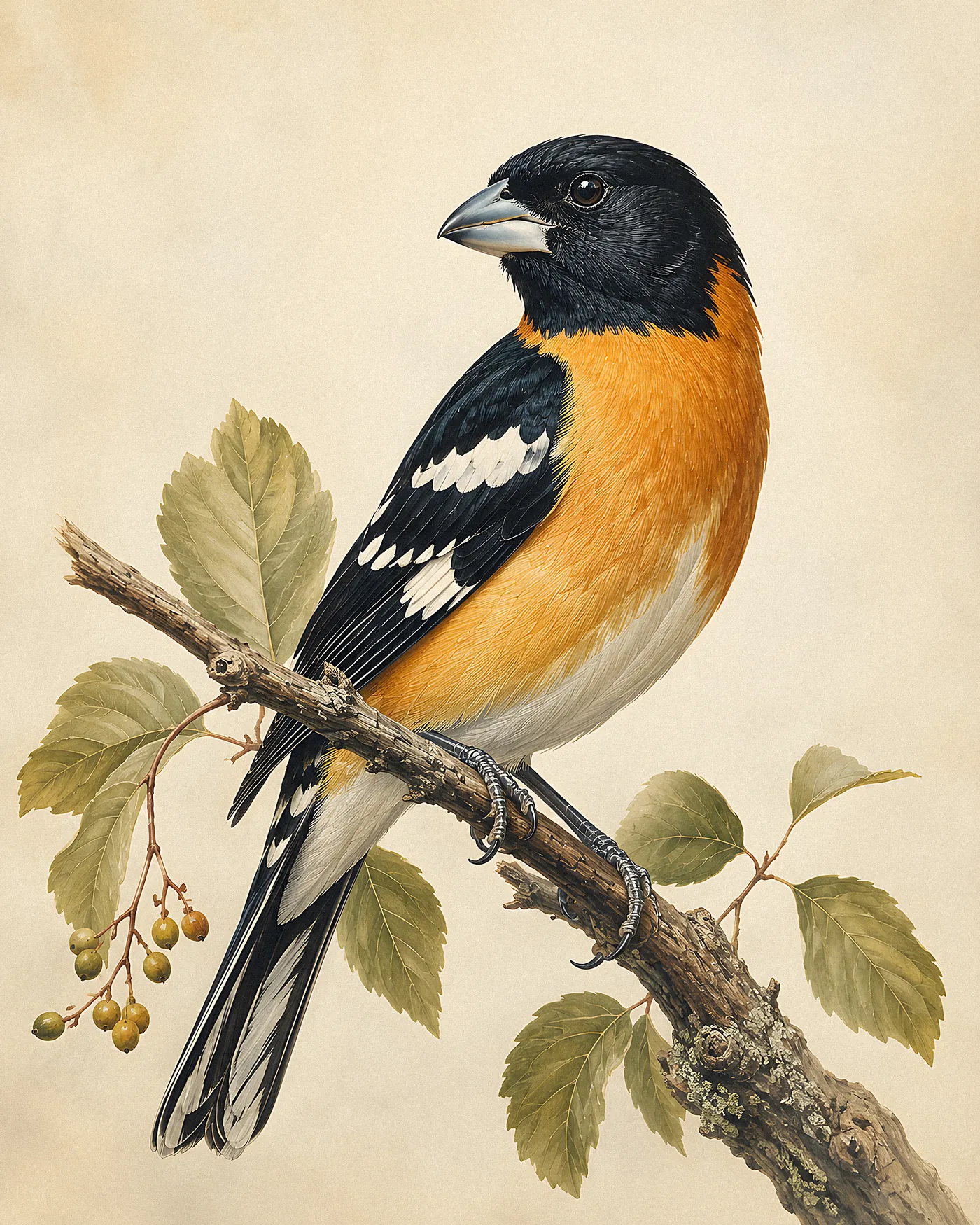
The Audubon plate shows the male on a pine branch beside a pine cone, the bill position visible - the asymmetric cross clear in profile. The brick-red of the plumage reads warm against the cream ground and the grey-green pine needles.
Paper and finish
Unframed prints come on Hahnemuhle Photo Rag 308gsm, a heavyweight fine-art paper with a soft matte surface. The surface holds fine lines and subtle colour gradients without glare, which matters for Audubon-tradition work where the cream ground needs to read as paper, not as a white field. The framed option is set in a classic moulding, glazed and ready to hang, in black, white or natural.
Sizes
Three sizes: 8x10, 16x20 and 24x30 inches, framed or unframed. Prints from $39. Framed from $99.
A high-resolution digital download is also available if you would rather print it yourself.